


Microbial decay analysis challenges interpretation of putative organ systems in Cambrian fuxianhuiids
- PMID: 29643211
- PMCID: PMC5904315
- DOI: 10.1098/rspb.2018.0051
Microbial decay analysis challenges interpretation of putative organ systems in Cambrian fuxianhuiids
Abstract
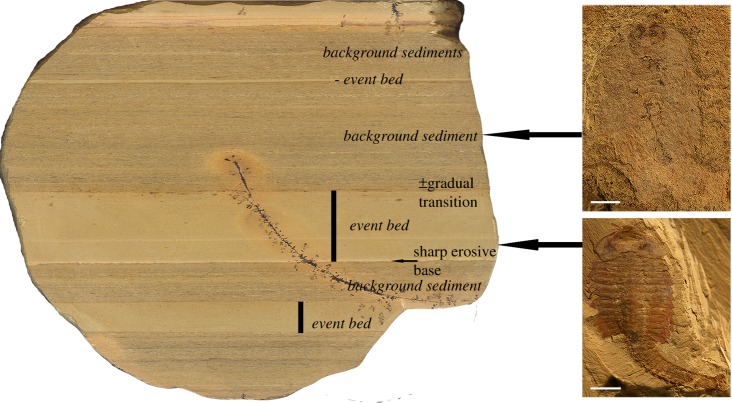
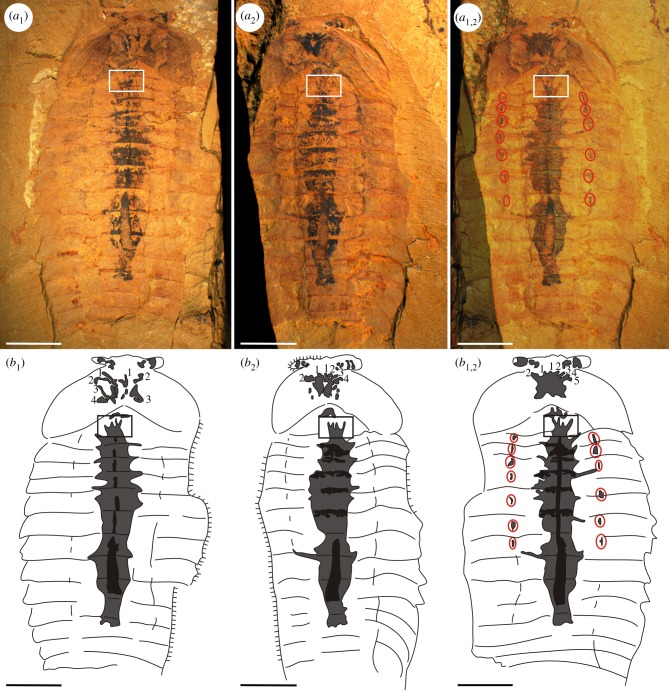
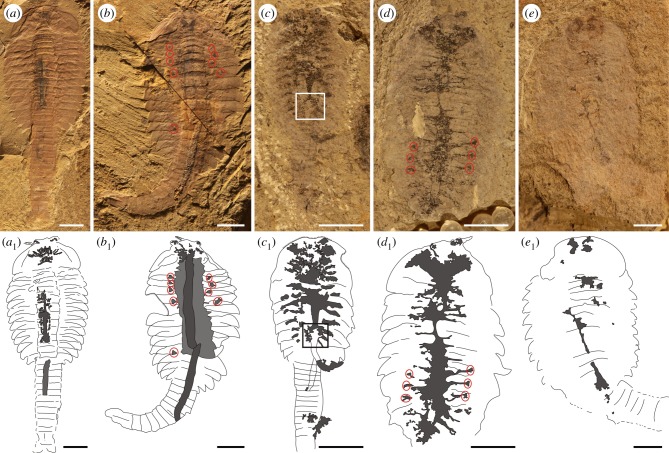
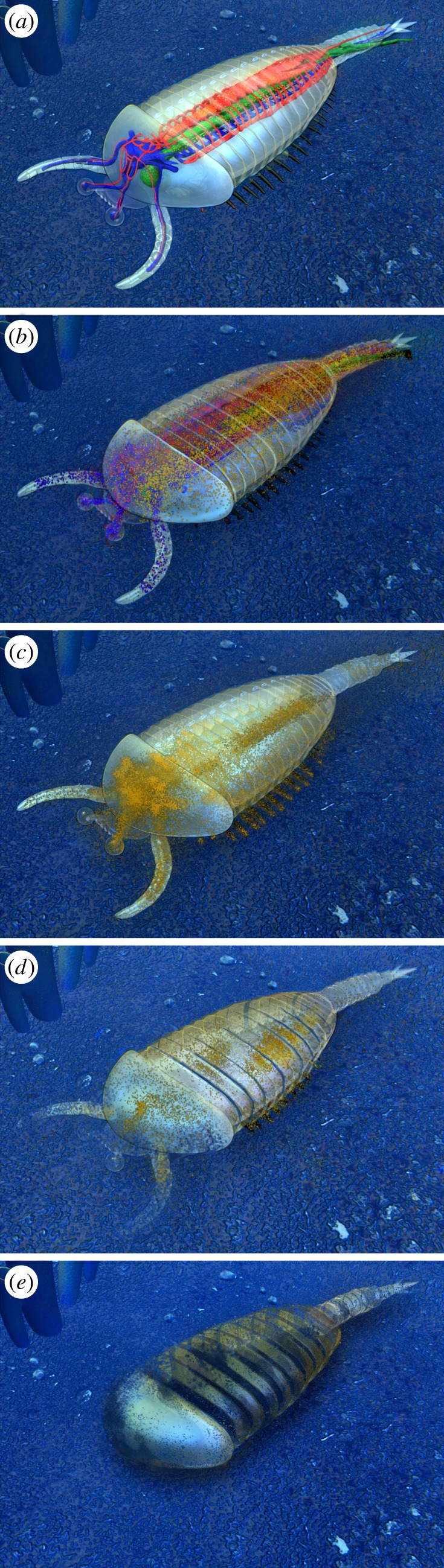
The Chengjiang fossil Lagerstätte (Cambrian Stage 3) from Yunnan, southern China is renowned for its soft-tissue preservation. Accordingly structures in fuxianhuiids, radiodontans and great appendage arthropods have been interpreted as the nervous and cardiovascular systems, including brains, hearts and blood vessels. That such delicate organ systems survive the fossilization process seems remarkable; given that this mode of preservation involves major taphonomic changes, such as flattening, microbial degradation, chemical alteration and replacement. Here, we document a range of taphonomic preservation states in numerous articulated individuals of Fuxianhuia protensa We suggest that organic (partly iron mineral-replaced) bulbous structures in the head region, previously interpreted as brain tissue, along with sagittally located organic strands interpreted as part of the cardiovascular system or as nerve cords, may be better explained as microbial biofilms that developed following decomposition of the intestine, muscle and other connective tissues, forming halos surrounding the original organic remains.
Keywords: Cambrian; Chengjiang fossil Lagerstätte; cardiovascular system; microbial biofilms; nervous tissue.
© 2018 The Author(s).
Conflict of interest statement
We have no competing interests.
Figures



References
-
- Hou XG, Bergström J. 1997. Arthropods of the Lower Cambrian Chengjiang fauna southwest China. Fossils Strata 45, 1–116.
-
- Shu DG, et al. 1999. Lower Cambrian vertebrates from south China. Nature 402, 42–46. ( 10.1038/46965) - DOI
Publication types
MeSH terms
Associated data
LinkOut - more resources
Full Text Sources
Other Literature Sources
