Resterilized Polypropylene Mesh for Inguinal Hernia Repair
- PMID: 29643729
- PMCID: PMC5883845
- DOI: 10.4103/njs.NJS_21_17
Resterilized Polypropylene Mesh for Inguinal Hernia Repair
Abstract
Purpose: The use of prosthetic biomaterials for reconstructing and reinforcing the posterior wall of the inguinal canal reduces the incidence of hernia recurrence. Cost, availability of mesh, and perhaps reluctance to adopt a new technique are factors which prevent widespread practice of hernioplasty in low-resource settings. Use of resterilized mesh significantly reduces the cost of hernioplasty and is safe.
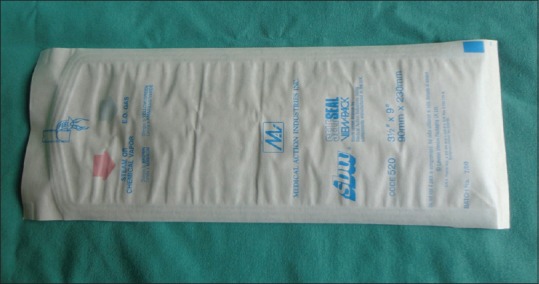
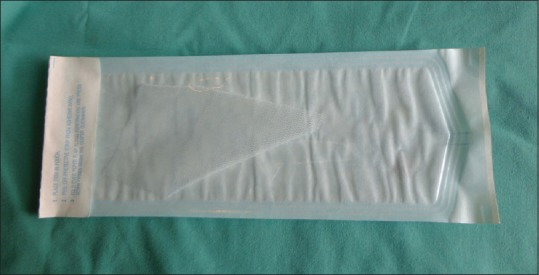
Patients and methods: Sheets of 30 cm × 30 cm polypropylene mesh were cut into 16 cm × 8 cm to produce mesh strips which were repackaged into SELFSEAL® (Medical Action Industries Inc., USA) sterilizing pouches measuring 90 mm × 230 mm and autoclaved. At repair, the strips are shaped to fit the anatomy of the posterior wall of the inguinal canal, a slit created at one end and applied in Lichtenstein repair of inguinal hernias. Patients were monitored for seroma collection and wound infection up to 2 weeks postoperative period.
Results: Sixty inguinal hernia repairs were done in 58 patients using the resterilized mesh; two cases being bilateral. One patient (1.7%) had seroma collection at 2 weeks which was aseptically aspirated. We did not record any case of wound infection.
Conclusion: The use of sterilized polypropylene mesh for the repair of inguinal hernias is safe and reduced the cost of hernioplasty by reducing the cost of polypropylene mesh. This technique is recommended in low-resource settings.
Keywords: Inguinal hernia; Lichtenstein repair; low-cost; sterilized mesh.
Conflict of interest statement
There are no conflicts of interest.
Figures
References
-
- Ohene-Yeboah M, Abantanga FA. Inguinal hernia disease in Africa: A common but neglected surgical condition. West Afr J Med. 2011;30:77–83. - PubMed
-
- Ashindoitiang JA, Ibrahim NA, Akinlolu OO. Risk factors for inguinal hernia in adult male Nigerians: A case control study. Int J Surg. 2012;10:364–7. - PubMed
-
- Ohene-Yeboah M, Abantanga F, Oppong J, Togbe B, Nimako B, Amoah M, et al. Some aspects of the epidemiology of external hernias in Kumasi, Ghana. Hernia. 2009;13:529–32. - PubMed
-
- Sanders DL, Porter CS, Mitchell KC, Kingsnorth AN. A prospective cohort study comparing the African and European hernia. Hernia. 2008;12:527–9. - PubMed
-
- Kingsnorth AN, Oppong C, Akoh J, Stephenson B, Simmermacher R. Operation hernia to Ghana. Hernia. 2006;10:376–9. - PubMed
LinkOut - more resources
Full Text Sources
Other Literature Sources