


Environmental colonization and onward clonal transmission of carbapenem-resistant Acinetobacter baumannii (CRAB) in a medical intensive care unit: the case for environmental hygiene
- PMID: 29644052
- PMCID: PMC5891964
- DOI: 10.1186/s13756-018-0343-z
Environmental colonization and onward clonal transmission of carbapenem-resistant Acinetobacter baumannii (CRAB) in a medical intensive care unit: the case for environmental hygiene
Abstract
Background: In May 2015, we noticed an increase in carbapenem-resistant Acinetobacter baumannii (CRAB) infections in the Medical Intensive Care Unit (MICU). To investigate this, we studied the extent of environmental contamination and subsequent onward clonal transmission of CRAB.
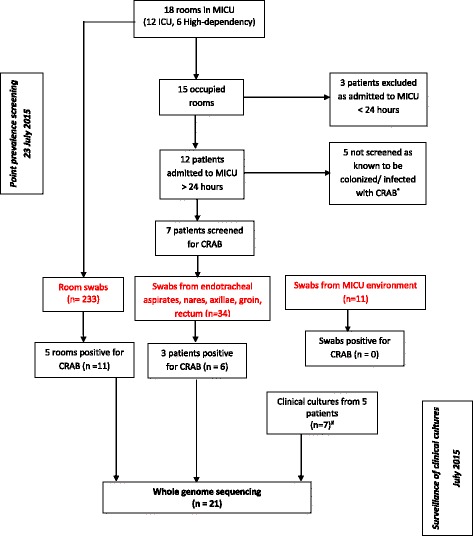
Methods: We conducted a one-day point prevalence screening (PPS) of the patients and environment in the MICU. We screened patients using endotracheal tube aspirates and swabs from nares, axillae, groin, rectum, wounds, and exit sites of drains. We collected environmental samples from patients' rooms and environment outside the patients' rooms. CRAB isolates from the PPS and clinical samples over the subsequent one month were studied for genetic relatedness by whole genome sequencing (WGS).
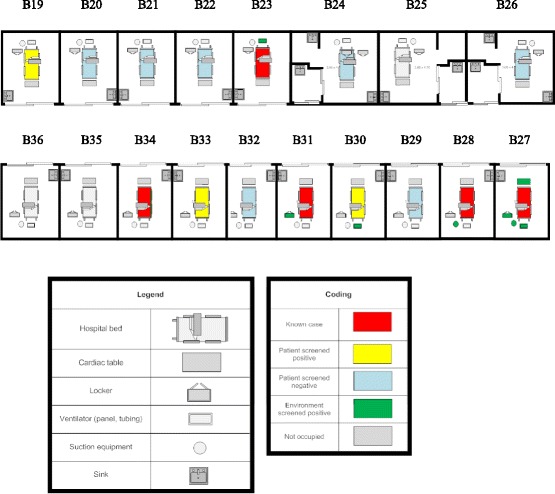
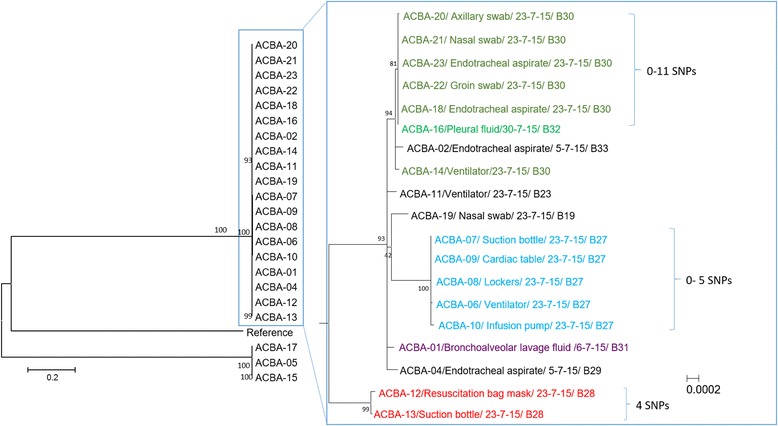
Results: We collected 34 samples from seven patients and 244 samples from the environment. On the day of PPS, we identified 8 CRAB carriers: 3 who screened positive and 5 previously known clinical infections. We detected environmental contamination in nearly two-thirds of the rooms housing patients with CRAB. WGS demonstrated genetic clustering of isolates within rooms but not across rooms. We analysed 4 CRAB isolates from clinical samples following the PPS. One genetically-related CRAB was identified in the respiratory sample of a patient with nosocomial pneumonia, who was admitted to the MICU five days after the PPS.
Conclusion: The extensive environmental colonization of CRAB by patients highlights the importance of environmental hygiene. The transmission dynamics of CRAB needs further investigation.
Keywords: Carbapenem-resistant Acinetobacter baumannii; Colonization; Intensive care unit; Whole genome sequencing.
Conflict of interest statement
This study was approved by the National Health Group of Singapore Domain Specific Review Board (NHG DSRB: 2014/00046).The authors report no conflict of interest relevant to this article.Springer Nature remains neutral with regard to jurisdictional claims in published maps and institutional affiliations.
Figures
References
Publication types
MeSH terms
Substances
LinkOut - more resources
Full Text Sources
Other Literature Sources
Medical
