


Negative-pressure in treatment of persistent post-traumatic subcutaneous emphysema with respiratory failure: Case report and literature review
- PMID: 29644297
- PMCID: PMC5887113
- DOI: 10.1016/j.tcr.2017.12.001
Negative-pressure in treatment of persistent post-traumatic subcutaneous emphysema with respiratory failure: Case report and literature review
Abstract
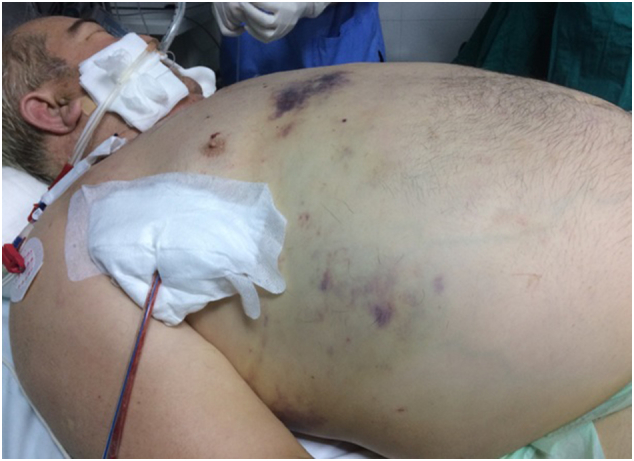
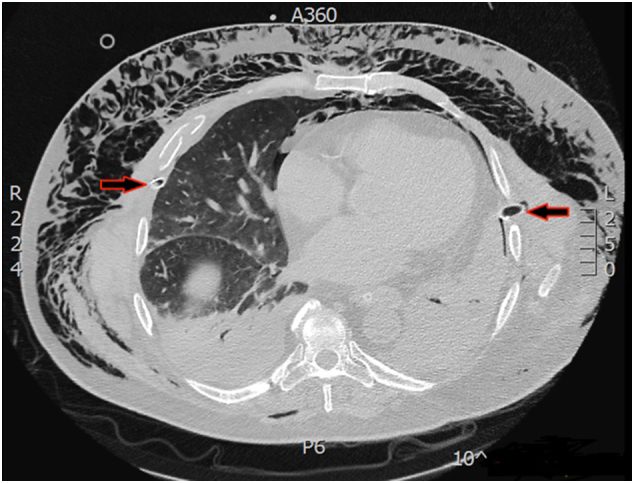
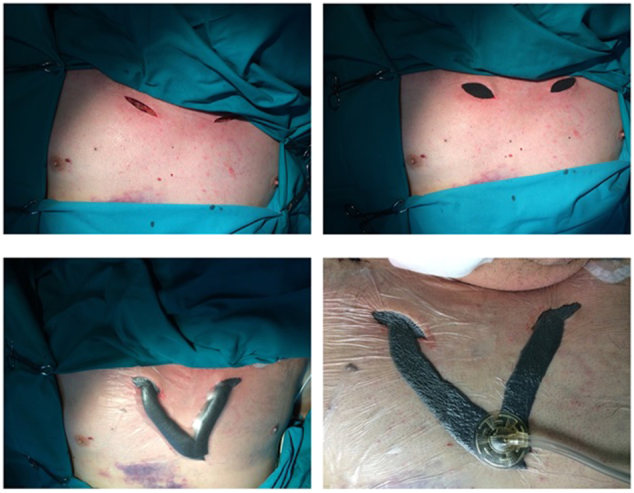
Subcutaneous emphysema may aggravate traumatic pneumothorax treatment, especially when mechanical ventilation is required. Expectative management usually suffices, but when respiratory function is impaired surgical treatment might be indicated. Historically relevant methods are blowhole incisions and placement of various drains, often with related wound complications. Since the first report of negative pressure wound therapy for the treatment of severe subcutaneous emphysema in 2009, only few publications on use of commercially available sets were published. We report on patient injured in a motor vehicle accident who had serial rib fractures and bilateral pneumothorax managed initially in another hospital. Due to respiratory deterioration, haemodynamic instability and renal failure patient was transferred to our Intensive Care Unit. Massive and persistent subcutaneous emphysema despite adequate thoracic drainage with respiratory deterioration and potentially injurious mechanical ventilation with high airway pressures was the indication for active surgical treatment. Negative-pressure wound therapy dressing was applied on typical blowhole incisions which resulted in swift emphysema regression and respiratory improvement. Negative pressure wound therapy for decompression of severe subcutaneous emphysema represents simple, effective and relatively unknown technique that deserves wider attention.
Keywords: Negative-pressure wound therapy; Pneumothorax; Respiratory insufficiency; Subcutaneous emphysema; Vacuum-assisted closure.
Figures
References
-
- Cerfolio R.J., Bryant A.S., Maniscalo L.M. Management of subcutaneous emphysema after pulmonary resection. Ann. Thorac. Surg. 2008;85:1759–1763. - PubMed
-
- Herlan D.B., Landreneau R.J., Ferson P.F. Massive spontaneous subcutaneous emphysema. Acute management with infraclavicular “blow holes”. Chest. 1992;102:503–505. - PubMed
-
- Huang C., Leavitt T., Bayer L.R., Orgill D.P. Effect of negative pressure wound therapy on wound healing. Curr. Probl. Surg. 2014;51:301–331. - PubMed
Publication types
LinkOut - more resources
Full Text Sources
Other Literature Sources
