Case Reports
. 2018 Jul;33(6):992-999.
doi: 10.1002/mds.27315. Epub 2018 Apr 11.

A novel missense mutation in GRIN2A causes a nonepileptic neurodevelopmental disorder

Affiliations
Case Reports

A novel missense mutation in GRIN2A causes a nonepileptic neurodevelopmental disorder

Ana Fernández-Marmiesse et al. Mov Disord. 2018 Jul.

Abstract

Background: Mutations in the GRIN2A gene, which encodes the GluN2A (glutamate [NMDA] receptor subunit epsilon-1) subunit of the N-methyl-d-aspartate receptor, have been identified in patients with epilepsy-aphasia spectrum disorders, idiopathic focal epilepsies with centrotemporal spikes, and epileptic encephalopathies with severe developmental delay. However, thus far, mutations in this gene have not been associated with a nonepileptic neurodevelopmental disorder with dystonia.

Objectives: The objective of this study was to identify the disease-causing gene in 2 siblings with neurodevelopmental and movement disorders with no epileptiform abnormalities.

Methods: The study method was targeted next-generation sequencing panel for neuropediatric disorders and subsequent electrophysiological studies.

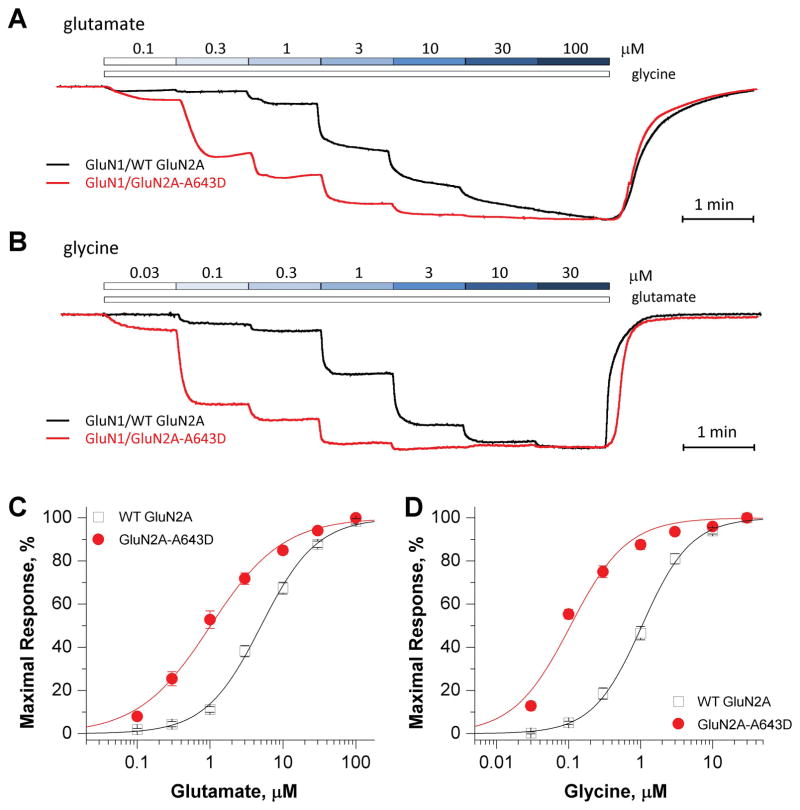
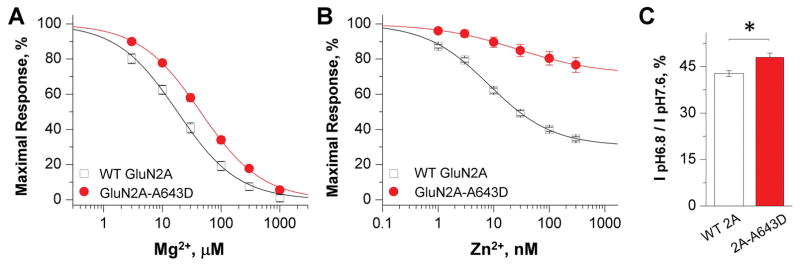
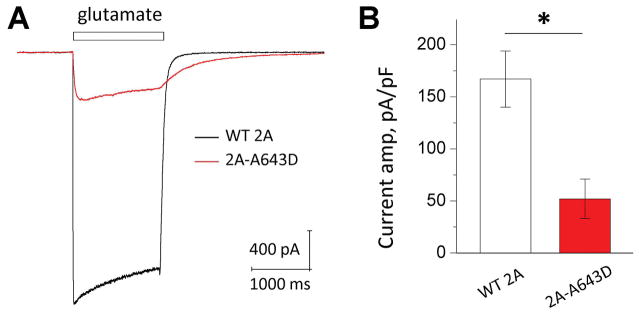
Results: The 2 siblings carry a novel missense mutation in the GRIN2A gene (p.Ala643Asp) that was not detected in genomic DNA isolated from blood cells of their parents, suggesting that the mutation is the consequence of germinal mosaicism in 1 progenitor. In functional studies, the GluN2A-A643D mutation increased the potency of the agonists L-glutamate and glycine and decreased the potency of endogenous negative modulators, including protons, magnesium and zinc but reduced agonist-evoked peak current response in mammalian cells, suggesting that this mutation has a mixed effect on N-methyl-d-aspartate receptor function.

Conclusion: De novo GRIN2A mutations can give rise to a neurodevelopmental and movement disorder without epilepsy. © 2018 International Parkinson and Movement Disorder Society.

Keywords: GRIN2A; GluN2A; Glutamate receptor; NMDA receptor; movement disorder.


Conflict of interest statement

Competing Financial Interests: S.F.T. is a consultant for Janssen Pharmaceuticals, Inc., Boehringer Ingelheim Pharma GmbH & Co. KG, a member of the Scientific Advisory Board of Sage Therapeutics, and a co-founder of NeurOp Inc.

Figures

Figure 1
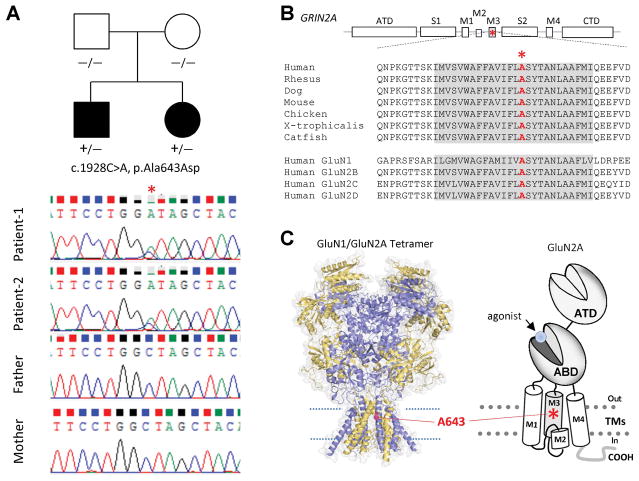
Figure 1. Identification of a GRIN2A mutation in two siblings born to healthy, non-consanguineous parents
(A) Family pedigree and whole-exome sequencing results of generations 1 and 2 confirming the presence in the patients, but not their parents, of the c.1928C>A mutation, which results in the amino acid change p.Ala643Asp. (B) Alignment of the GluN2A protein sequence across multiple species and of the GluN2A sequence with those of other NMDA subunits. The M3 transmembrane domain is highly conserved across vertebrate species and within the NMDA receptor family. The alanine residue (*) that is altered in the two patients is also highly conserved. ATD, amino terminal domain; S1 and S1, polypeptide chains that form the agonist-binding domain; M1, M2, M3, and M4, transmembrane domain helices 1, 3, and 4, and the membrane re-entrant loop 2; CTD, carboxy-terminal domain. (C) Schematic showing the fully formed GluN1/GluN2A receptor (left) and GluN2A monomer (right). GluN2A-Ala643 is located near the center of the channel pore (*).
Figure 2
Figure 2. GluN2A-A643D increases agonist potency
(A, B) Superimposed representative concentration-response TEVC traces for increasing concentrations of glutamate (A; in the presence of 30 μM glycine) and glycine (B; in the presence of 100 μM glutamate) for WT (wild-type) GluN2A- (black), and GluN2A-A643D- (red) expressing Xenopus laevis oocytes. (C, D) Fitted composite glutamate and glycine concentration-response curves for WT GluN2A- and GluN2A-A643D-expressing Xenopus laevis oocytes. The percentage of maximal current response is plotted as a function of agonist concentration in μM. TEVC recordings were conducted at a holding potential of −40 mV.
Figure 3
Figure 3. GluN2A-A643D decreases NMDAR sensitivity to endogenous negative modulators
(A, B) Fitted concentration-response curves for endogenous antagonists. The percentage of maximal response is plotted against antagonist concentration in μM. TEVC recordings were conducted at a holding potential of −60 mV for magnesium and −20 mV for zinc. (C) Percentage current response at pH 6.8 vs. 7.6 of WT GluN2A- and GluN2A-A643D-expressing Xenopus laevis oocytes. GluN2A-A643D-containing NMDARs show decreased current attenuation in the presence of increased proton concentrations (i.e. low pH).
Figure 4
Figure 4. GluN2A-A643D changes current response
(A) Current response was recorded on transiently transfected HEK293 cells by using the whole cell voltage patch clamp recordings. (B) The peak current amplitude to a maximal concentration of agonists normalized to cell capacitance was significant decreased in the GluN2A-A643D mutant receptors (*p = 0.004, Mann Whitney test).

References

    1. Yuan H, Low C-M, Moody OA, Jenkins A, Traynelis SF. Ionotropic GABA and Glutamate Receptor Mutations and Human Neurologic Diseases. Mol Pharmacol. 2015;88:203–217. - PMC - PubMed
    1. Monyer H, Burnashev N, Laurie DJ, Sakmann B, Seeburg PH. Developmental and regional expression in the rat brain and functional properties of four NMDA receptors. Neuron. 1994;12:529–540. - PubMed
    1. Dunah AW, Luo J, Wang YH, Yasuda RP, Wolfe BB. Subunit composition of N-methyl-D-aspartate receptors in the central nervous system that contain the NR2D subunit. Mol Pharmacol. 1998;53:429–437. - PubMed
    1. Dunah AW, Standaert DG. Subcellular segregation of distinct heteromeric NMDA glutamate receptors in the striatum. J Neurochem 2003. 2003;85:935–943. - PubMed
    1. Lopez de Armentia M, Sah P. Development and subunit composition of synaptic NMDA receptors in the amygdala: NR2B synapses in the adult central amygdala. J Neurosci. 2003;23:6876–6883. - PMC - PubMed

Publication types

MeSH terms

LinkOut - more resources