Randomized Controlled Trial
. 2020 Sep;25(10-11):1784-1795.
doi: 10.1177/1359105318769355. Epub 2018 Apr 12.

Positive affect skills may improve pain management in people with HIV

Affiliations
Randomized Controlled Trial

Positive affect skills may improve pain management in people with HIV

Elizabeth L Addington et al. J Health Psychol. 2020 Sep.

Abstract

Non-opioid pain management strategies are critically needed for people with HIV. We therefore conducted a secondary analysis of pain-related outcomes in a randomized controlled trial of a positive affect skills intervention for adults newly diagnosed with HIV (N = 159). Results suggest that, even if pain prevalence rises, positive affect skills may reduce pain interference and prevent increased use of opioid analgesics by people living with HIV. Future research should replicate and extend these findings by conducting trials that are specifically designed to target pain outcomes.

Keywords: HIV; affect; coping; intervention; pain.


Conflict of interest statement

Declaration of Conflicting Interests

The author(s) declared no potential conflicts of interest with respect to the research, authorship, and/or publication of this article.

Figures
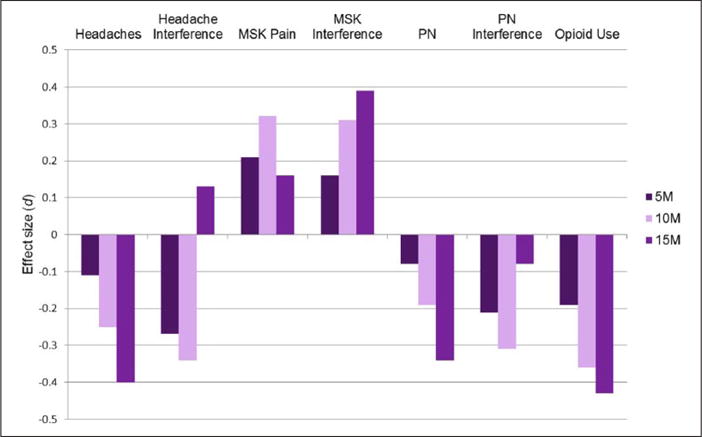
Figure 1
Figure 1
Effect sizes (d) for between-group differences in change pain-related outcomes from baseline to each assessment. M: months; MSK: musculoskeletal; PN: peripheral neuropathy. Positive effect sizes indicate that the intervention group showed greater increases (or small decreases) from baseline to that assessment point, while negative effect sizes indicate that the intervention group compared to the control group showed greater decreases (or smaller increases).
Figure 2
Figure 2
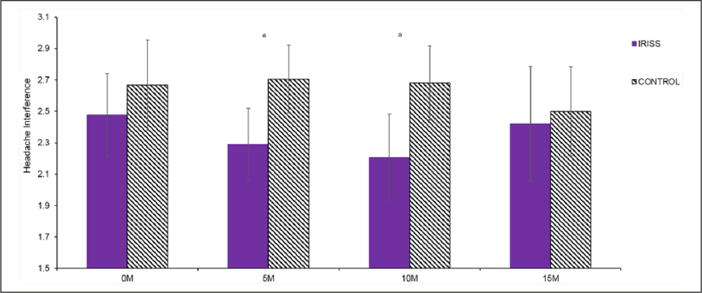
Change in headache-related interference over time. IRISS: Intervention for those Recently Informed of their Seropositive Status; M: months. aStatistically significant (p ≤ .05) between-group differences within each time point.
Figure 3
Figure 3
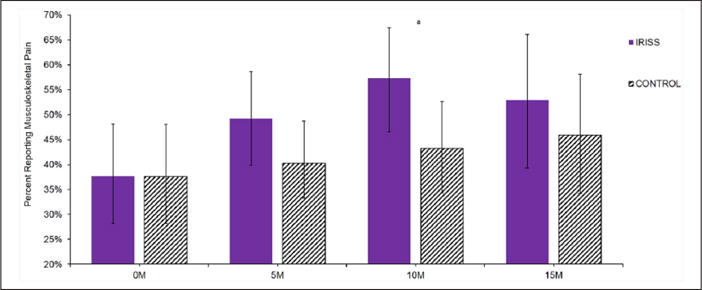
Change in prevalence of musculoskeletal pain over time. IRISS: Intervention for those Recently Informed of their Seropositive Status; M: months. aStatistically significant (p ≤ .05) between-group differences within each time point.
Figure 4
Figure 4
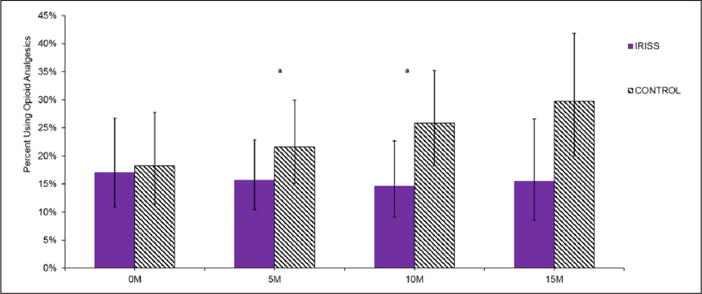
Change in prevalence of opioid analgesic use over time. IRISS: Intervention for those Recently Informed of their Seropositive Status; M: months. aStatistically significant (p ≤ .05) between-group differences within each time point.

References

    1. Becker WC, Gordon K, Jennifer Edelman E, et al. Trends in any and high-dose opioid analgesic receipt among aging patients with and without HIV. AIDS and Behavior. 2016;20(3):679–686. - PMC - PubMed
    1. Berges I-M, Seale G, Ostir GV. Positive affect and pain ratings in persons with stroke. Rehabilitation Psychology. 2011;56(1):52–57. - PMC - PubMed
    1. Borenstein M, Hedges LV, Higgins JPT, et al. Converting among effect sizes. In: Borenstein M, Hedges LV, Higgins JPT, Rothstein HR, editors. Introduction to Meta-analysis. Chichester, UK: John Wiley & Sons; 2009. pp. 45–49.
    1. Carrico AW, Moskowitz JT. Positive affect promotes engagement in care after HIV diagnosis. Health Psychology. 2014;33(7):686–689. - PMC - PubMed
    1. Carrico AW, Gómez W, Siever MD, et al. Pilot randomized controlled trial of an integrative intervention with methamphetamine-using men who have sex with men. Archives of Sexual Behavior. 2015;44(7):1861–1867. - PMC - PubMed

Publication types