


Lipid transfer proteins in the assembly of apoB-containing lipoproteins
- PMID: 29650752
- PMCID: PMC6027923
- DOI: 10.1194/jlr.R083451
Lipid transfer proteins in the assembly of apoB-containing lipoproteins
Abstract
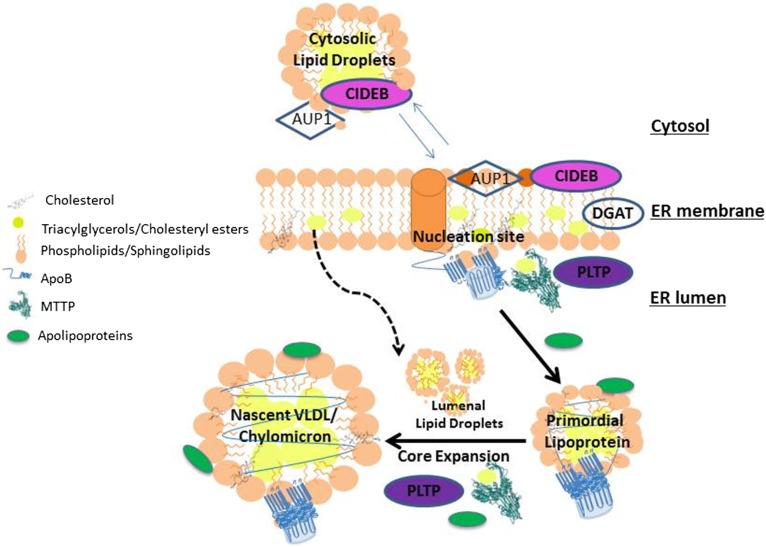
A better understanding of intracellular lipoprotein assembly may help identify proteins with important roles in lipid disorders. apoB-containing lipoproteins (B-lps) are macromolecular lipid and protein micelles that act as specialized transport vehicles for hydrophobic lipids. They are assembled predominantly in enterocytes and hepatocytes to transport dietary and endogenous fat, respectively, to different tissues. Assembly occurs in the endoplasmic reticulum (ER) and is dependent on lipid resynthesis in the ER and on a chaperone, namely, microsomal triglyceride transfer protein (MTTP). Precursors for lipid synthesis are obtained from extracellular sources and from cytoplasmic lipid droplets. MTTP is the major and essential lipid transfer protein that transfers phospholipids and triacylglycerols to nascent apoB for the assembly of lipoproteins. Assembly is aided by cell death-inducing DFF45-like effector B and by phospholipid transfer protein, which may facilitate additional deposition of triacylglycerols and phospholipids, respectively, to apoB. Here, we summarize the current understanding of the different steps in the assembly of B-lps and discuss the role of lipid transfer proteins in these steps to help identify new clinical targets for lipid-associated disorders, such as heart disease.
Keywords: MTP; apolipoprotein B.
Conflict of interest statement
The authors declare that they have no conflicts of interest with respect to the content of this article.
Figures
References
-
- Davidson N. O., and Shelness G. S.. 2000. Apolipoprotein B: mRNA editing, lipoprotein assembly, and presecretory degradation. Annu. Rev. Nutr. 20: 169–193. - PubMed
-
- Hussain M. M., Kancha R. K., Zhou Z., Luchoomun J., Zu H., and Bakillah A.. 1996. Chylomicron assembly and catabolism: role of apolipoproteins and receptors. Biochim. Biophys. Acta. 1300: 151–170. - PubMed
-
- Hussain M. M., Shi J., and Dreizen P.. 2003. Microsomal triglyceride transfer protein and its role in apolipoprotein B-lipoprotein assembly. J. Lipid Res. 44: 22–32. - PubMed
-
- Walsh M. T., and Hussain M. M.. 2017. Targeting microsomal triglyceride transfer protein and lipoprotein assembly to treat homozygous familial hypercholesterolemia. Crit. Rev. Clin. Lab. Sci. 54: 26–48. - PubMed
-
- Olofsson S. O., and Boren J.. 2005. Apolipoprotein B: a clinically important apolipoprotein which assembles atherogenic lipoproteins and promotes the development of atherosclerosis. J. Intern. Med. 258: 395–410. - PubMed
Publication types
MeSH terms
Substances
Grants and funding
LinkOut - more resources
Full Text Sources
Other Literature Sources
Miscellaneous
