


Managing diabetic foot infections: a survey of Australasian infectious diseases clinicians
- PMID: 29651304
- PMCID: PMC5894166
- DOI: 10.1186/s13047-018-0256-3
Managing diabetic foot infections: a survey of Australasian infectious diseases clinicians
Abstract
Background: Diabetic foot infections (DFI) present a major morbidity, mortality and economic challenge for the tertiary health sector. However, lack of high quality evidence for specific treatment regimens for patients with DFIs may result in inconsistent management. This study aimed to identify DFI caseload proportion and patterns of clinical practice of Infectious Diseases (ID) Physicians and Trainees within Australia and New Zealand.
Methods: A cross-sectional online survey of Australian and New Zealand ID Physicians and Trainees was undertaken, to estimate the overall ID caseload devoted to patients with DFIs and assess clinicians' management practices of patients with DFIs.
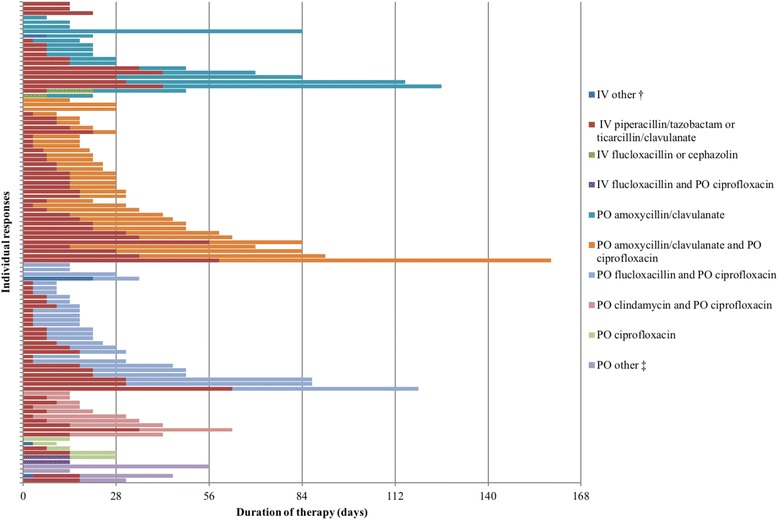
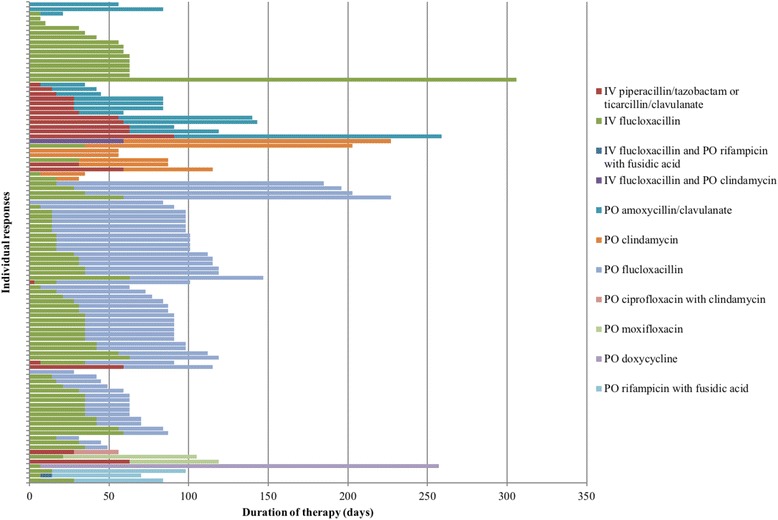
Results: Approximately 28% (142/499) of ID Physicians and Trainees from Australia and New Zealand responded to the survey. DFI made up 19.2% of all ID consultations. Involvement in multidisciplinary teams (MDT) was common as 77.5% (93/120) of those responding indicated their patients had access to an inpatient or outpatient MDT. Significant heterogeneity of antimicrobial treatments was reported, with 82 unique treatment regimens used by 102 respondents in one scenario and 76 unique treatment regimens used by 101 respondents in the second scenario. The duration of therapy and the choice of antibiotics for microorganisms isolated from superficial swabs also varied widely.
Conclusions: Patients with DFIs represent a significant proportion of an ID clinician's caseload. This should be reflected in the ID training program. Large heterogeneity in practice between clinicians reflects a lack of evidence from well-designed clinical trials for patients with DFI and highlights the need for management guidelines informed by future trials.
Keywords: Australia; Diabetes mellitus; Diabetic foot infection; Infectious diseases; New Zealand; Physician.
Conflict of interest statement
This project was conducted as a quality initiative benchmarking current practice against the national therapeutic guidelines. Participants were aware of the nature of the project. Case vignettes were written specifically for this project and contained no real patient information. Ethical approval was not required for this survey of health professionals as it was assessed to have no ethical risk.Not applicable.The authors declare that they have no competing interests.Springer Nature remains neutral with regard to jurisdictional claims in published maps and institutional affiliations.
Figures
References
-
- Barr E, Magliano D, Zimmet P, Polkinghorne K, Atkins R, Dunstan D, Murray S, Shaw J. The Australian diabetes obesity and lifestyle study (AusDiab) 2005. Melbourne: International Diabetes Institute; 2006.
-
- Unwin N. Epidemiology of lower extremity amputation in centres in Europe, North America and East Asia. The Global Lower Extremity Amputation Study Group. Br J Surg. 2000;87(3):328–37. - PubMed
-
- National Association of Diabetes Centres (NADC): Australian National Diabetes Audit - Australian Quality Clinical Audit Final Report 2015. Australian Government; 2015. http://www.health.gov.au/internet/main/publishing.nsf/content/pq-diabete.... Accessed on 31 Oct 2017.
MeSH terms
Substances
LinkOut - more resources
Full Text Sources
Other Literature Sources
Medical
