


The quest for a non-vector psyllid: Natural variation in acquisition and transmission of the huanglongbing pathogen 'Candidatus Liberibacter asiaticus' by Asian citrus psyllid isofemale lines
- PMID: 29652934
- PMCID: PMC5898736
- DOI: 10.1371/journal.pone.0195804
The quest for a non-vector psyllid: Natural variation in acquisition and transmission of the huanglongbing pathogen 'Candidatus Liberibacter asiaticus' by Asian citrus psyllid isofemale lines
Abstract
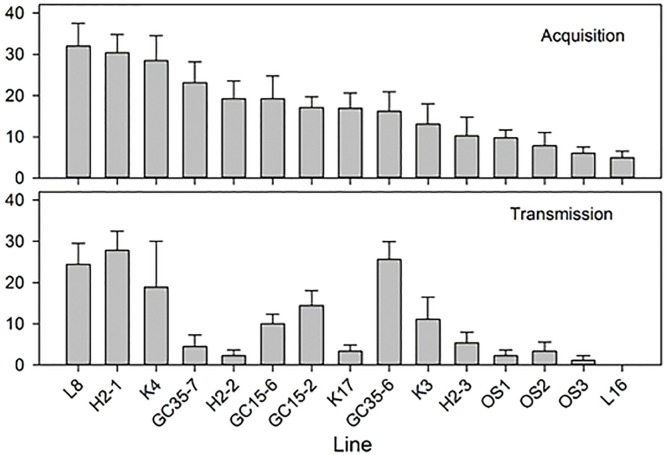
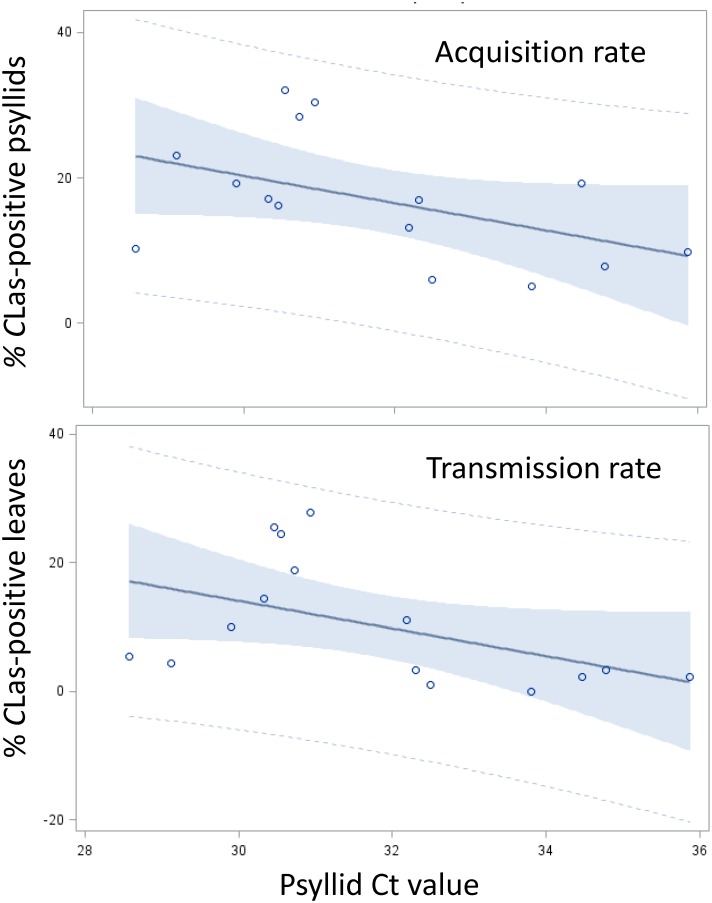
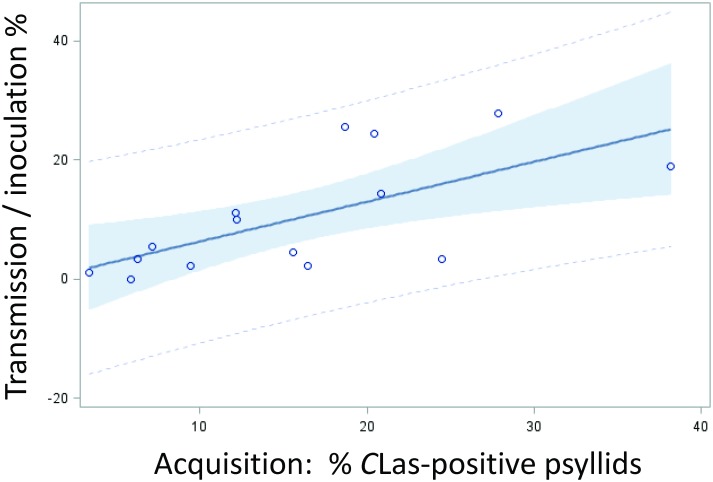
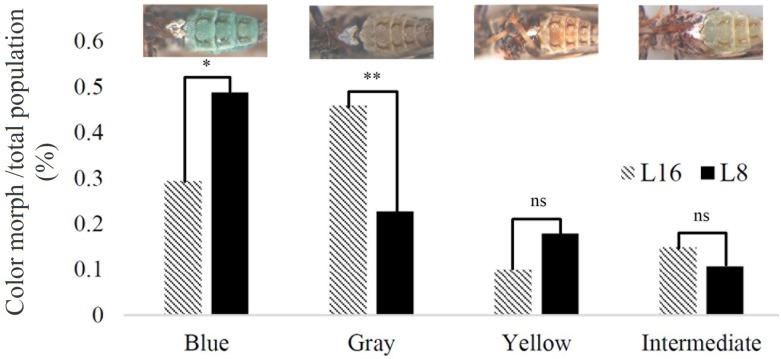
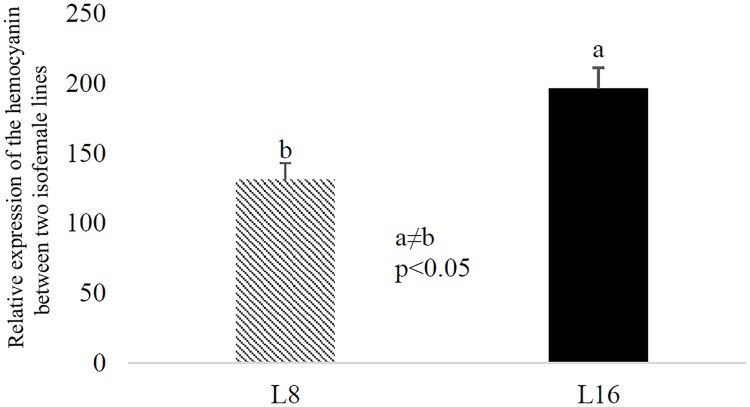
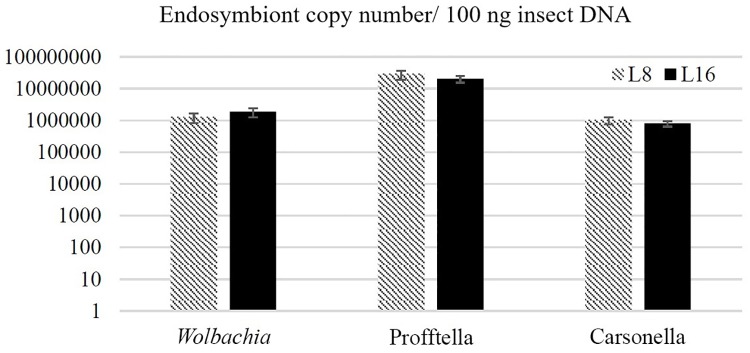
Genetic variability in insect vectors is valuable to study vector competence determinants and to select non-vector populations that may help reduce the spread of vector-borne pathogens. We collected and tested vector competency of 15 isofemale lines of Asian citrus psyllid, Diaphorina citri, vector of 'Candidatus Liberibacter asiaticus' (CLas). CLas is associated with huanglongbing (citrus greening), the most serious citrus disease worldwide. D. citri adults were collected from orange jasmine (Murraya paniculata) hedges in Florida, and individual pairs (females and males) were caged on healthy Murraya plants for egg laying. The progeny from each pair that tested CLas-negative by qPCR were maintained on Murraya plants and considered an isofemale line. Six acquisition tests on D. citri adults that were reared as nymphs on CLas-infected citrus, from various generations of each line, were conducted to assess their acquisition rates (percentage of qPCR-positive adults). Three lines with mean acquisition rates of 28 to 32%, were classified as 'good' acquirers and three other lines were classified as 'poor' acquirers, with only 5 to 8% acquisition rates. All lines were further tested for their ability to inoculate CLas by confining CLas-exposed psyllids for one week onto healthy citrus leaves (6-10 adults/leaf/week), and testing the leaves for CLas by qPCR. Mean inoculation rates were 19 to 28% for the three good acquirer lines and 0 to 3% for the three poor acquirer lines. Statistical analyses indicated positive correlations between CLas acquisition and inoculation rates, as well as between CLas titer in the psyllids and CLas acquisition or inoculation rates. Phenotypic and molecular characterization of one of the good and one of the poor acquirer lines revealed differences between them in color morphs and hemocyanin expression, but not the composition of bacterial endosymbionts. Understanding the genetic architecture of CLas transmission will enable the development of new tools for combating this devastating citrus disease.
Conflict of interest statement
Figures
References
-
- Hall DG, Richardson ML, Ammar E-D, Halbert SE. Asian citrus psyllid, Diaphorina citri, vector of citrus huanglongbing disease. Entomologia Experimentalis Et Applicata. 2012;146(2):207–23.
-
- Gottwald TR. Current epidemiological understanding of citrus Huanglongbing. Annu Rev Phytopathol. 2010;48:119–39. doi: 10.1146/annurev-phyto-073009-114418 . - DOI - PubMed
-
- da Graca JV, Douhan GW, Halbert SE, Keremane ML, Lee RF, Vidalakis G, et al. Huanglongbing: An overview of a complex pathosystem ravaging the world’s citrus. J Integr Plant Biol. 2016;58(4):373–87. doi: 10.1111/jipb.12437 . - DOI - PubMed
-
- Wang N, Stelinski LL, Pelz-Stelinski KS, Graham JH, Zhang Y. Tale of the Huanglongbing Disease Pyramid in the Context of the Citrus Microbiome. Phytopathology. 2017;107(4):380–7. Epub 2017/01/18. doi: 10.1094/PHYTO-12-16-0426-RVW . - DOI - PubMed
-
- Wang N, Pierson EA, Setubal JC, Xu J, Levy JG, Zhang Y, et al. The "Candidatus Liberibacter"-Host Interface: Insights into Pathogenesis Mechanisms and Disease Control. Annu Rev Phytopathol. 2017;55:451–82. Epub 2017/06/24. doi: 10.1146/annurev-phyto-080516-035513 . - DOI - PubMed
Publication types
MeSH terms
LinkOut - more resources
Full Text Sources
Other Literature Sources
