


Amiodarone-induced reversible and irreversible hepatotoxicity: two case reports
- PMID: 29653592
- PMCID: PMC5899395
- DOI: 10.1186/s13256-018-1629-8
Amiodarone-induced reversible and irreversible hepatotoxicity: two case reports
Abstract
Background: Amiodarone is a highly effective treatment for supraventricular and ventricular tachyarrhythmia; however, it could be associated with several serious adverse effects, including liver injury.
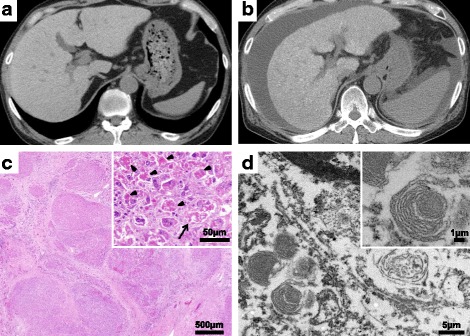
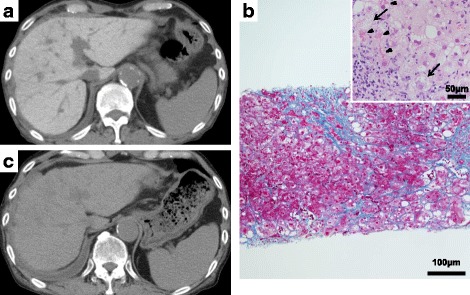
Case presentation: We report the clinical and histological features of two contrasting Japanese patients with amiodarone-induced reversible and irreversible hepatotoxicity. One patient with amiodarone-induced irreversible hepatotoxicity showed liver cirrhosis during treatment with amiodarone and died of hepatic failure; the other patient, who had reversible hepatotoxicity, showed a reversible course of liver function and imaging after discontinuation of amiodarone.
Conclusions: We emphasize the importance of close monitoring of liver enzymes and evaluation of liver computed tomographic imaging as well as liver biopsy during treatment with amiodarone, and discontinuation should be considered when amiodarone-induced hepatotoxicity is suspected.
Keywords: Amiodarone; Hepatotoxicity.
Conflict of interest statement
Ethics approval and consent to participate
The publication of this case report was approved by the clinical research ethics committees of Kanazawa University Hospital.
Consent for publication
Written informed consent was obtained from the patients or their relatives for publication of this case report and any accompanying images. A copy of the written consents is available for review by the Editor-in-Chief of this journal.
Competing interests
The authors declare that they have no competing interests.
Publisher’s Note
Springer Nature remains neutral with regard to jurisdictional claims in published maps and institutional affiliations.
Figures
References
Publication types
MeSH terms
Substances
LinkOut - more resources
Full Text Sources
Other Literature Sources
Medical
