Review
. 2018 Apr 13;376(3):15.
doi: 10.1007/s41061-018-0193-4.

Sulfur-Based Ylides in Transition-Metal-Catalysed Processes

Affiliations
Review

Sulfur-Based Ylides in Transition-Metal-Catalysed Processes

James D Neuhaus et al. Top Curr Chem (Cham). .

Abstract

Traditionally employed in the synthesis of small ring systems and rearrangement chemistry, sulfur-based ylides occupy a unique position in the toolbox of the synthetic organic chemist. In recent years a number of pioneering researchers have looked to expand the application of these unorthodox reagents through the use of transition metal catalysis. The strength and flexibility of such a combination have been shown to be of key importance in developing powerful novel methodologies. This chapter summarises recent developments in transition metal-catalysed sulfonium/sulfoxonium ylide reactions, as well as providing a historical perspective. In overviewing the successes in this area, the authors hope to encourage others into this growing field.

Keywords: Asymmetric catalysis; Historical perspective; One-carbon synthon; Recent developments; Sulfonium ylides; Sulfoxonium ylides; Transition metal catalysis.


Figures
Scheme 1
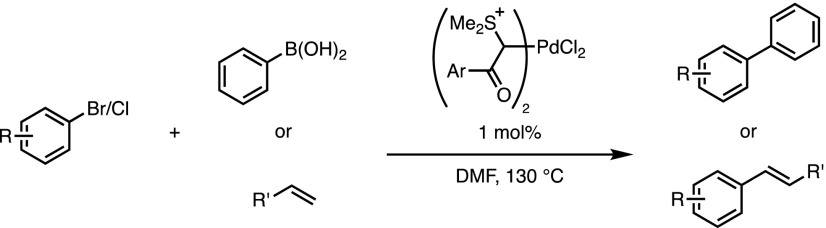
Scheme 1
Sulfonium ylides complexes as cross-coupling catalysts. DMF Dimethylformamide

Scheme 2
Scheme 2
The first Cu-promoted formal (4 + 1) cycloaddition
Fig. 1
Fig. 1
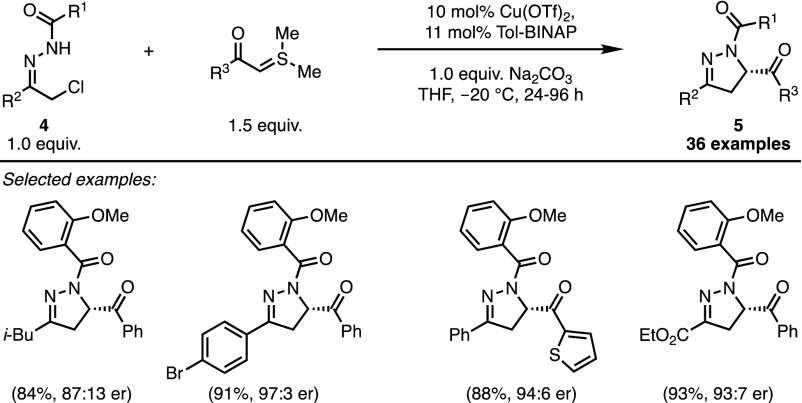
Chiral Lewis acid-promoted, formal (4 + 1) cycloaddition
Scheme 3
Scheme 3
Scope of dihydropyrazole formation
Scheme 4
Scheme 4
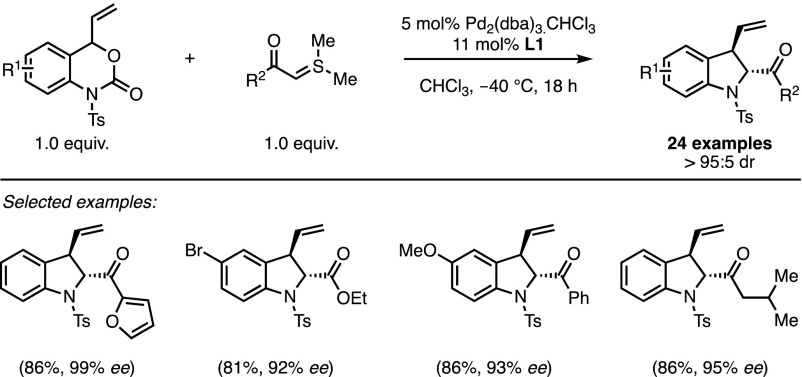
Palladium-catalysed decarboxylative (4 + 1) for the asymmetric synthesis of indolines
Fig. 2
Fig. 2
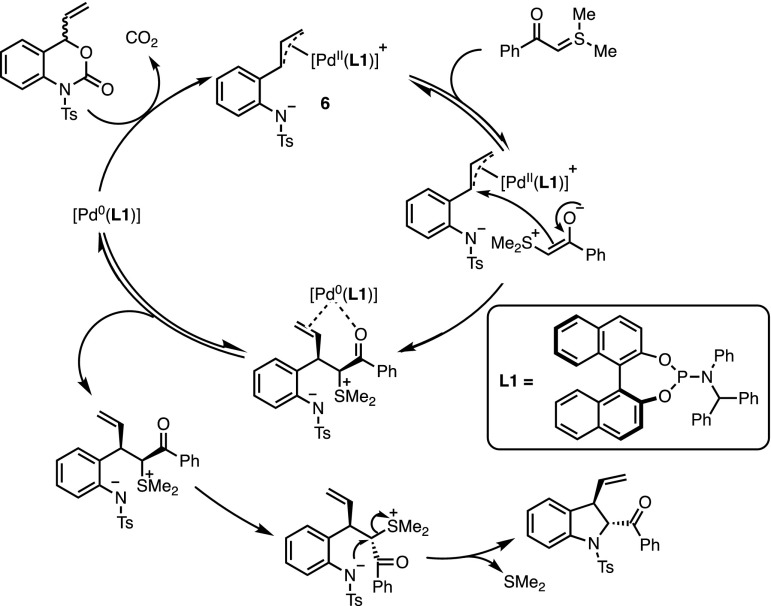
The mechanism of Pd-catalysed decarboxylative formal (4 + 1) cycloaddition
Scheme 5
Scheme 5
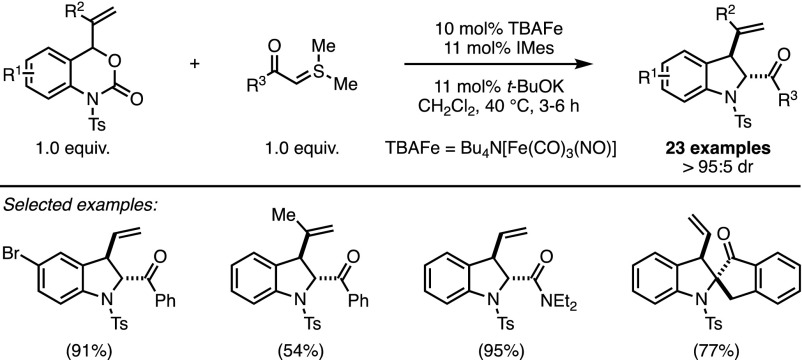
Iron-catalysed decarboxylative formal (4 + 1) cycloadditions. TBAFe Bu4N[Fe(CO)3(NO)]
Scheme 6
Scheme 6
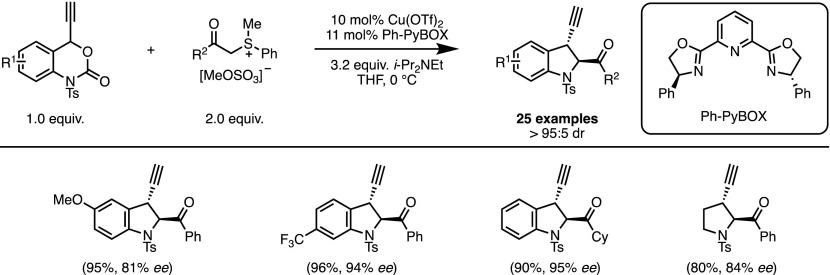
Copper-catalysed decarboxylative formal (4 + 1) cycloadditions. THF Tetrahydrofuran
Fig. 3
Fig. 3
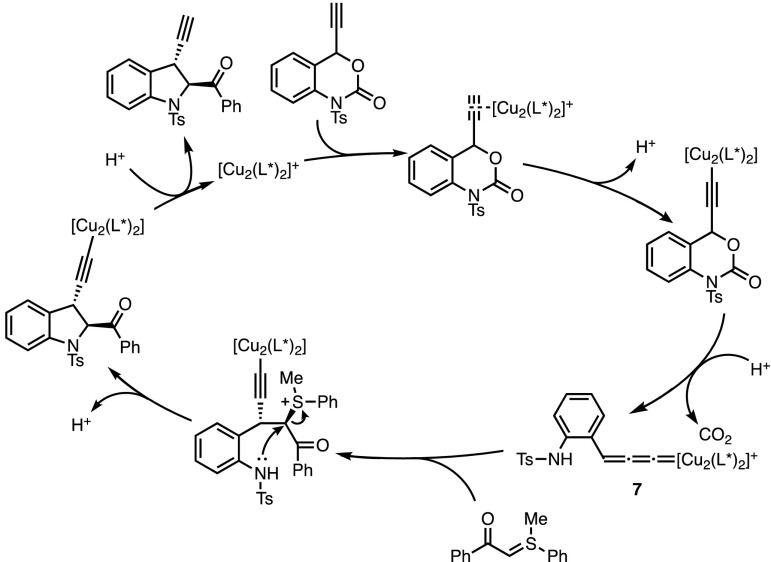
Copper-allenylidene intermediates in decarboxylative formal (4 + 1) cycloadditions
Scheme 7
Scheme 7
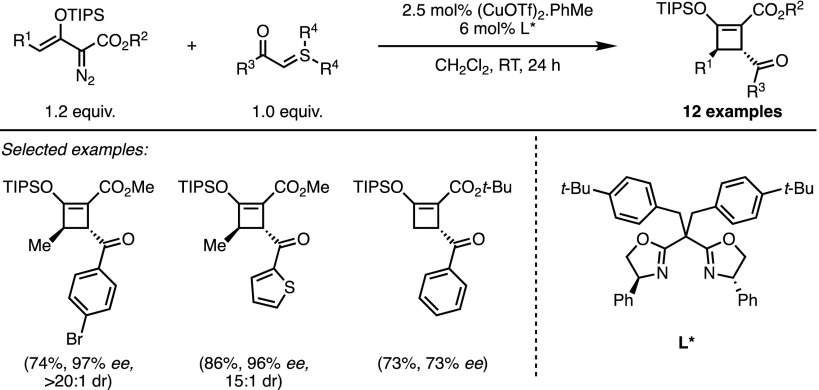
Doyle’s Cu-catalysed asymmetric formal (3 + 1) cycloaddition. RT Room temperature
Fig. 4
Fig. 4
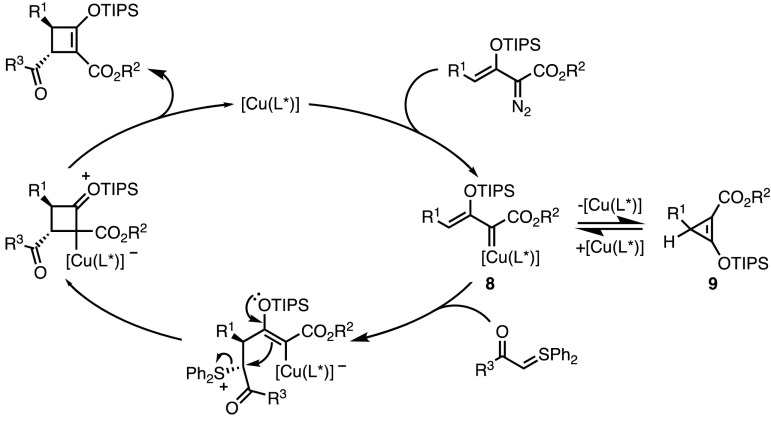
Mechanism of the formal (3 + 1) cycloaddition involving sulfonium ylides
Scheme 8
Scheme 8
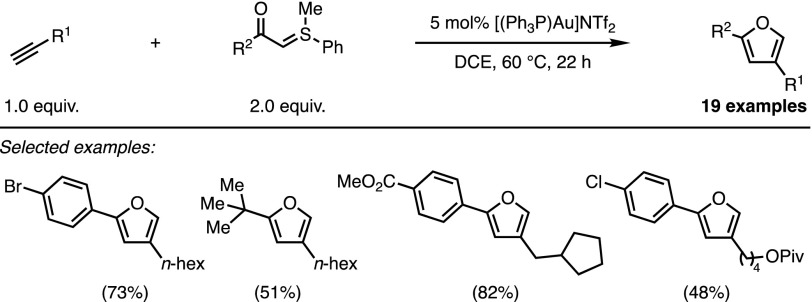
Skrydstrup’s intermolecular furan synthesis. DCE 1,2-Dichloroethane
Scheme 9
Scheme 9
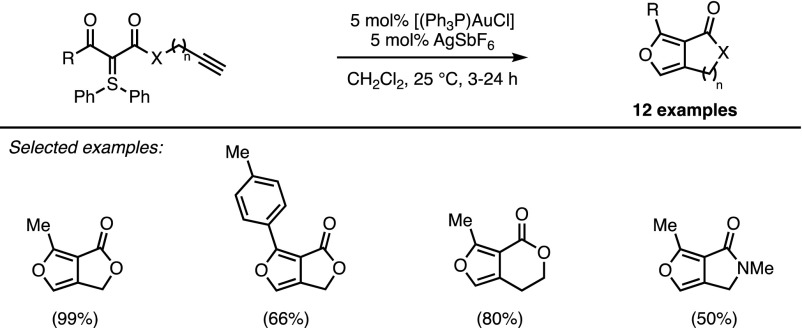
Maulide’s intramolecular furan synthesis
Fig. 5
Fig. 5
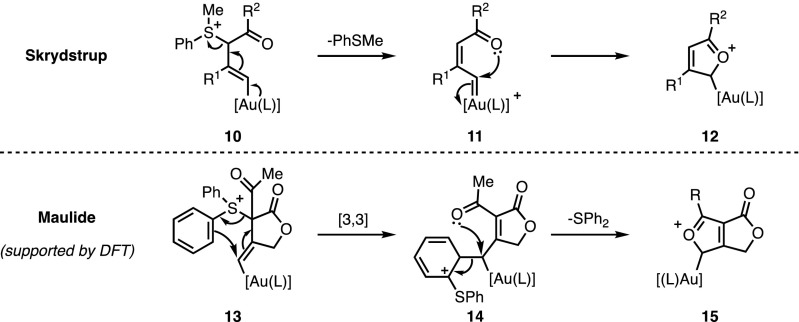
Proposed mechanisms for furan formation
Scheme 10
Scheme 10
Intermolecular synthesis of trisubstituted furans
Scheme 11
Scheme 11
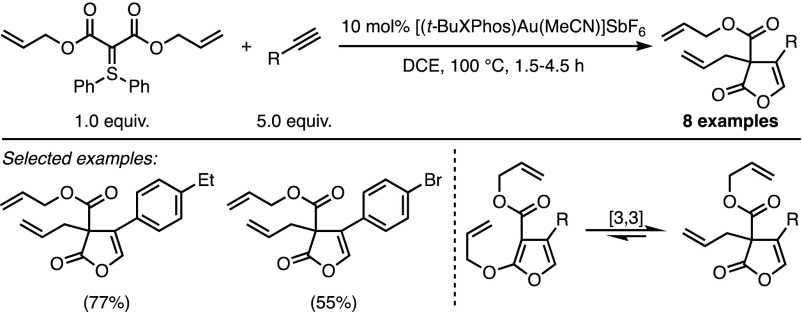
Maulide’s intermolecular furanone formation
Scheme 12
Scheme 12
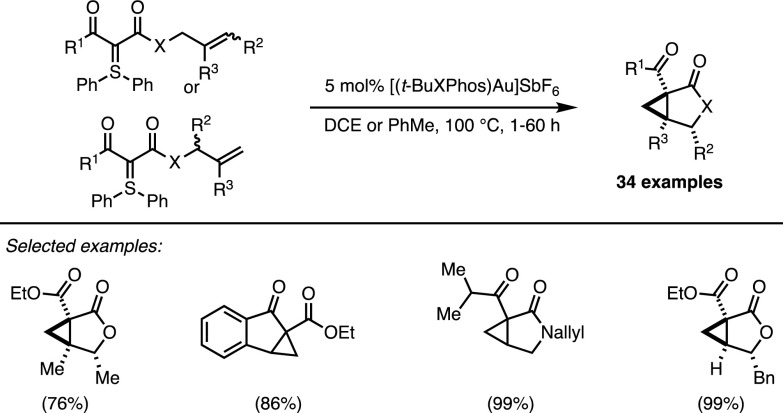
Maulide’s Au-promoted intramolecular cyclopropanation
Scheme 13
Scheme 13
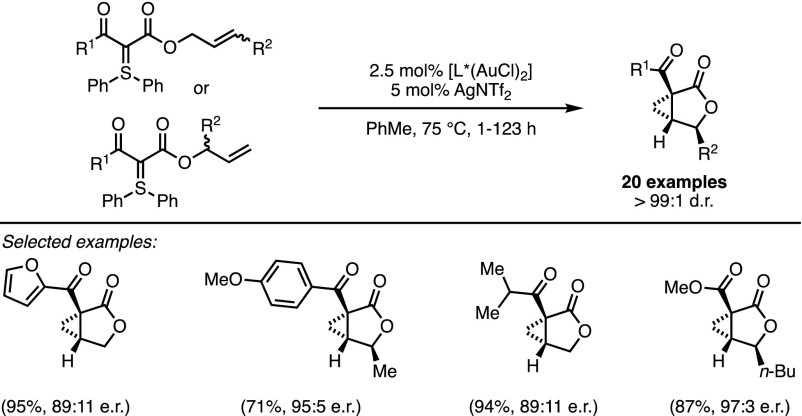
Domino deracemisation/cyclopropanation of sulfonium ylides
Fig. 6
Fig. 6
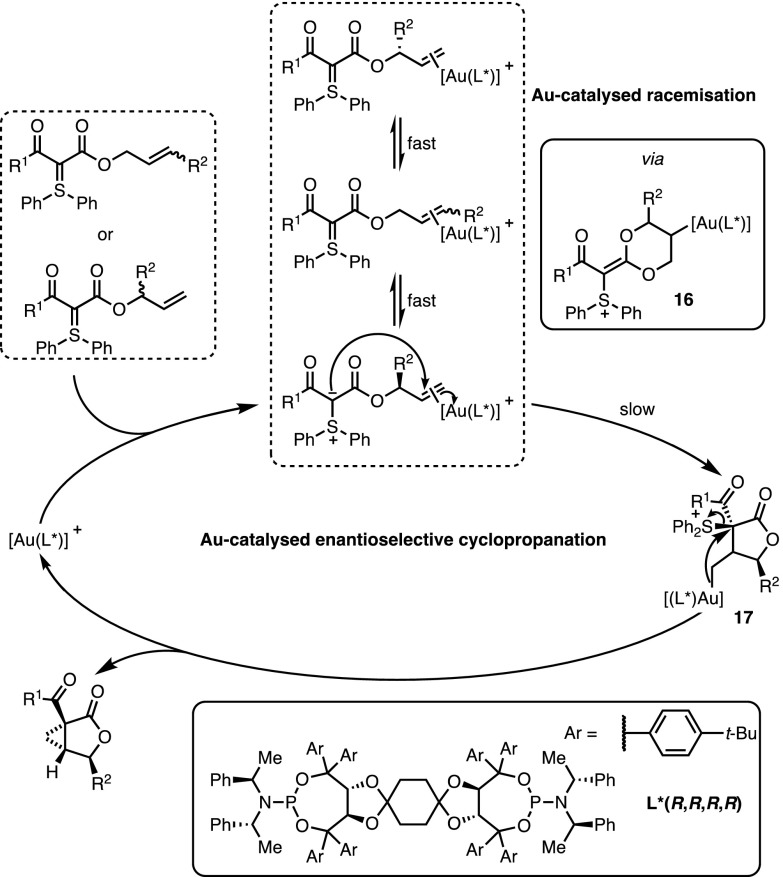
Mechanistic rationale behind the deracemisation/cyclopropanation cascade
Scheme 14
Scheme 14
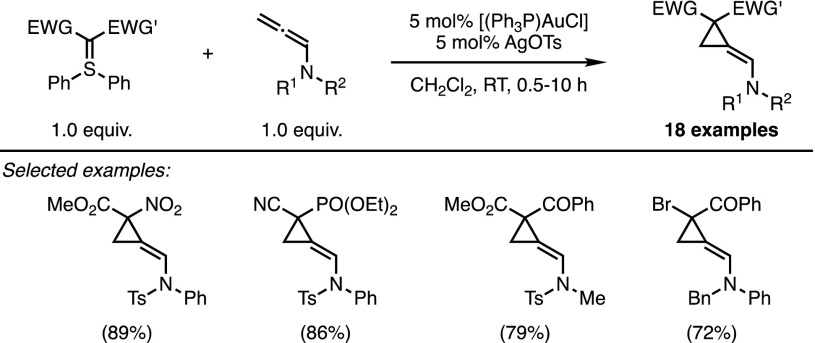
Intermolecular cyclopropanation of allenamides
Scheme 15
Scheme 15
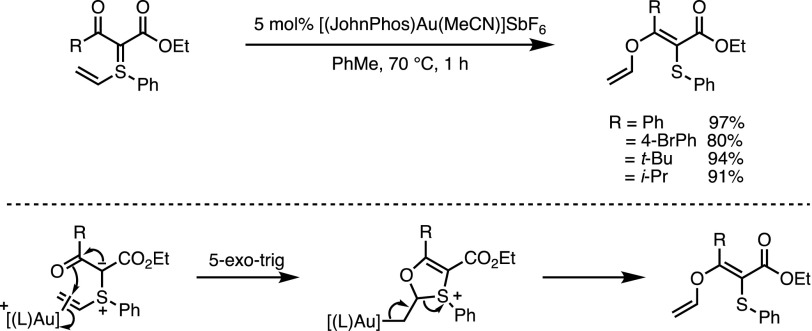
Gold-catalysed [1,4] vinyl migration
Scheme 16
Scheme 16
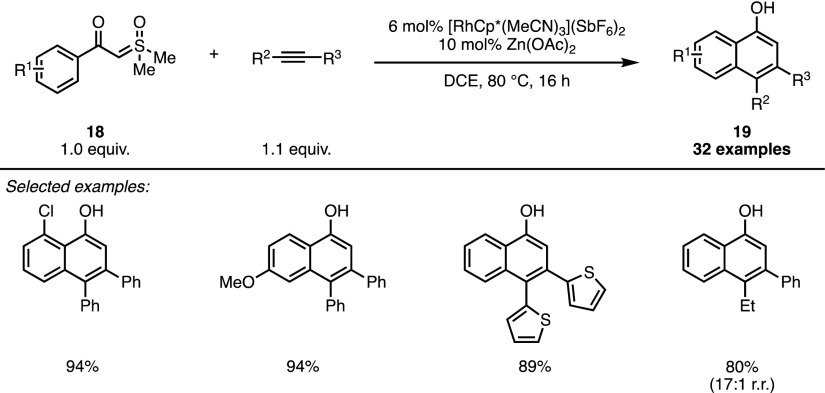
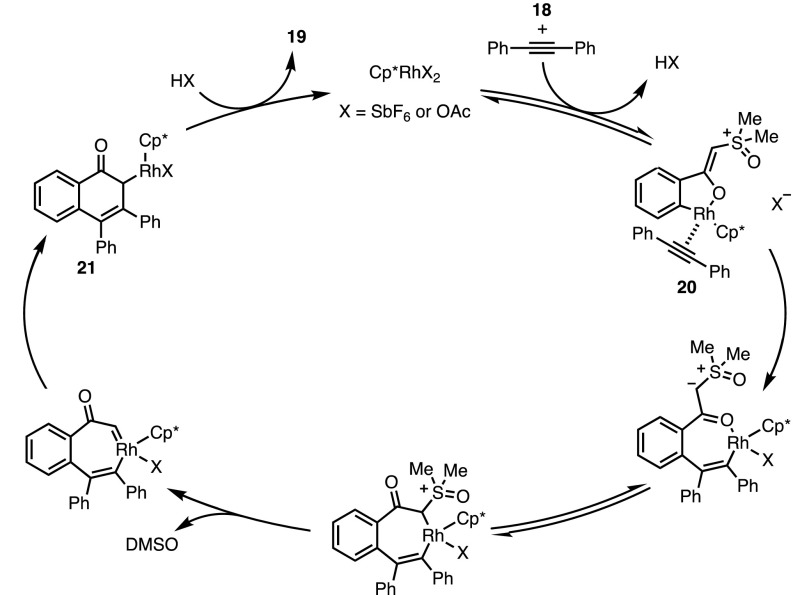
Sulfoxonium ylides as precursors for the Rh-catalysed formation of napthols
Fig. 7
Fig. 7
Proposed mechanism of naphthol formation. DMSO Dimethyl sulfoxide
Scheme 17
Scheme 17
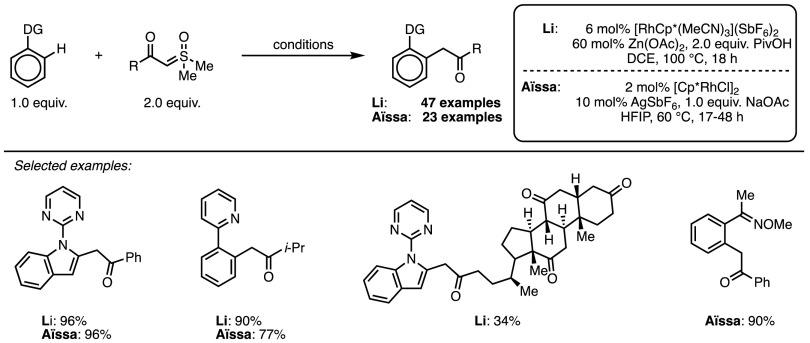
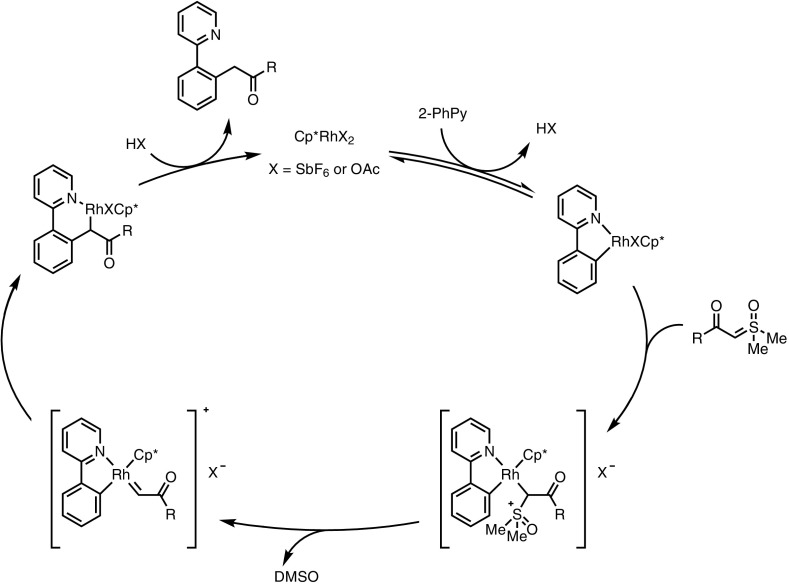
Simultaneously disclosed Rh-catalysed formal C–H insertion reactions. HFIP Hexafluoroisopropanol
Fig. 8
Fig. 8
Mechanism of formal C–H insertion of sulfoxonium ylides
Scheme 18
Scheme 18
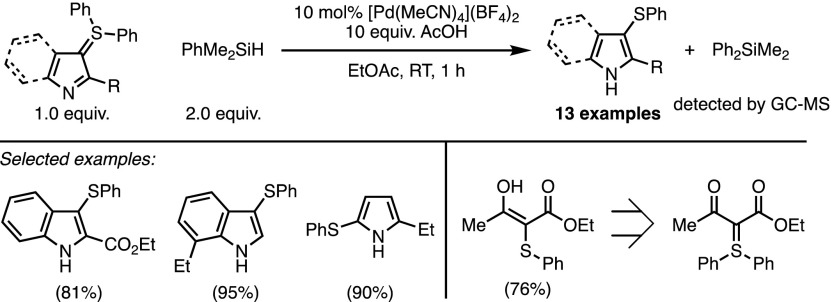
Pd-catalysed sulfur-to-silicon group transfer. GC-MS Gas chromatography–mass spectrometry
Scheme 19
Scheme 19
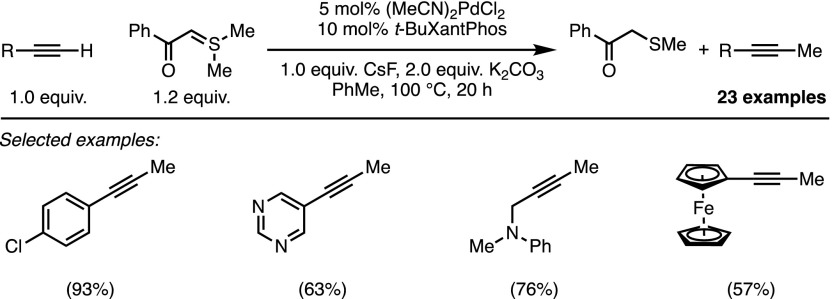
C–S bond activation for the methylation of terminal alkynes
Scheme 20
Scheme 20
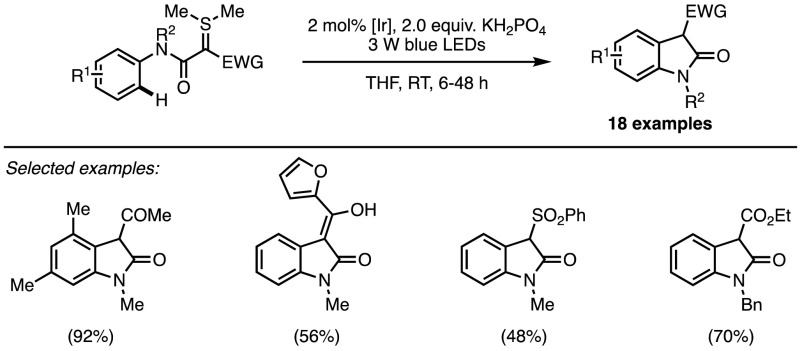
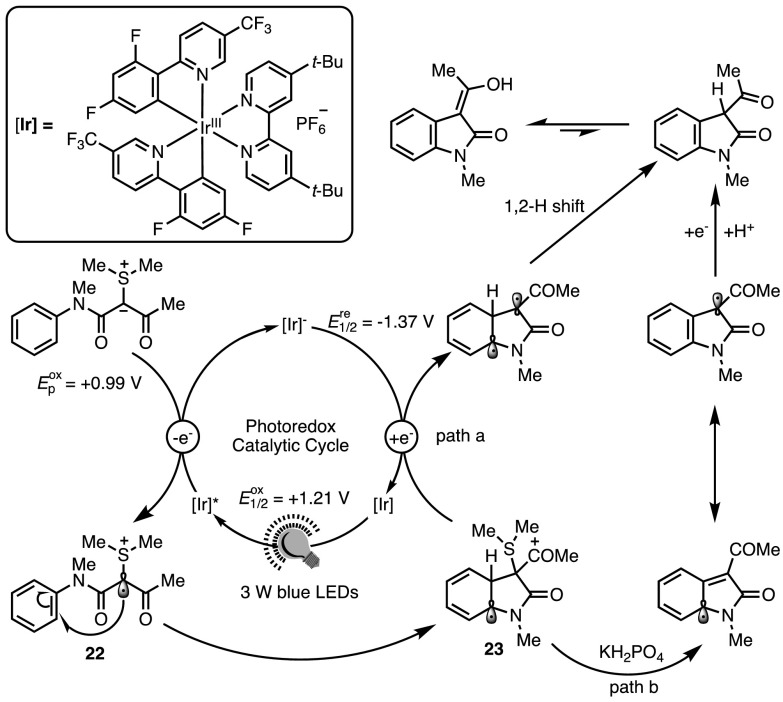
Xiao’s photocatalytic insertion of sulfonium ylides into C–H bonds for oxindole synthesis [48]. LEDs Light-emitting diodes
Fig. 9
Fig. 9
Mechanism of the photocatalysed C–H insertion. LEDs Light-emitting diodes
Scheme 21
Scheme 21
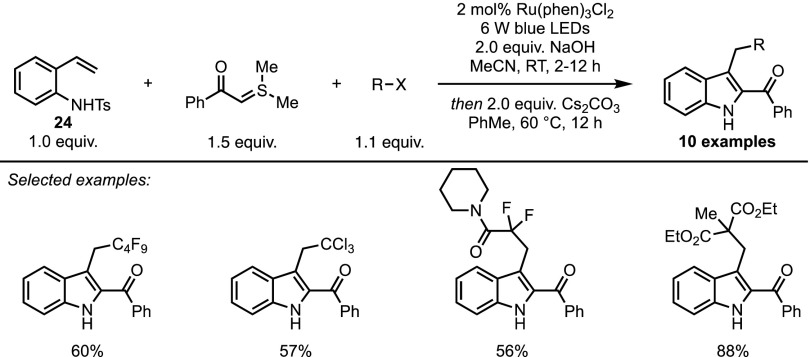
Photocatalytic synthesis of 2,3-disubstituted indoles
Fig. 10
Fig. 10
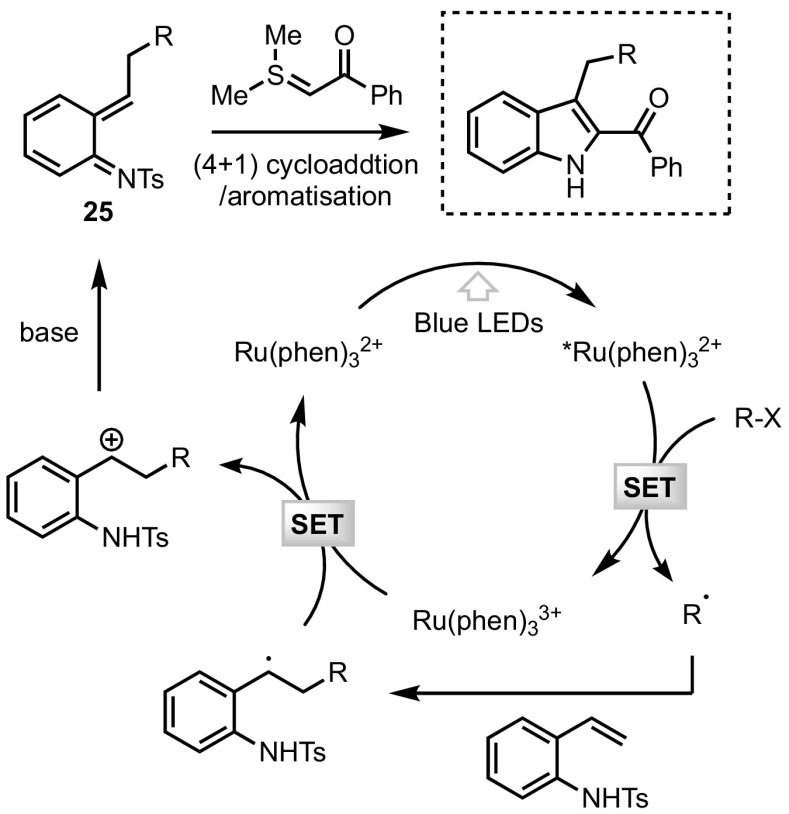
Mechanism of the photocatalysed synthesis of 2,3-disubstituted indoles
Scheme 22
Scheme 22
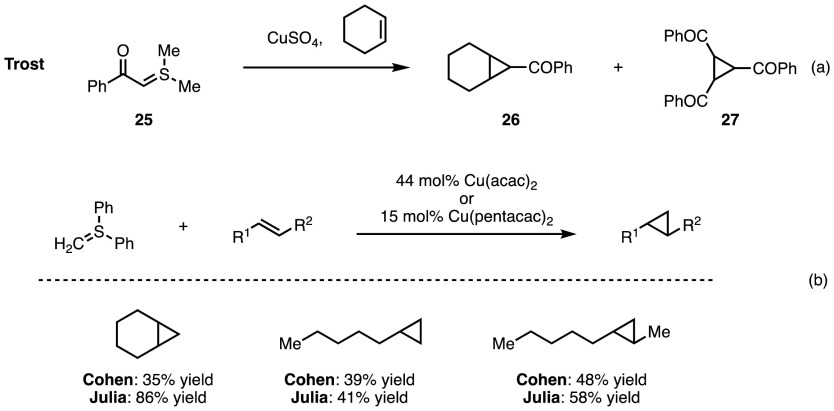
Initial investigations towards the use of sulfonium ylides as diazo surrogates
Scheme 23
Scheme 23
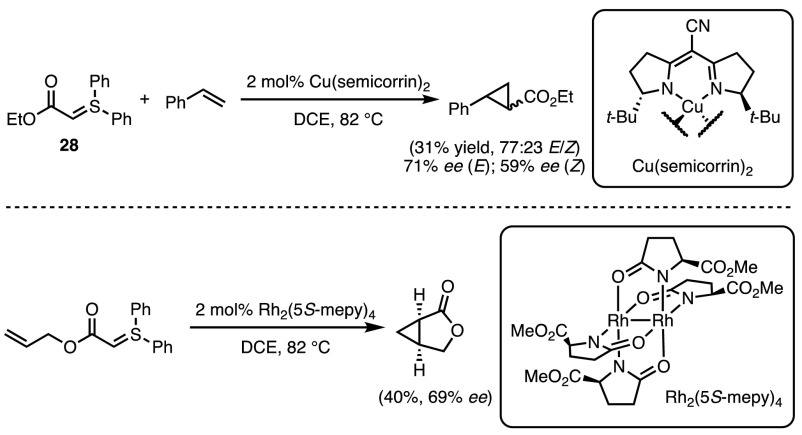
Asymmetric metal-catalysed cyclopropanations
Scheme 24
Scheme 24
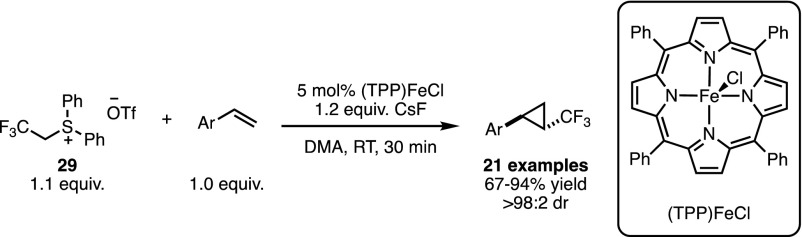
Iron-catalysed carbenoid transfer to generate CF3-substituted cyclopropanes. DMA Dimethylacetamide
Scheme 25
Scheme 25
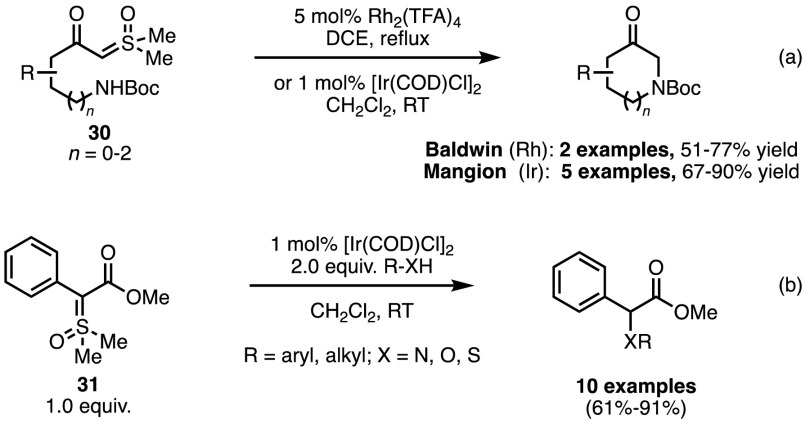
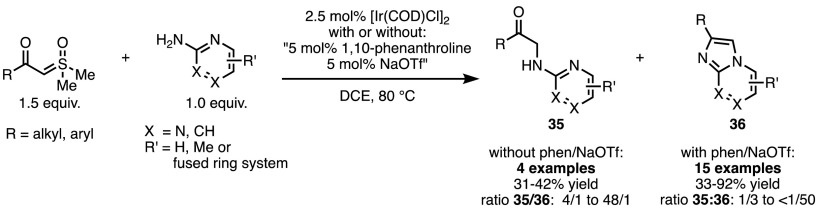
Rhodium- and iridium-catalysed X–H bond insertion reactions
Scheme 26
Scheme 26
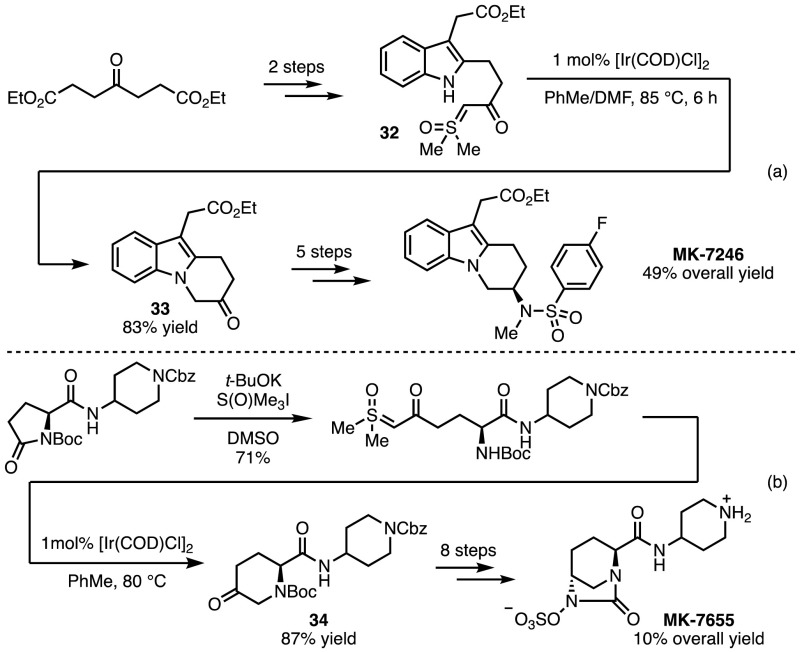
Iridium-catalysed N–H insertion in the synthesis of biologically relevant targets. DMF Dimethylformamide
Scheme 27
Scheme 27
Ligand effects in X–H insertion reactions
Scheme 28
Scheme 28
Hopmann’s N–H insertion for indole synthesis. p-TSA p-Toluenesulfonic acid
Scheme 29
Scheme 29
Limitations in C–H insertion reactions
Scheme 30
Scheme 30
Iridium-catalysed C–H insertion for pyrrole synthesis
Scheme 31
Scheme 31
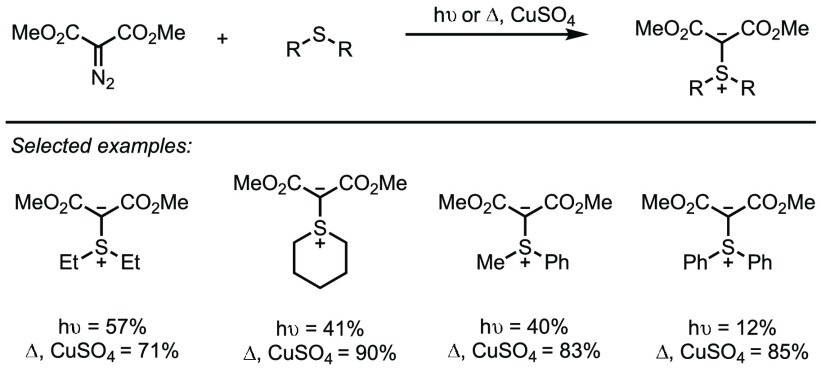
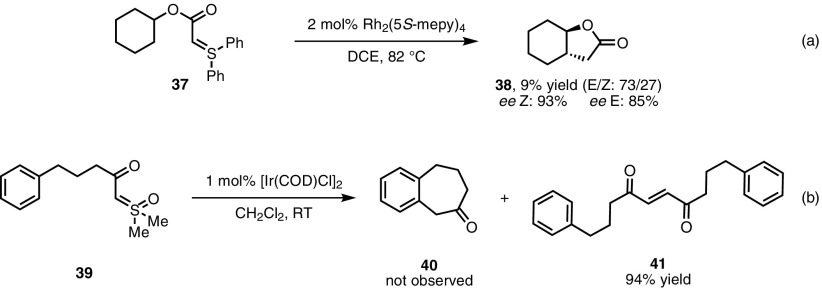
Thermal versus photochemical formation of sulfonium ylides
Fig. 11
Fig. 11
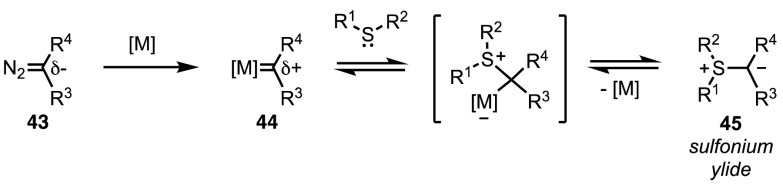
General mechanism for the metal-catalysed synthesis of sulfonium ylides from diazo compounds
Fig. 12
Fig. 12
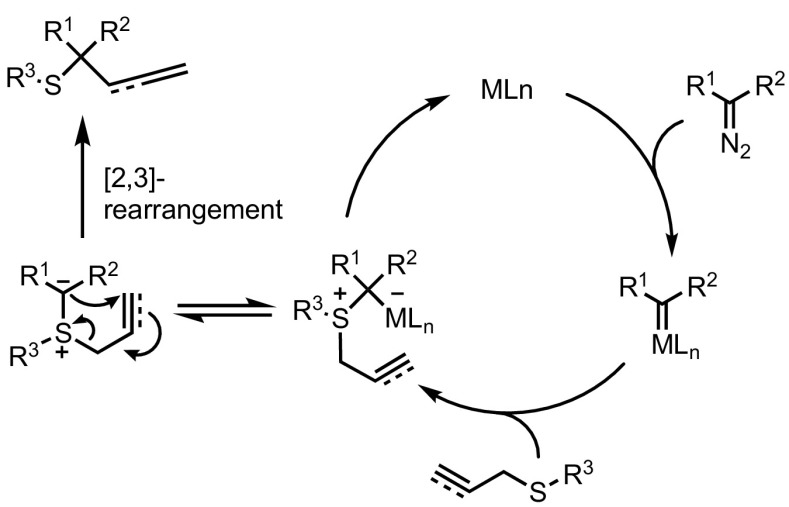
General proposed mechanism for the Doyle–Kirmse reaction
Scheme 32
Scheme 32
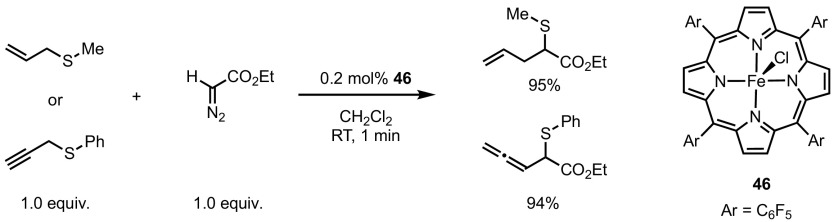
Iron-catalysed Doyle–Kirmse reaction of allyl and propargylsulfides
Scheme 33
Scheme 33
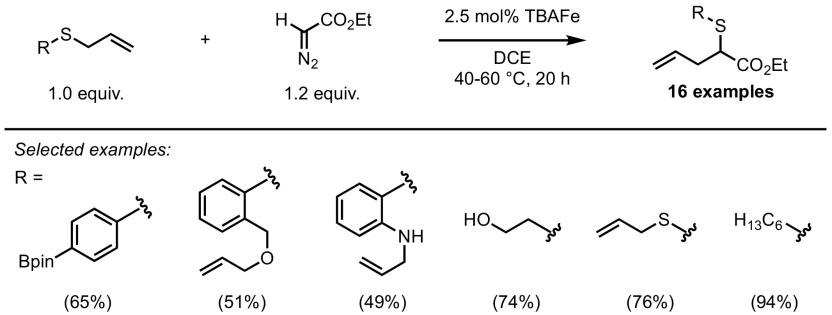
Highly chemoselective TBAFe-catalysed Doyle–Kirmse reaction
Scheme 34
Scheme 34
Rhodium-catalysed thia Sommelet–Hauser rearrangement of benzylsulfides
Scheme 35
Scheme 35
Wang’s modified Gassman oxindole synthesis
Scheme 36
Scheme 36
Enantioselective Doyle–Kirmse reaction by Uemura and co-workers
Fig. 13
Fig. 13
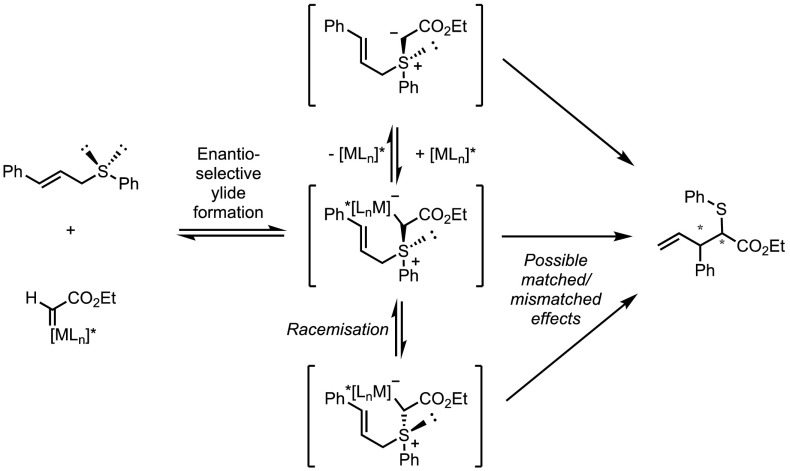
Plausible reaction pathways in enantioselective metal-catalysed Doyle–Kirmse reactions
Scheme 37
Scheme 37
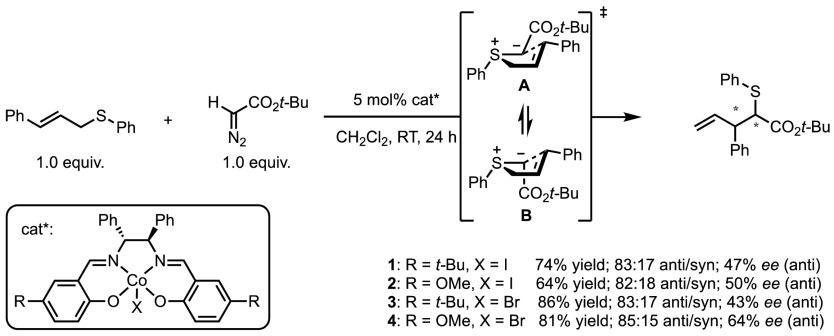
Cobalt salen-catalysed Doyle–Kirmse reaction
Scheme 38
Scheme 38
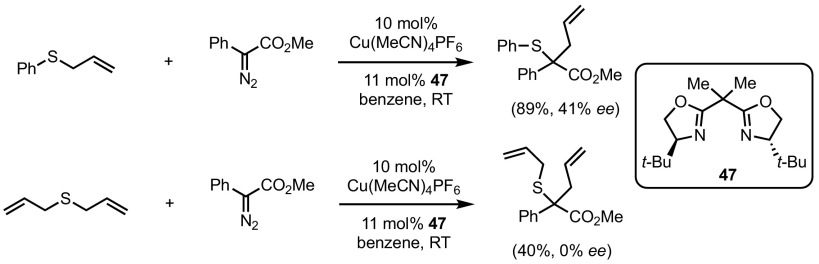
Difference in enantio-induction starting from non-symmetric and symmetric allylsulfides
Fig. 14
Fig. 14
Evidence of the strong affinity of sulfonium ylides for electrophilic copper complexes
Scheme 39
Scheme 39
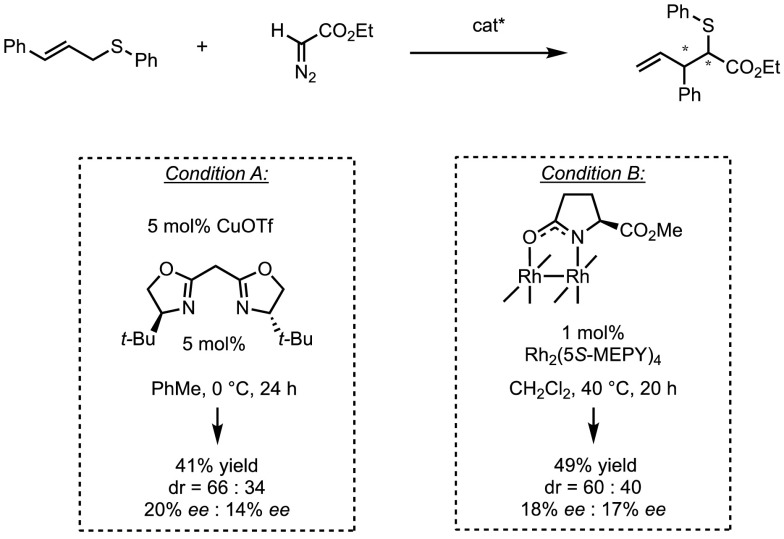
Double asymmetric induction in copper-catalysed Doyle–Kirmse reaction
Scheme 40
Scheme 40
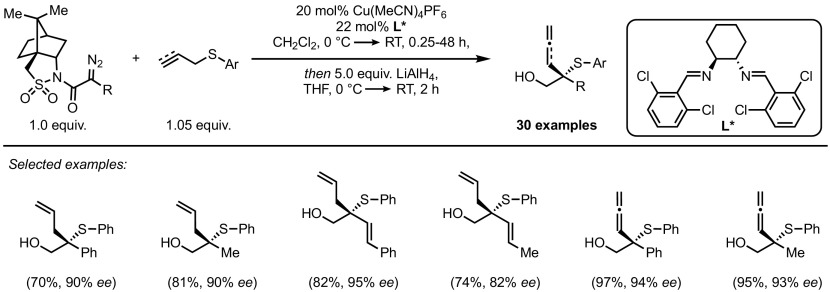
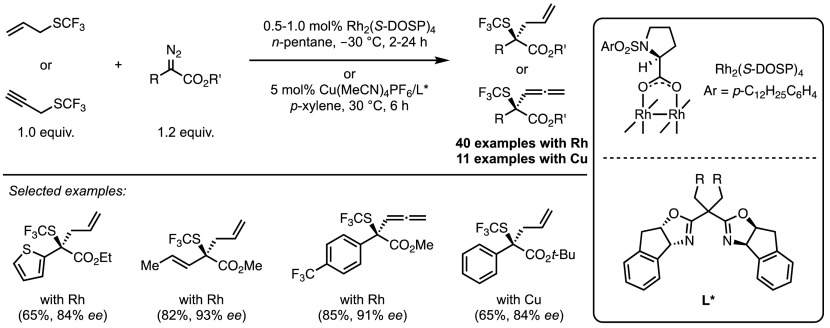
Enantioselective Doyle–Kirmse reaction under full catalyst control
Scheme 41
Scheme 41
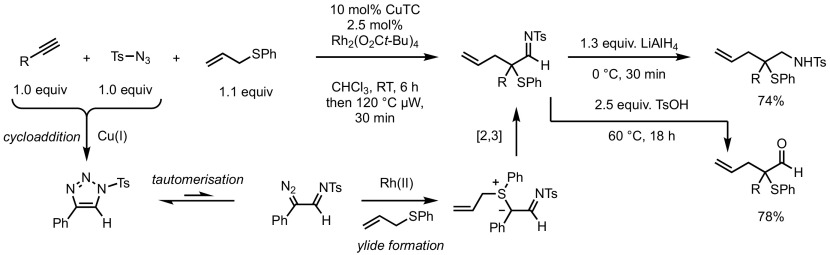
In situ generation of diazo compounds in the Doyle–Kirmse synthesis of thioether imines
Scheme 42
Scheme 42
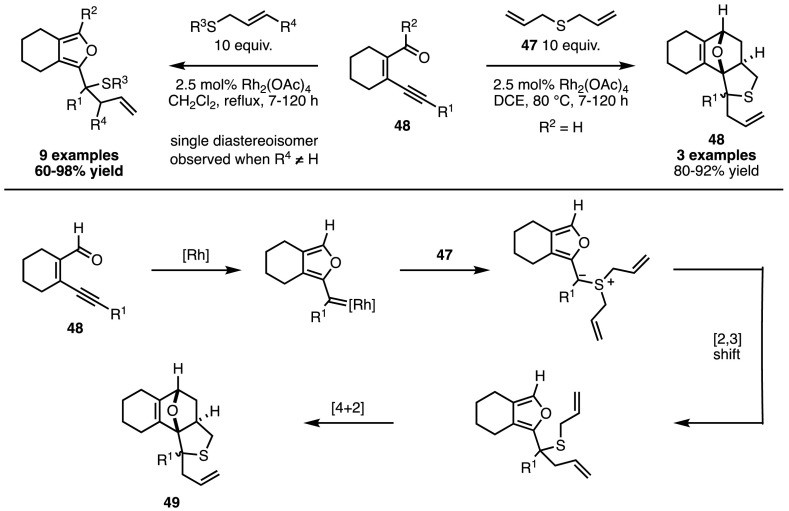
Doyle–Kirmse reactions from in situ-generated (2-furyl)carbenoids
Scheme 43
Scheme 43
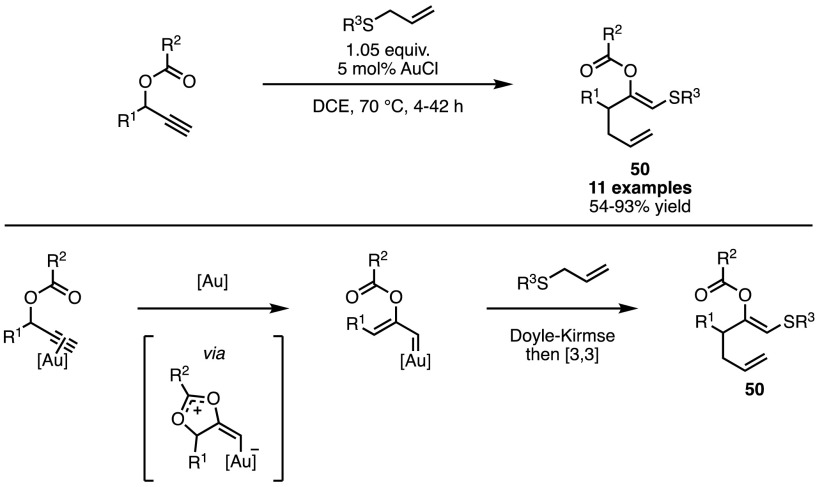
Alkynes as masked ylides in Doyle–Kirmse chemistry
Scheme 44
Scheme 44
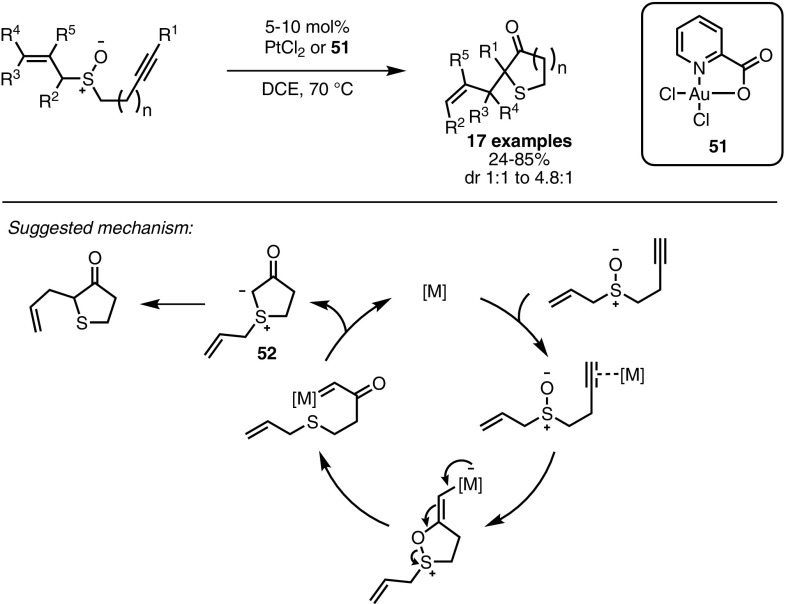
Synthesis of sulfur heterocycles from alkynyl sulfoxides
Scheme 45
Scheme 45
Doyle–Kirmse reaction from cyclopropenes
Scheme 46
Scheme 46
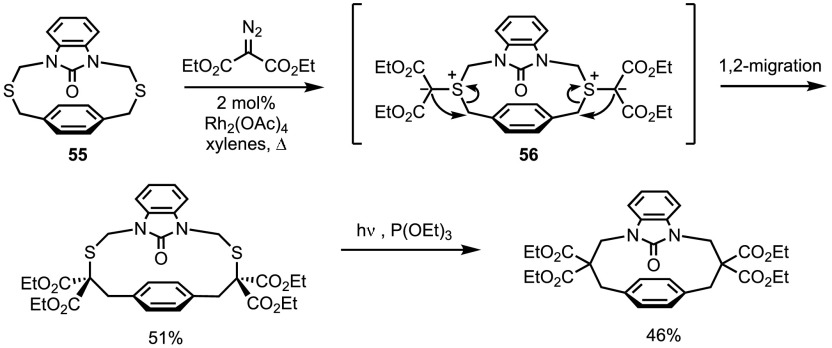
Macrocycle ring expansion by the double Stevens rearrangement
Scheme 47
Scheme 47
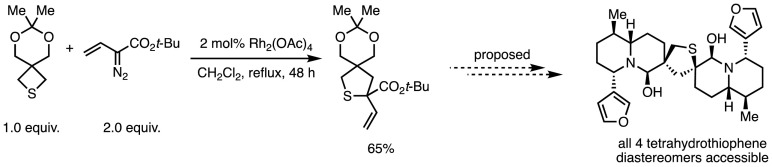
Proposed synthesis of Nuphar thioalkaloids through ring expansion of thietanes
Scheme 48
Scheme 48
Stevens rearrangement as a key step in the formal synthesis of (+)-Laurencin
Scheme 49
Scheme 49
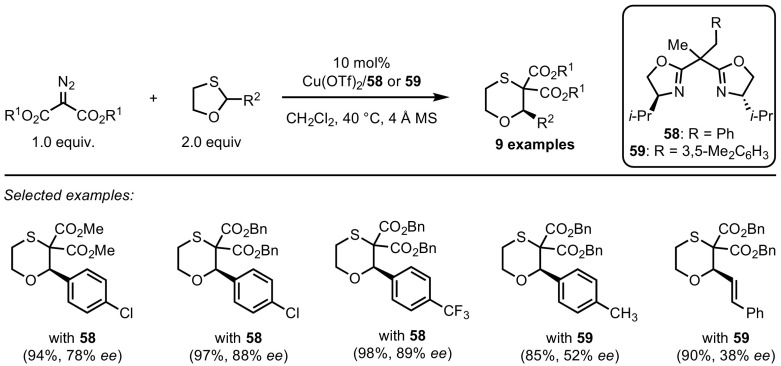
Copper-catalysed enantioselective 1,2-migration of dithioacetals
Scheme 50
Scheme 50
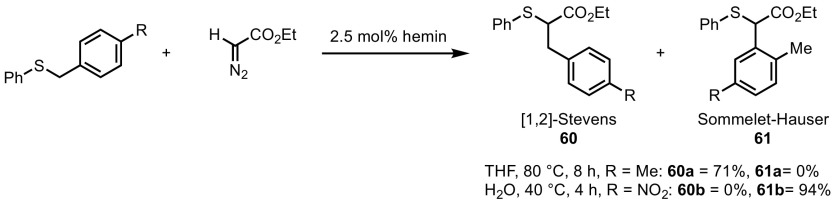
Chemoselectivity between 1,2-migration and Sommelet–Hauser rearrangement
Scheme 51
Scheme 51
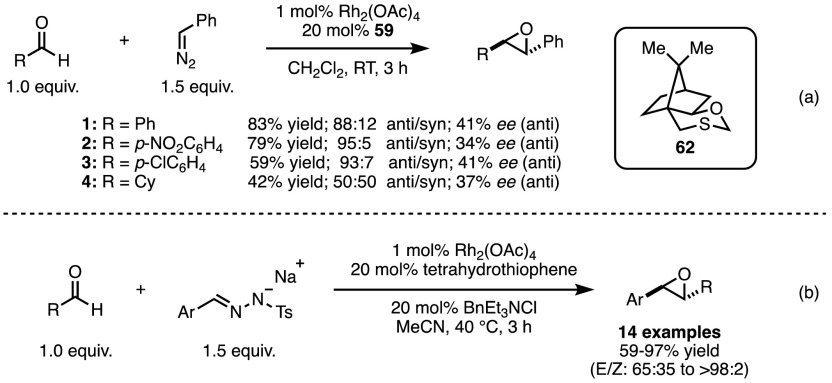
Diazo-based and diazo-free sulfide-mediated epoxidation of aldehydes
Fig. 15
Fig. 15
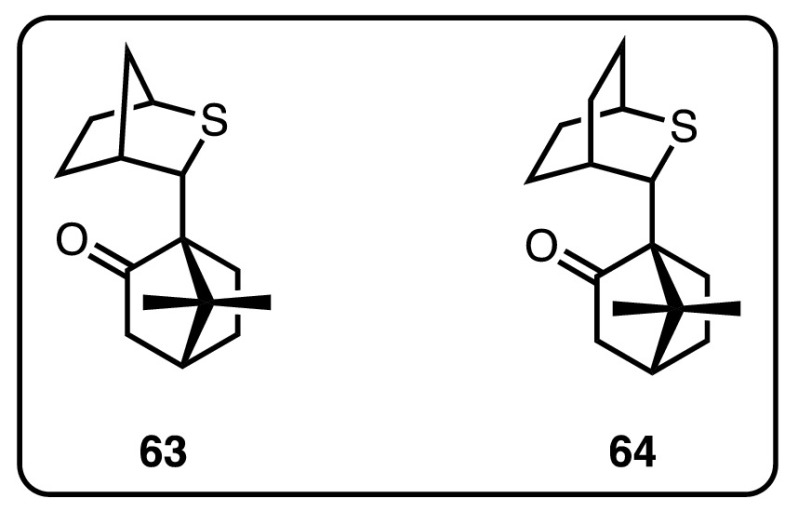
Camphor-derived chiral sulfides for epoxidation, aziridination and cyclopropanation
Scheme 52
Scheme 52
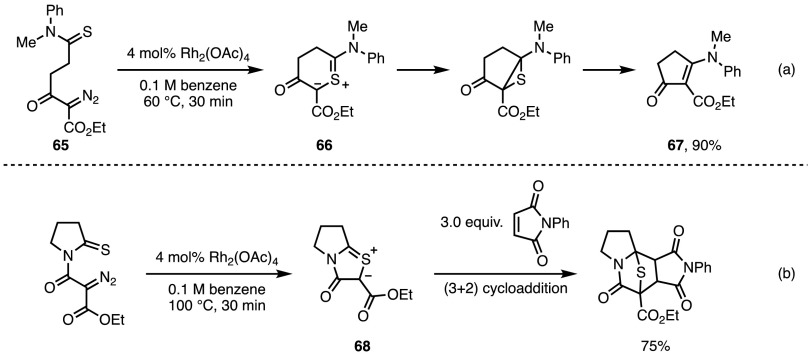
Rhodium-catalysed formation of thiocarbonyl ylides for electrocyclisation and cycloaddition reactions

References

    1. Oost R, Neuhaus JD, Merad J, Maulide N. Sulfur ylides in organic synthesis and transition metal catalysis. Struct Bond. 2017
    1. Bravo P, Fronza G, Ticozzi C, Gaudiano G. J Organomet Chem. 1974;74:143–154.
    1. Koezuka H, Matsubayashi G, Tanaka T. Inorg Chem. 1974;13:443–446.
    1. Weber L. Angew Chem Int Ed. 1983;22:516–528.
    1. Sabounchei SJ, Akhlaghi Bagherjeri F, Hosseinzadeh M, Boskovic C, Gable RW. C R Chim. 2014;17:1257–1263.

LinkOut - more resources