


Symptom management, nutrition and hydration at end-of-life: a qualitative exploration of patients', carers' and health professionals' experiences and further research questions
- PMID: 29656713
- PMCID: PMC5901670
- DOI: 10.1186/s12904-018-0314-4
Symptom management, nutrition and hydration at end-of-life: a qualitative exploration of patients', carers' and health professionals' experiences and further research questions
Abstract
Background: Symptom management is an essential aspect of palliative and end-of-life care, but evidence suggests that patients' symptoms may not always be relieved, causing significant harm to patients and magnifying their relatives' distress. A growing body of evidence focuses on symptom management at the end-of-life, but research funding for palliative care remains disproportionately low. It is therefore crucial that research funding is targeted at areas of importance to patients and relatives. The Palliative and end-of-life care Priority Setting Partnership (PeolcPSP) undertook a UK-wide free-text survey to establish research priorities within palliative and end-of-life care and disseminated its results in 2015. Much of the data were related more broadly to personal perceptions and experiences rather than specific research questions. The aim of this article is to report on a supplementary analysis exploring the experiences and questions of PeolcPSP survey respondents regarding symptoms, hydration and nutrition.
Methods: The PeolcPSP data (n = 1403) were coded by a team of qualitative researchers in a supplementary analysis. There were 190 responses that related to symptoms, nutrition and hydration. The data were analysed thematically using Braun and Clarke's approach.
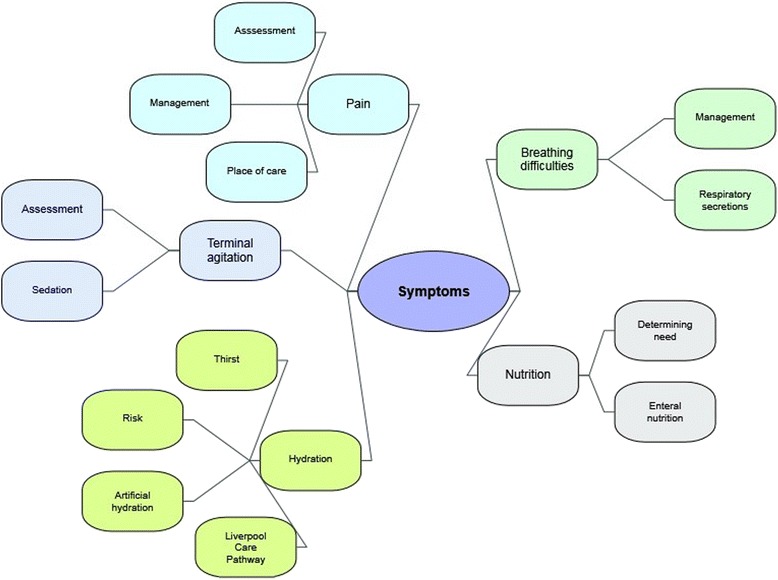
Results: Five themes were identified: pain, breathlessness, agitation, nutrition and hydration. The majority of responses related to symptoms that were sub-optimally managed, in particular pain. Nutrition and hydration were of significant concern, particularly for carers. Overall, respondents consistently asked about the most effective, evidence-based methods for managing symptoms and suggested areas where further research is necessary.
Conclusions: This study highlights the perceptions and experiences of patients, families and professionals within palliative care, highlighting the need for improved care, communication and further research to establish which treatments are most effective within a palliative care population. This is essential to reduce harm and distress for patients and families.
Keywords: Dehydration; Nutritional status; Pain management; Palliative care; Qualitative research; Symptom assessment; Terminal care.
Conflict of interest statement
Ethics approval and consent to participate
Ethical approval was not required for the survey, which was not considered to constitute ‘research’, as agreed by Cardiff University’s School of Medicine Research Ethics Committee. All identifiable data were removed from the survey responses during analysis. Respondents were asked to consent to their participation in the PeolcPSP survey, following a written explanation of the study.
Consent for publication
Not applicable.
Competing interests
The authors declare that they have no competing interests.
Publisher’s Note
Springer Nature remains neutral with regard to jurisdictional claims in published maps and institutional affiliations.
References
-
- World Health Organization . Global atlas of palliative care at the end of life. 2014.
-
- World Health Organization . WHO definition of palliative care. 2017.
-
- Dixon J, King D, Matosevic T, Clark M, Knapp M. Equity in the provision of palliative care in the UK: review of evidence. 2015.
MeSH terms
Grants and funding
LinkOut - more resources
Full Text Sources
Other Literature Sources
