


The Risk of Cross Infection in the Emergency Department: A Simulation Study
- PMID: 29656720
- PMCID: PMC6088782
- DOI: 10.1017/ice.2018.61
The Risk of Cross Infection in the Emergency Department: A Simulation Study
Abstract
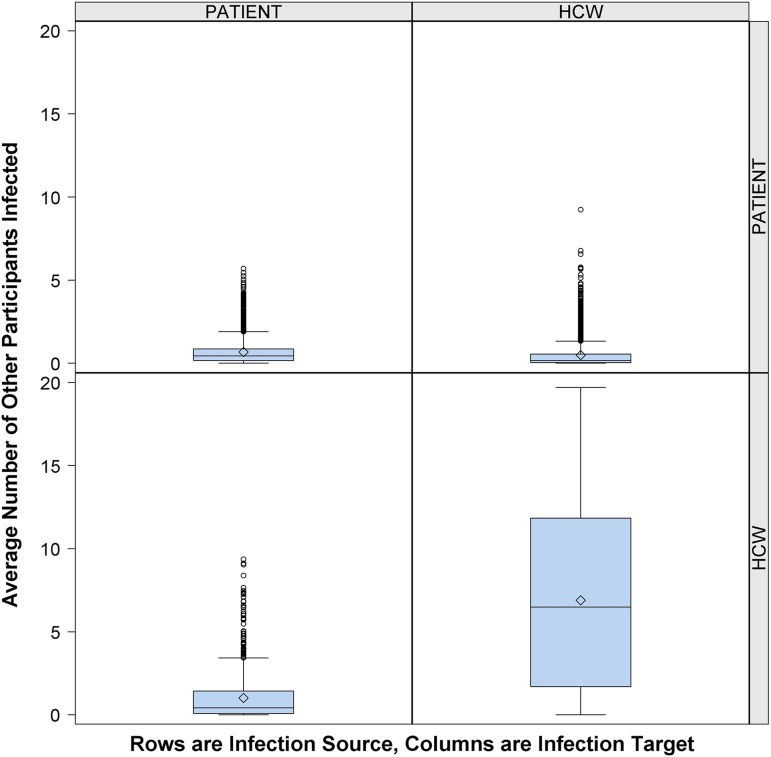
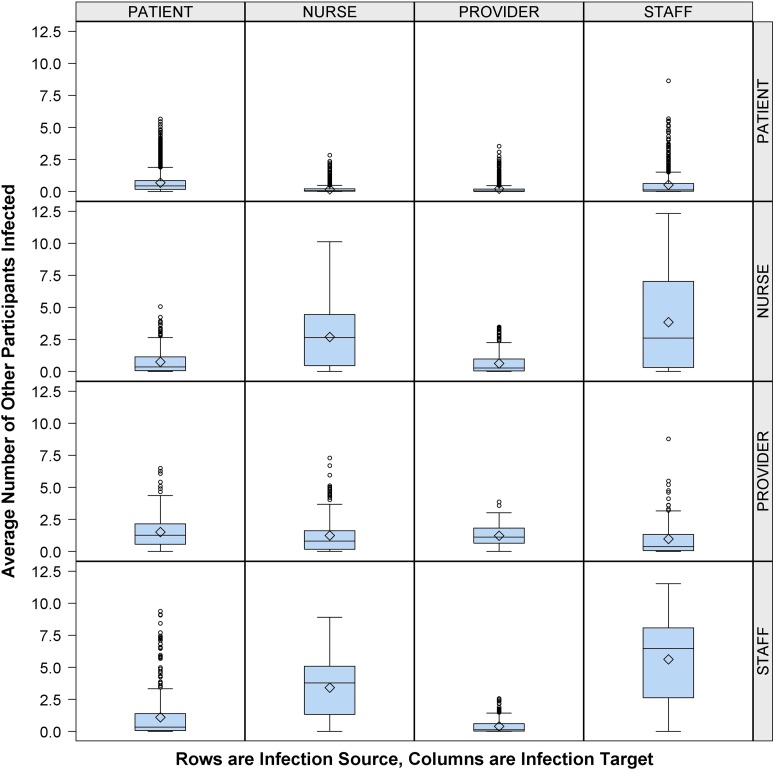
OBJECTIVESThe risk of cross infection in a busy emergency department (ED) is a serious public health concern, especially in times of pandemic threats. We simulated cross infections due to respiratory diseases spread by large droplets using empirical data on contacts (ie, close-proximity interactions of ≤1m) in an ED to quantify risks due to contact and to examine factors with differential risks associated with them.DESIGNProspective study.PARTICIPANTSHealth workers (HCWs) and patients.SETTINGA busy ED.METHODSData on contacts between participants were collected over 6 months by observing two 12-hour shifts per week using a radiofrequency identification proximity detection system. We simulated cross infection due to a novel agent across these contacts to determine risks associated with HCW role, chief complaint category, arrival mode, and ED disposition status.RESULTSCross-infection risk between HCWs was substantially greater than between patients or between patients and HCWs. Providers had the least risk, followed by nurses, and nonpatient care staff had the most risk. There were no differences by patient chief complaint category. We detected differential risk patterns by arrival mode and by HCW role. Although no differential risk was associated with ED disposition status, 0.1 infections were expected per shift among patients admitted to hospital.CONCLUSIONThese simulations demonstrate that, on average, 11 patients who were infected in the ED will be admitted to the hospital over the course of an 8-week local influenza outbreak. These patients are a source of further cross-infection risk once in the hospital.Infect Control Hosp Epidemiol 2018;39:688-693.
Figures
References
-
- Jacobson S. Ebola outbreak in Dallas officially ends. 2014. Dallas News website. http://www.dallasnews.com/news/metro/20141106-ebola-outbreak-in-dallas-o.... Published 2014. Accessed November 25, 2014.
-
- Halloran ME, Haber M, Longini IM, Struchiner CJ. Direct and indirect effects in vaccine efficacy and effectiveness. Am J Epidemiol 1991;133:323–331. - PubMed
-
- Hethcote HW. An age-structured model for pertussis transmission. Math Biosci 1997;145:89–136. - PubMed
Publication types
MeSH terms
Grants and funding
LinkOut - more resources
Full Text Sources
Other Literature Sources
