Comparison of Wound Tape and Suture Wounds on Traumatic Wounds' Scar
- PMID: 29657934
- PMCID: PMC5887701
- DOI: 10.4103/abr.abr_148_16
Comparison of Wound Tape and Suture Wounds on Traumatic Wounds' Scar
Abstract
Background: Several methods have been used in wound closure for traumatic wounds, but it is not clear that which of these methods has more safety and efficacy. This study aimed to compare scar width due to standard and current treatments in wound repair by suturing and method of wound restoration using wound tape in patients with traumatic ulcers.
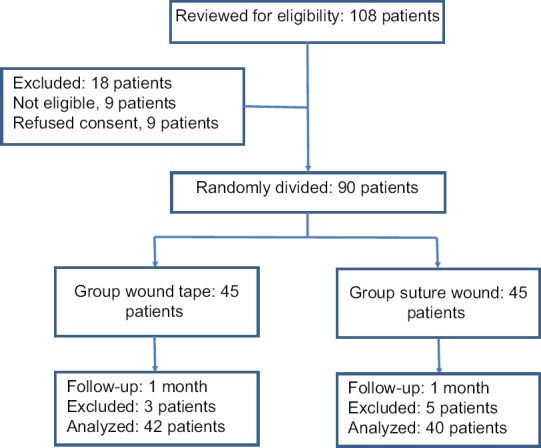
Materials and methods: This randomized clinical trial was done in ninety patients with wounds in the facial area. They were divided randomly into two groups of 45. The wounds in the first group were sutured, and wound tapes were used to wound closure in the second group. After 2 months, length and width of scar and results of life-size photography were recorded in a list, especially prepared for this purpose.
Results: The mean age of the patients was 22.7 ± 12.9 years with 46 males (56.1%) and 36 females (43.9%). After 2 months, scars width in suture wound group was 2.9 mm and in wound tape group was 2.5 mm, with no statistically significant difference (P = 0.07). In patients with wound length of >20 mm, scars width was similar between groups and no significant differences was noted (P = 0.27), but in patients with wound length of <20 mm, scars width in wound tape group was significantly less than suture wound group (1.7 vs. 2.5 mm, respectively, P = 0.01). Wound complications were not significantly different between the two groups.
Conclusion: Findings revealed that scar formation in wounds lower than 20 mm treated using wound tape was lower than suture, but for wounds between 20 and 50 mm were similar between wound tape and suture.
Keywords: Scar; suture; traumatic wound; wound tape.
Conflict of interest statement
There are no conflicts of interest.
Figures
References
-
- Singer AJ, Thode HC, Jr, Hollander JE. National trends in ED lacerations between 1992 and 2002. Am J Emerg Med. 2006;24:183–8. - PubMed
-
- Flynn D, Knoedler MA, Hess EP, Murad MH, Erwin PJ, Montori VM, et al. Engaging patients in health care decisions in the emergency department through shared decision-making: A systematic review. Acad Emerg Med. 2012;19:959–67. - PubMed
-
- Singer AJ, Hollander JE, Valentine SM, Turque TW, McCuskey CF, Quinn JV. Prospective, randomized, controlled trial of tissue adhesive (2-octylcyanoacrylate) vs standard wound closure techniques for laceration repair. Stony Brook Octylcyanoacrylate Study Group. Acad Emerg Med. 1998;5:94–9. - PubMed
-
- Zempsky WT, Parrotti D, Grem C, Nichols J. Randomized controlled comparison of cosmetic outcomes of simple facial lacerations closed with Steri Strip Skin Closures or Dermabond tissue adhesive. Pediatr Emerg Care. 2004;20:519–24. - PubMed
LinkOut - more resources
Full Text Sources
Other Literature Sources