


Post-Game High Protein Intake May Improve Recovery of Football-Specific Performance during a Congested Game Fixture: Results from the PRO-FOOTBALL Study
- PMID: 29659539
- PMCID: PMC5946279
- DOI: 10.3390/nu10040494
Post-Game High Protein Intake May Improve Recovery of Football-Specific Performance during a Congested Game Fixture: Results from the PRO-FOOTBALL Study
Abstract
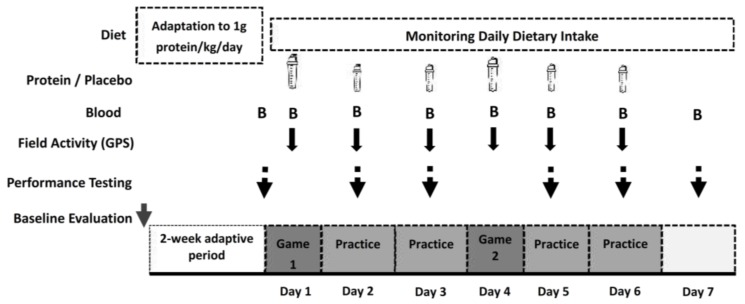
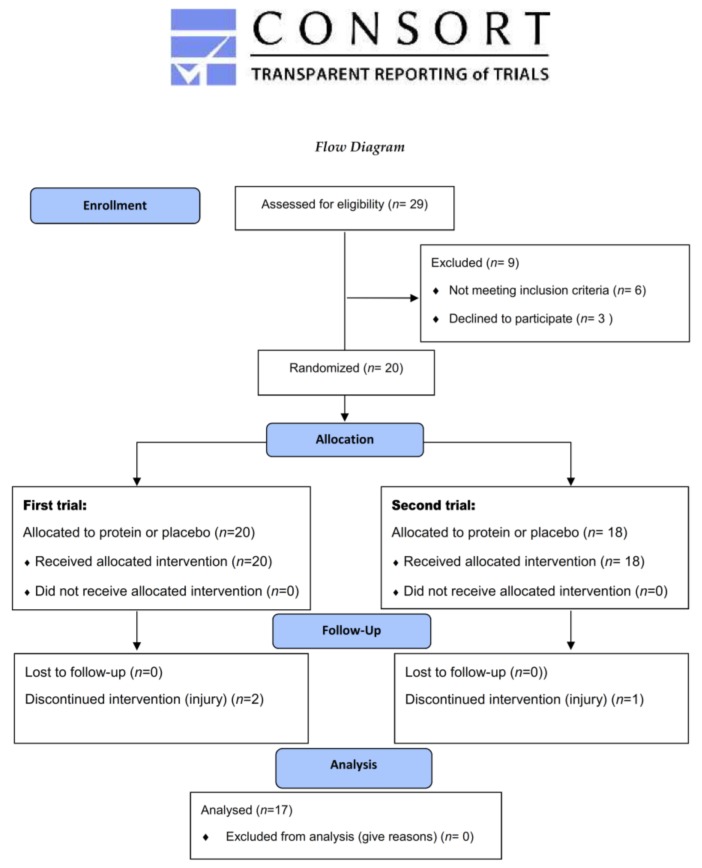
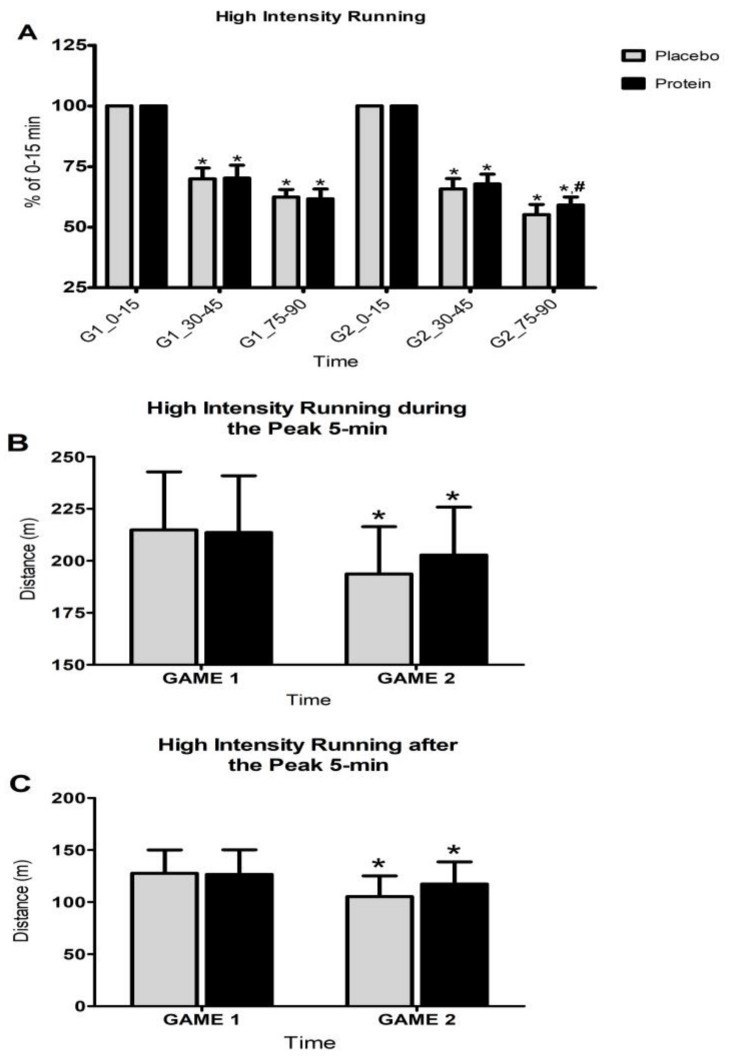
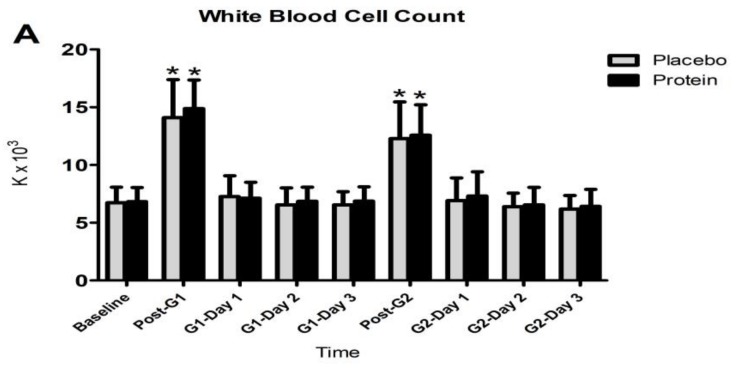
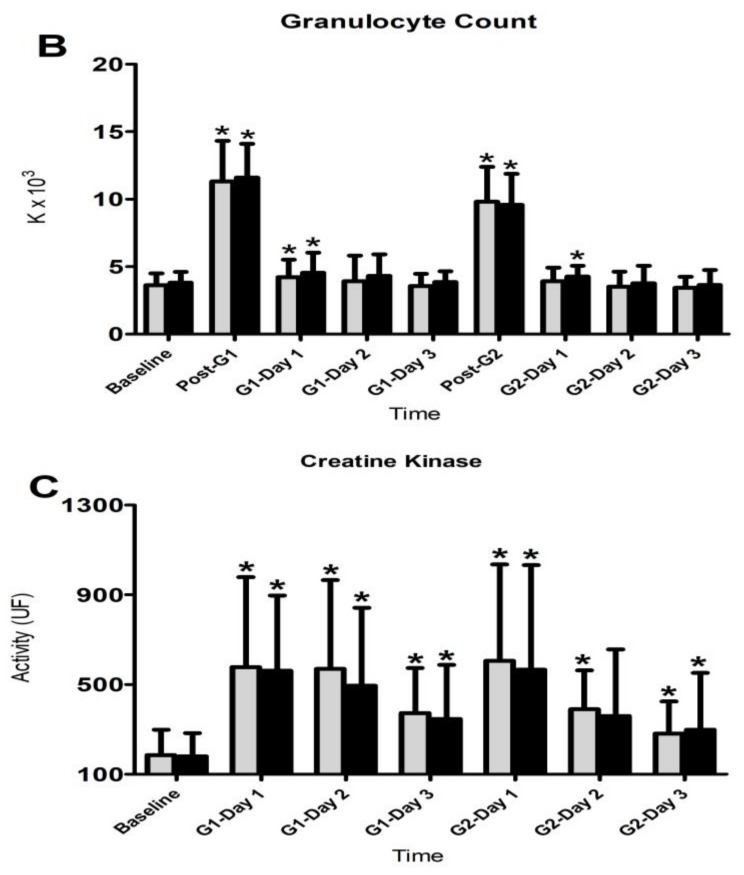
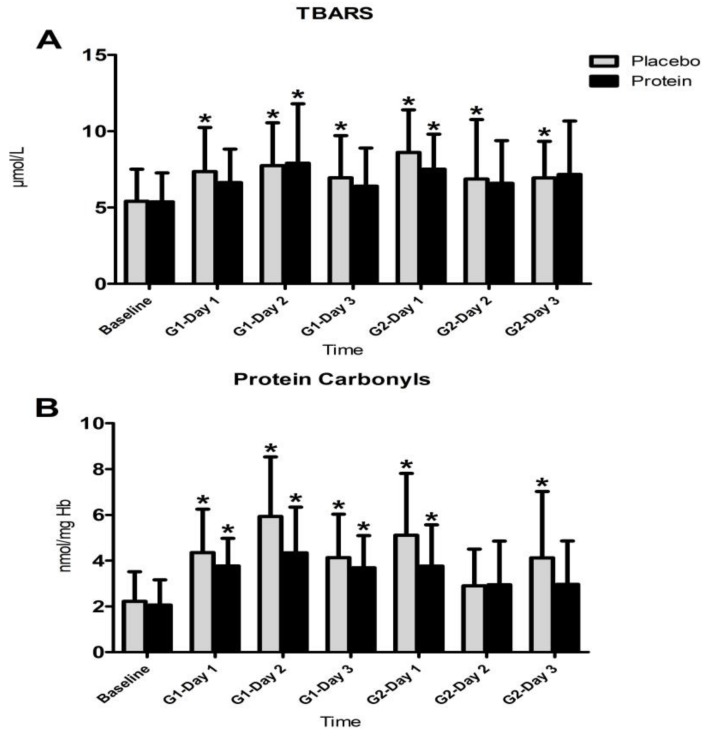
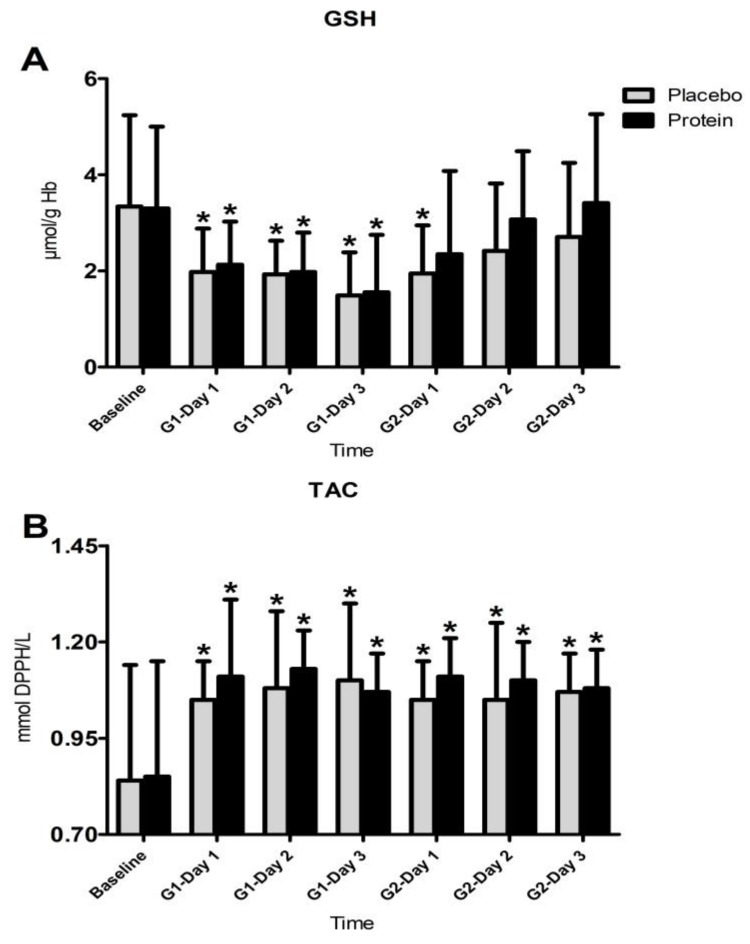
The effects of protein supplementation on performance recovery and inflammatory responses during a simulated one-week in-season microcycle with two games (G1, G2) performed three days apart were examined. Twenty football players participated in two trials, receiving either milk protein concentrate (1.15 and 0.26 g/kg on game and training days, respectively) (PRO) or an energy-matched placebo (1.37 and 0.31 g/kg of carbohydrate on game and training days, respectively) (PLA) according to a randomized, repeated-measures, crossover, double-blind design. Each trial included two games and four daily practices. Speed, jump height, isokinetic peak torque, and muscle soreness of knee flexors (KF) and extensors (KE) were measured before G1 and daily thereafter for six days. Blood was drawn before G1 and daily thereafter. Football-specific locomotor activity and heart rate were monitored using GPS technology during games and practices. The two games resulted in reduced speed (by 3-17%), strength of knee flexors (by 12-23%), and jumping performance (by 3-10%) throughout recovery, in both trials. Average heart rate and total distance covered during games remained unchanged in PRO but not in PLA. Moreover, PRO resulted in a change of smaller magnitude in high-intensity running at the end of G2 (75-90 min vs. 0-15 min) compared to PLA (P = 0.012). KE concentric strength demonstrated a more prolonged decline in PLA (days 1 and 2 after G1, P = 0.014-0.018; days 1, 2 and 3 after G2, P = 0.016-0.037) compared to PRO (days 1 after G1, P = 0.013; days 1 and 2 after G2, P = 0.014-0.033) following both games. KF eccentric strength decreased throughout recovery after G1 (PLA: P=0.001-0.047-PRO: P =0.004-0.22) in both trials, whereas after G2 it declined throughout recovery in PLA (P = 0.000-0.013) but only during the first two days (P = 0.000-0.014) in PRO. No treatment effect was observed for delayed onset of muscle soreness, leukocyte counts, and creatine kinase activity. PRO resulted in a faster recovery of protein and lipid peroxidation markers after both games. Reduced glutathione demonstrated a more short-lived reduction after G2 in PRO compared to PLA. In summary, these results provide evidence that protein feeding may more efficiently restore football-specific performance and strength and provide antioxidant protection during a congested game fixture.
Keywords: congested fixture; field activity; football; in-season; performance; protein supplementation.
Conflict of interest statement
The authors declare no conflict of interest.
Figures
References
-
- Bangsbo J. The physiology of soccer-with special reference to intense intermittent exercise. Acta Physiol. Scand. Suppl. 1994;619:1–155. - PubMed
-
- Fatouros I.G., Chatzinikolaou A., Douroudos I.I., Nikolaidis M.G., Kyparos A., Margonis K., Michailidis Y., Vantarakis A., Taxildaris K., Katrabasas I., et al. Time course of changes in oxidative stress and antioxidant status responses following a soccer game. J. Strength Cond. Res. 2010;24:3278–3286. doi: 10.1519/JSC.0b013e3181b60444. - DOI - PubMed
-
- Ispirlidis I., Fatouros I.G., Jamurtas A.Z., Nikolaidis M.G., Michailidis I., Douroudos I., Margonis K., Chatzinikolaou A., Kalistratos E., Katrabasas I., et al. Time course of changes in inflammatory and performance responses following a soccer game. Clin. J. Sports Med. 2008;18:428–431. doi: 10.1097/JSM.0b013e3181818e0b. - DOI - PubMed
Publication types
MeSH terms
Substances
LinkOut - more resources
Full Text Sources
Other Literature Sources
Medical
