Review
. 2019 May;80(5):1199-1213.
doi: 10.1016/j.jaad.2018.03.056. Epub 2018 Apr 14.

Hair disorders in cancer survivors

Affiliations
Review

Hair disorders in cancer survivors

Azael Freites-Martinez et al. J Am Acad Dermatol. 2019 May.

Abstract

With increasing survival rates across all cancers, survivors represent a growing population that is frequently affected by persistent or permanent hair growth disorders as a result of systemic therapies, radiotherapy, surgical procedures, and therapeutic transplants. These hair disorders include persistent chemotherapy-induced alopecia, persistent radiotherapy-induced alopecia, endocrine therapy-induced alopecia and hirsutism, postsurgery alopecia and localized hypertrichosis, and persistent stem cell transplantation and targeted therapy-induced alopecia. The information contained in this continuing medical education series should facilitate a better understanding on hair disorders in cancer survivors so that adequate support and therapies may be provided.

Keywords: alopecia; cancer survivors; cancer therapy; endocrine therapy; hirsutism; hypertrichosis; persistent alopecia; persistent chemotherapy-induced alopecia; persistent radiotherapy-induced alopecia; quality of life; therapeutic transplants.


Conflict of interest statement

COI Disclosure Statement: AFM, CvdH and JJ have nothing to disclose. JS: Consultant for Aclaris, Samumed, Incyte, Replicel Life Sciences, Shook, Hardy, Bacon LLP who represent Sanofi Aventis US LLC. AR: consultant for Cutera lasers and Vivscal. RP: has a speaking, consultant or advisory role with Giuliani/Italy, Unilever/UK, Reckitt Benkiser/UK and Shiseido/Japan. SG: has a speaking, consultant or advisory role with Adgero Biopharmaceuticals, AMAG pharmaceuticals, Procter and Gamble and Valeant women’s health pharmaceuticals. MEL: has a speaking, consultant or advisory role with Abbvie, Quintiles, Boehringer Ingelheim, AstraZeneca pharmaceuticals, Legacy Healthcare, Foamix, Adgero Bio Pharmaceuticals, Janssen R&D, Novartis, Paxman and Novocure, and also receives research grants from Berg and Bristol-Myers Squibb.

Figures

Figure 1
Figure 1
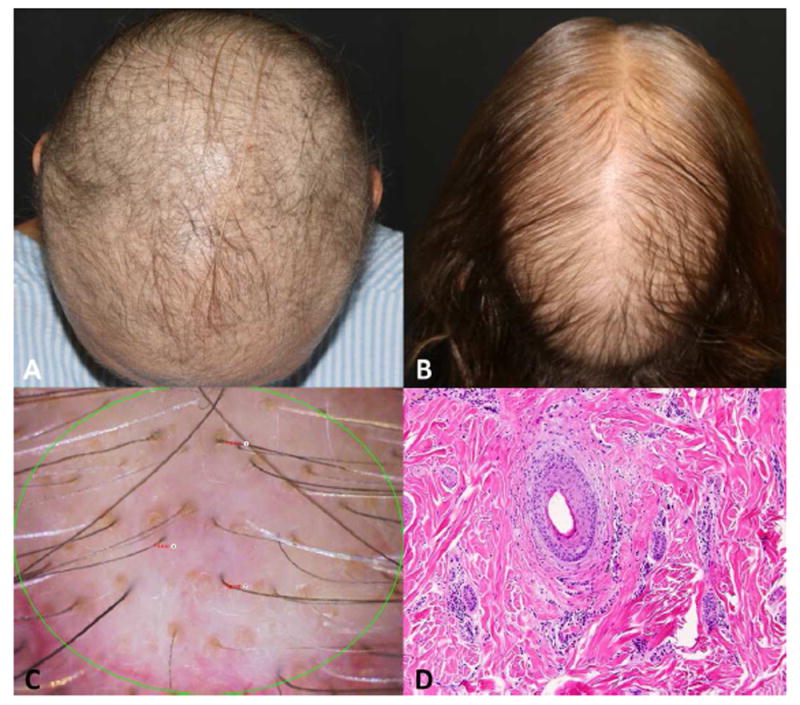
Persistent chemotherapy-induced alopecia (pCIA). A. Diffuse alopecia in a breast cancer survivor, 2 years after taxane based chemotherapy completion. B. pCIA in a breast cancer survivor, 1.6 years after taxane based chemotherapy completion with similar pattern of androgenetic alopecia, predominant hair thinning on the crown area. C. Trichoscopy of patient in figure B, featuring hair thinning, miniaturized hairs, and yellow dots. D. Histology section featuring mild perifollicular inflammation and fibrosis, (hematoxylin-eosin stain).
Figure 2
Figure 2
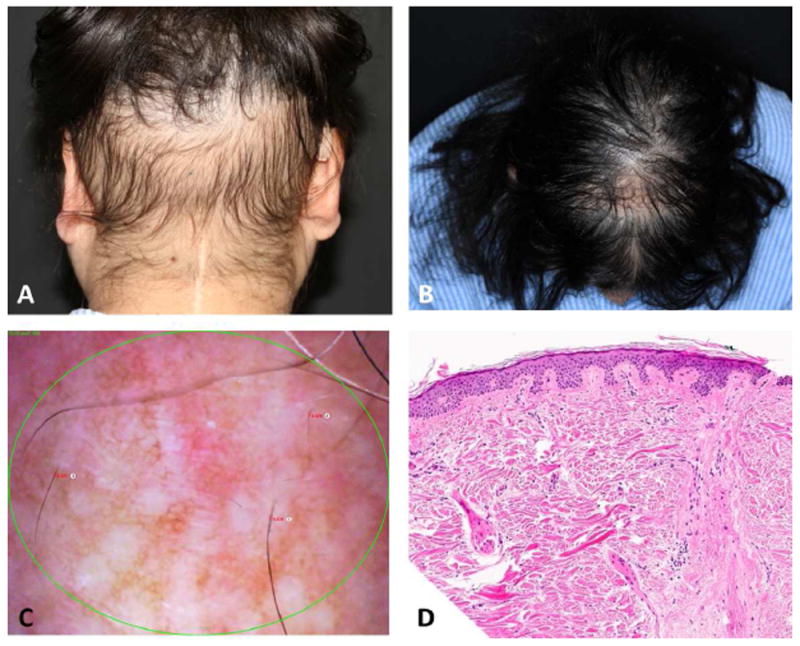
Persistent radiotherapy-induced alopecia (pRIA). A. Localized alopecia in a childhood cancer survivor with medulloblastoma treated with surgery and traditional (photon) radiotherapy. B. Diffuse hair loss with hair thinning on the crown area with a central scar after traditional radiotherapy and cytotoxic chemotherapy for a SNC tumor. C. Phototrichogram of patient in figure A, Featuring hair thinning miniaturized hairs, and white dots. D, Histology section featuring hair follicle replaced by fibrous tract. There is no significant inflammation (hematoxylin-eosin stain).
Figure 3
Figure 3
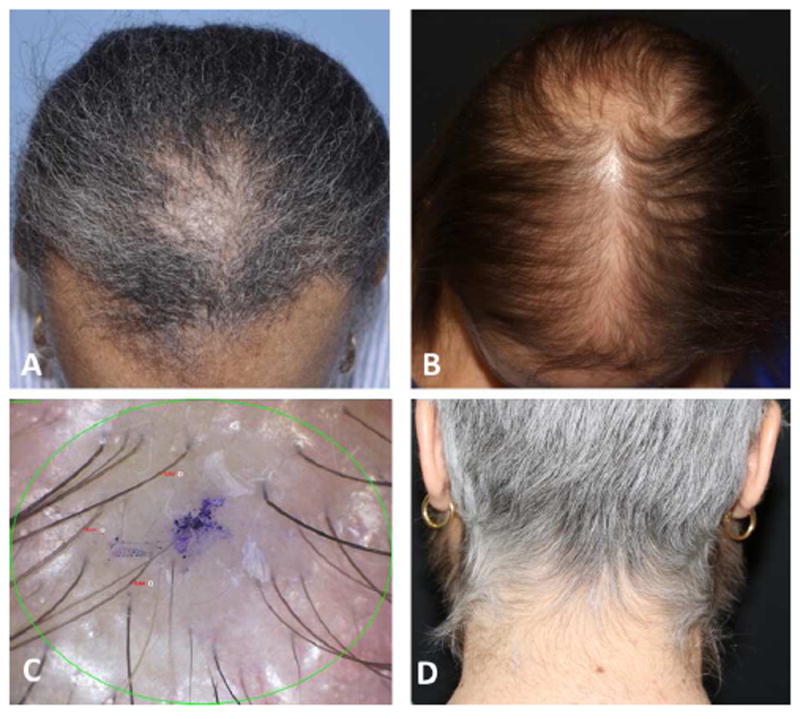
Endocrine therapy-induced alopecia (EIA). A. EIA with similar pattern of androgenetic alopecia, predominant on the frontoparietal hair line. B. EIA with similar pattern of androgenetic alopecia, predominant on the crown area. C. Trichoscopy featuring vellus hairs, and intermediate and thick terminal hairs. D. Hirsutism in a patient receiving endocrine therapy.
Figure 4
Figure 4
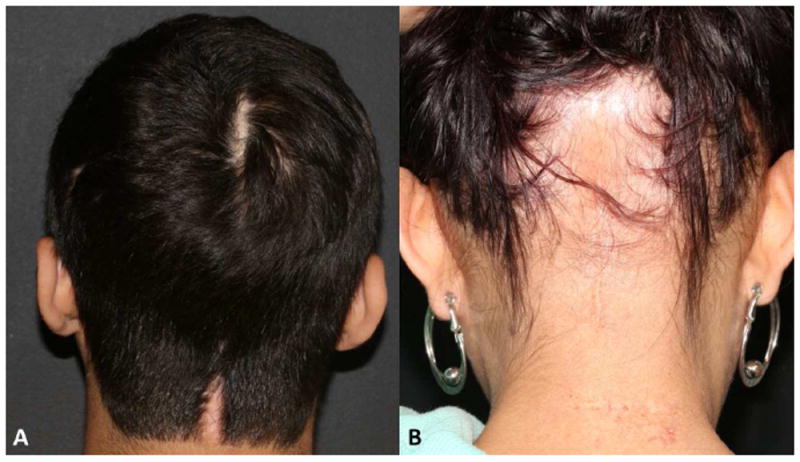
A. Linear scar on the scalp after surgery of a skull base tumor. B. Post-surgery and persistent radiotherapy-induced alopecia.
Figure 5
Figure 5
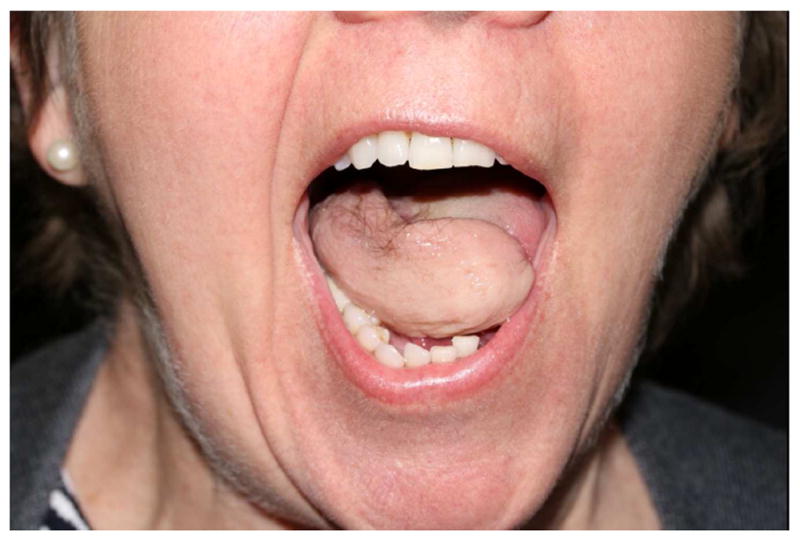
Post-surgery hair disorders. Terminal hairs on the tongue after reconstruction using a hairy donor site.
Figure 6
Figure 6
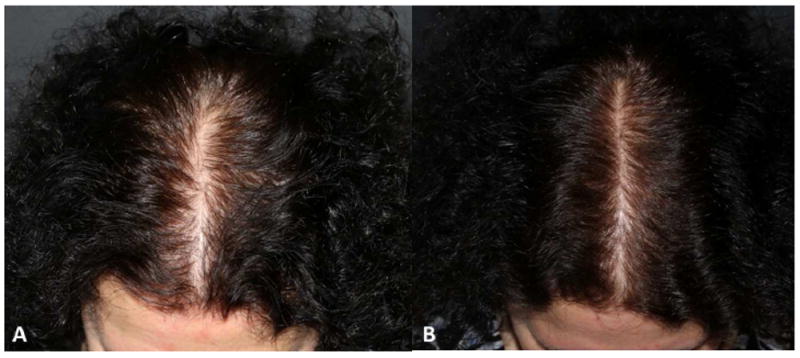
Endocrine therapy-induced alopecia (EIA). A. Before and B. Six months after therapy with topical minoxidil foam 5% twice a day.
Figure 7
Figure 7
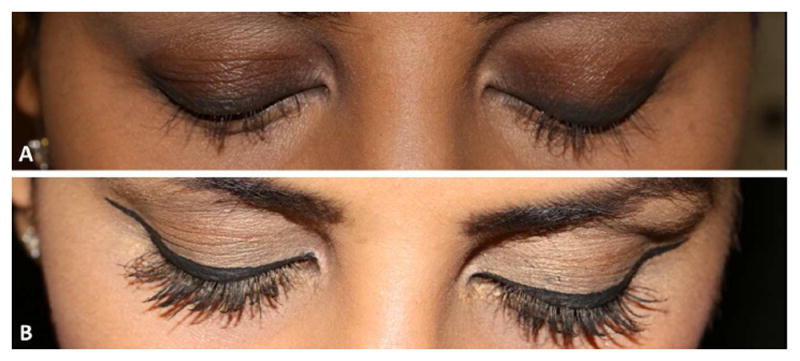
Topical bimatoprost 0.03% gel for persistent chemotherapy-induced eyelashes alopecia. A. Before therapy and B. Six months after therapy.

References

    1. [4 Jan 2017]; https://www.cancer.gov/publications/dictionaries/cancer-terms?cdrid=445089.
    1. de Moor JS, Mariotto AB, Parry C, Alfano CM, Padgett L, Kent EE, et al. Cancer survivors in the United States: prevalence across the survivorship trajectory and implications for care. Cancer epidemiology, biomarkers & prevention : a publication of the American Association for Cancer Research, cosponsored by the American Society of Preventive Oncology. 2013;22:561–70. - PMC - PubMed
    1. Ferlay J, Soerjomataram I, Dikshit R, Eser S, Mathers C, Rebelo M, et al. Cancer incidence and mortality worldwide: sources, methods and major patterns in GLOBOCAN 2012. International journal of cancer Journal international du cancer. 2015;136:E359–86. - PubMed
    1. Siegel RL, Miller KD, Jemal A. Cancer statistics, 2016. CA: a cancer journal for clinicians. 2016;66:7–30. - PubMed
    1. Ward E, DeSantis C, Robbins A, Kohler B, Jemal A. Childhood and adolescent cancer statistics, 2014. CA: a cancer journal for clinicians. 2014;64:83–103. - PubMed

Substances