. 2018 Jul;37(29):3967-3980.
doi: 10.1038/s41388-018-0213-4. Epub 2018 Apr 17.

NGR (Asn-Gly-Arg)-targeted delivery of coagulase to tumor vasculature arrests cancer cell growth

Affiliations

NGR (Asn-Gly-Arg)-targeted delivery of coagulase to tumor vasculature arrests cancer cell growth

Khaled Seidi et al. Oncogene. 2018 Jul.

Abstract

Induction of selective thrombosis and infarction in tumor-feeding vessels represents an attractive strategy to combat cancer. Here we took advantage of the unique coagulation properties of staphylocoagulase and genetically engineered it to generate a new fusion protein with novel anti-cancer properties. This novel bi-functional protein consists of truncated coagulase (tCoa) and an NGR (GNGRAHA) motif that recognizes CD13 and αvβ3 integrin receptors, targeting it to tumor endothelial cells. Herein, we report that tCoa coupled by its C-terminus to an NGR sequence retained its normal binding activity with prothrombin and avβ3 integrins, as confirmed in silico and in vitro. Moreover, in vivo biodistribution studies demonstrated selective accumulation of FITC-labeled tCoa-NGR fusion proteins at the site of subcutaneously implanted PC3 tumor xenografts in nude mice. Notably, systemic administration of tCoa-NGR to mice bearing 4T1 mouse mammary xenografts or PC3 human prostate tumors resulted in a significant reduction in tumor growth. These anti-tumor effects were accompanied by massive thrombotic occlusion of small and large tumor vessels, tumor infarction and tumor cell death. From these findings, we propose tCoa-NGR mediated tumor infarction as a novel and promising anti-cancer strategy targeting both CD13 and integrin αvβ3 positive tumor neovasculature.


Conflict of interest statement

The authors declare that they have no conflict of interest.

Figures
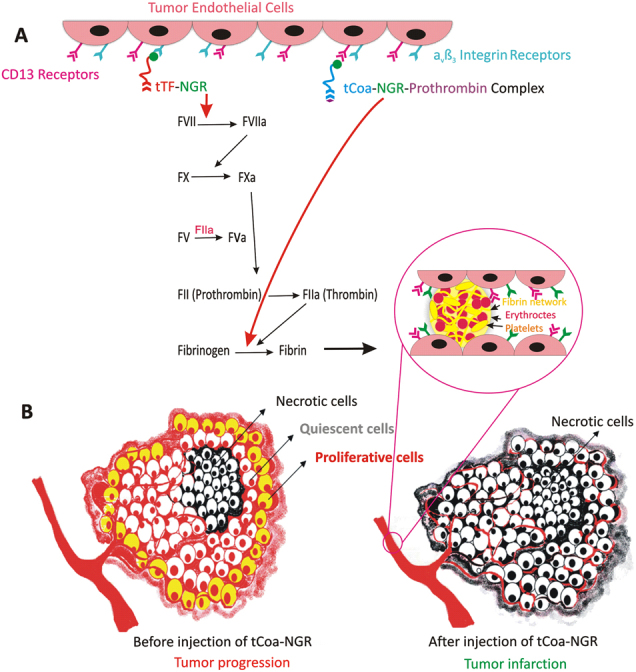
Fig. 1
Fig. 1
Differences between induction of thrombosis by NGR modified bacterial coagulase and human tissue factor. a Tissue factor (TF)-mediated thrombosis is systemic and involves stepwise activation of various clotting factors, while coagulase mediated coagulation is local and only affects fibrinogen levels. b Impact of tCoa-NGR on solid tumors. Before injection of the novel fusion protein, solid tumors are proliferative, harboring three different cell populations: highly proliferative cells in the tumor edge, necrotic cells in the core, and dormant cells in the middle layers. Treatment of solid tumors with tCoa-NGR results in the induction of thrombosis, occlusion of tumor-feeding blood vessels, tumor infarction, and oxygen, energy and nutrient depletion of the cancer cells undergoing anaerobic glycolysis, subsequently promoting necrosis of tumor cells. Part B of this figure is adopted from Jahanban-Esfahlan, R. et al. [1]
Fig. 2
Fig. 2
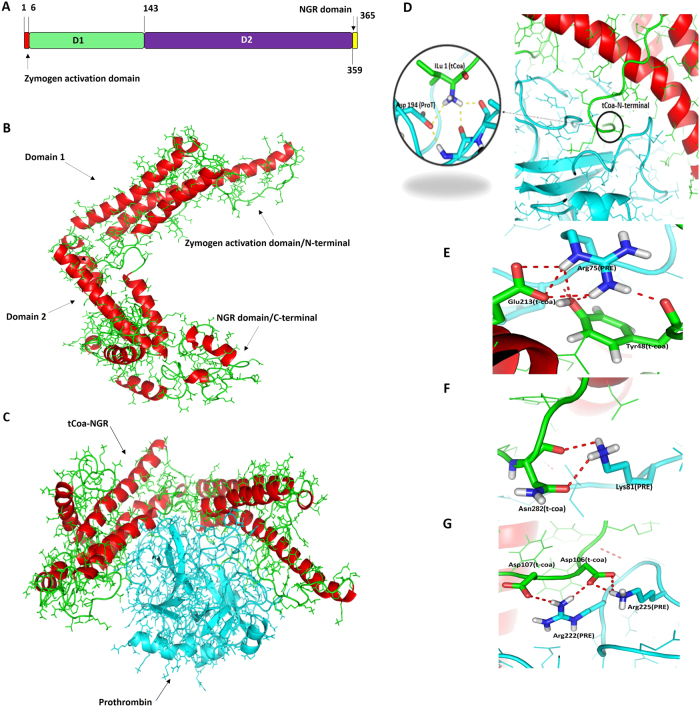
Molecular dynamic studies of tCoa-NGR proteins in silico. a Protein structure of tCoa-NGR. b 3D structure of tCoa-NGR. Helical structure of tCoa-NGR within its two important domains. c Molecular dynamic simulation of tCoa-NGR-prothrombin complex. d Insertion of tCoa N-termius into prothrombin. e Interactions of Arg75 of prothrombin with Glu213 and Tyr48 of tCoa. f Interactions between Lys81 of prothrombin and Asn282 of tCoa-NGR. g Interactions between basic residues of prothrombin and acidic residues of tCoa-NGR
Fig. 3
Fig. 3
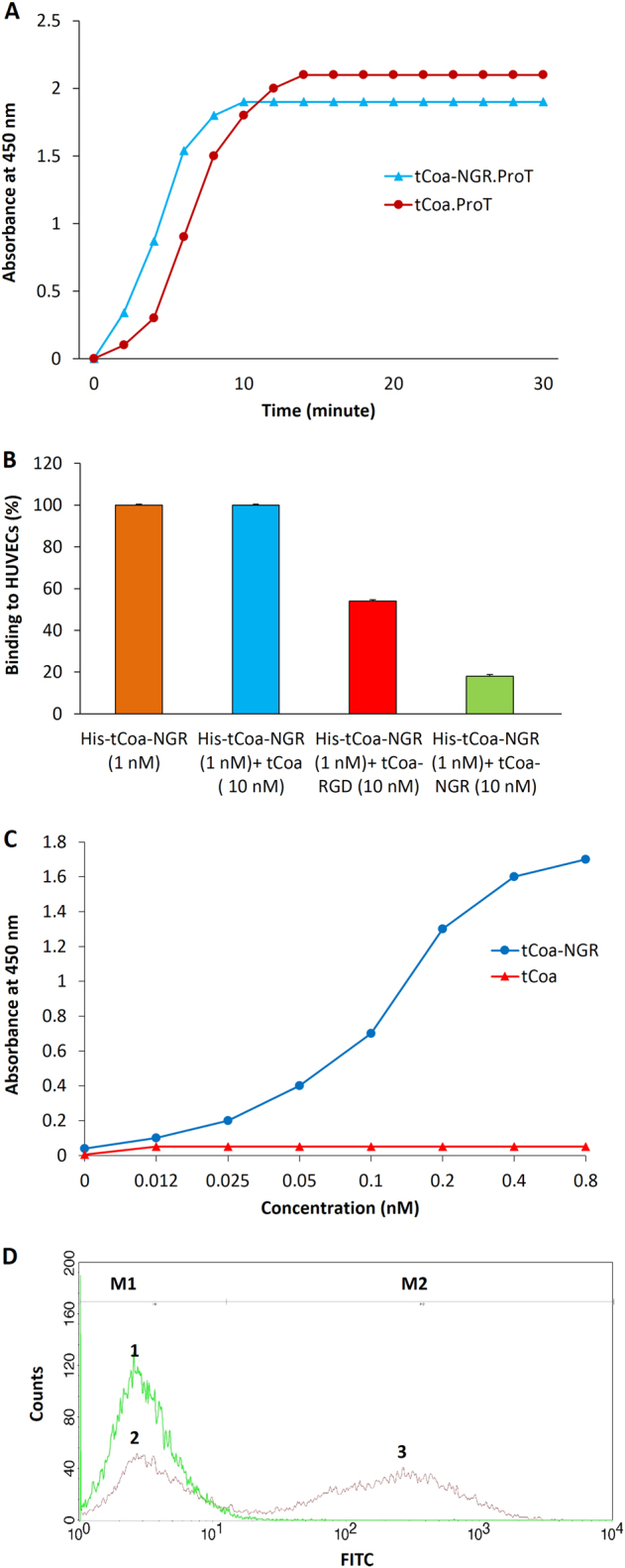
Functional studies to demonstrate coagulase activity and binding potential of tCoa-NGR fusion proteins in vitro. a Induction of thrombosis was measured to demonstrate tCoa clotting activity by tCoa-NGR fusion proteins. tCoa-NGR was capable of activating prothrombin at 1:1 nanomolar concentrations, comparable to that of prothrombin activation by tCoa at each time point. bd Ligand-receptor binding studies to demonstrate binding of tCoa-NGR to CD13 and αvβ3 integrin by ELISA and FACS. b Addition of non His-tagged tCoa-RGD (αvβ3 integrin receptor inhibitor) or tCoa-NGR (αvβ3 and CD13 receptor inhibitor) as competitive ligands of NGR motif, resulted in 46% and 82% binding inhibition of His-tagged tCoa-NGR to its endothelial receptors, respectively. c tCoa-NGR but not tCoa specifically binds to immobilized endothelial cells in a dose-dependent fashion, with the highest binding at 0.8 nM concentration. d Differential binding of tCoa (peak 1) and tCoa-NGR (peak 2, 3) to endothelial cells in suspension was assessed by FACS. HUVECs were incubated with either tCoa or tCoa-NGR, and proteins that bound to the cells were FITC-labeled and detected by FACS. In this histogram, the M1 marker identifies cells that were not bound by proteins, while the M2 marker comprises the cells positive for bound proteins
Fig. 4
Fig. 4
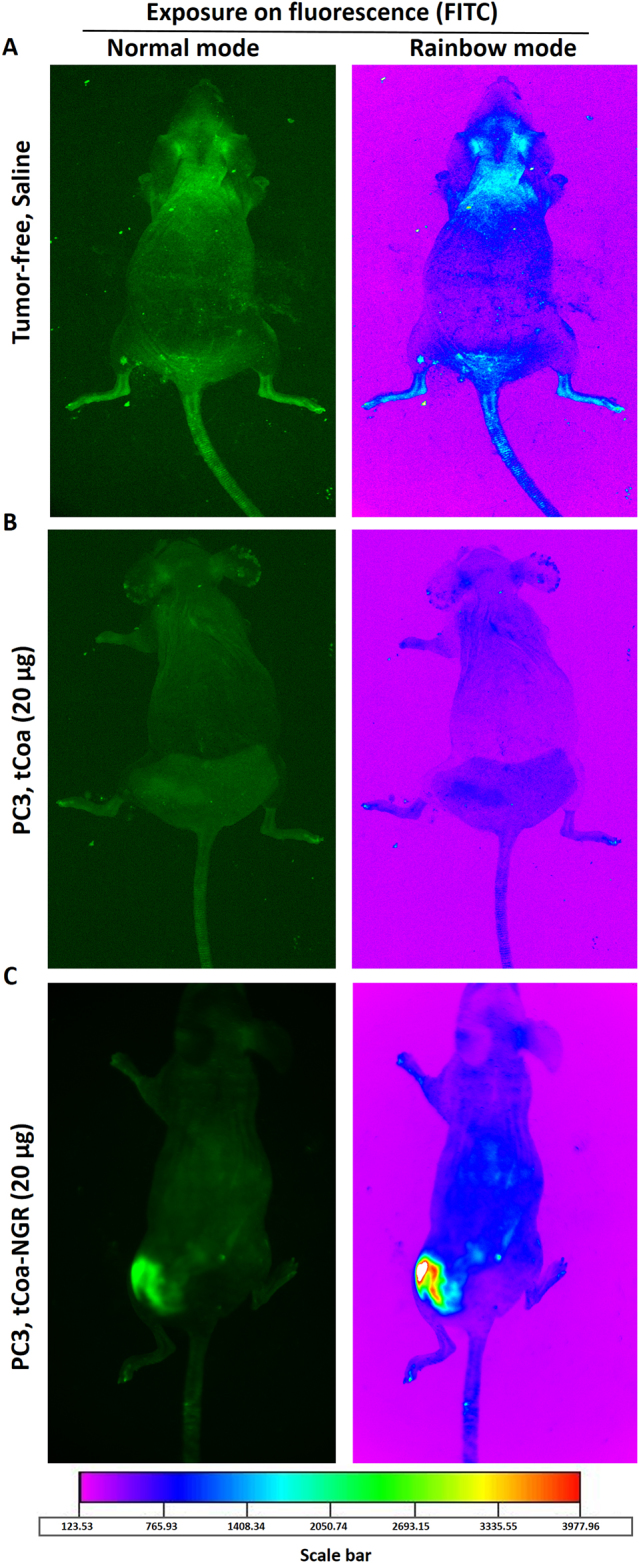
Tracing fluorescently labeled tCoa-NGR proteins in vivo. a Tumor-free mice injected with saline as control. Mice bearing PC3 prostate cancer xenografts were injected with either (b) tCoa labeled with FITC or (c) tCoa-NGR labeled with FITC (n = 6). Selective accumulation of targeted fusion protein to tumor neovasculature was assessed by an in vivo imaging system
Fig. 5
Fig. 5
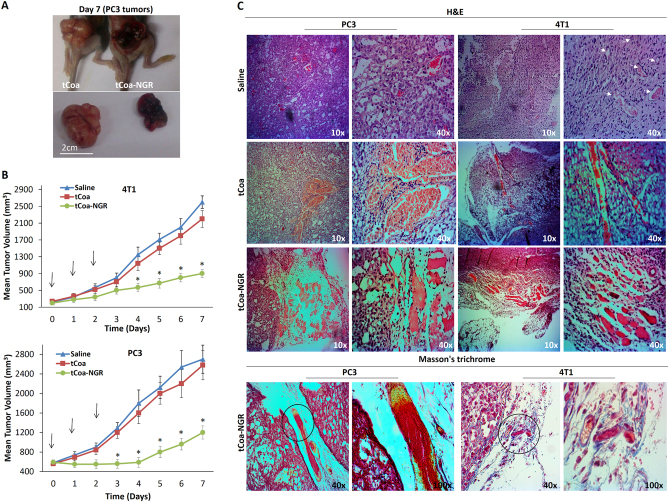
Therapeutic potential of tCoa-NGR proteins in vivo. a ​Illustrative photos of mice bearing prostate cancer xenografts (PC3) at the end of treatment (day 7) treated with tCoa-NGR (right) or tCoa (left). b 4T1 and PC3 tumor-bearing mice were injected intravenously with saline, 10 µg tCoa or 10 µg tCoa-NGR (n = 6). c Histological analysis of 4T1 mouse mammary xenografts in BALB/c mice and PC3 human prostate carcinoma xenografts in C57Bl/6 nude mice treated with either saline, tCoa or tCoa-NGR fusion proteins. Arrows represent intact vessels throughout tumor tissue sections in mice treated with saline. Conversely, tCoa-NGR tumor tissues presented occluded blood vessels with packed erythrocytes and fibrin clots, indicating an induction of thrombosis in the vasculature of 4T1 and PC3 tumors. Several thrombosed blood vessels are selected, and the same location is shown with two different magnifications for clarity. Moreover, induction of complete thrombosis in the neovasculature of mice bearing 4T1 or PC3 tumors was explored through distinct staining of fibrin (red) and red blood cells (yellow) by Masson’s trichrome staining
Fig. 6
Fig. 6
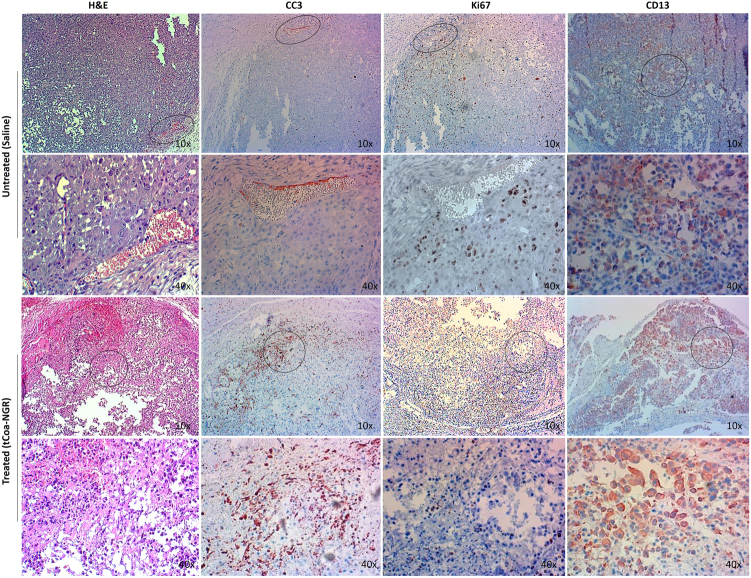
H&E and immunohistochemistry analysis of PC3 tumor sections stained with CD13, Ki67 and CC3 in saline controls and groups treated with tCoa-NGR fusion proteins
Fig. 7
Fig. 7
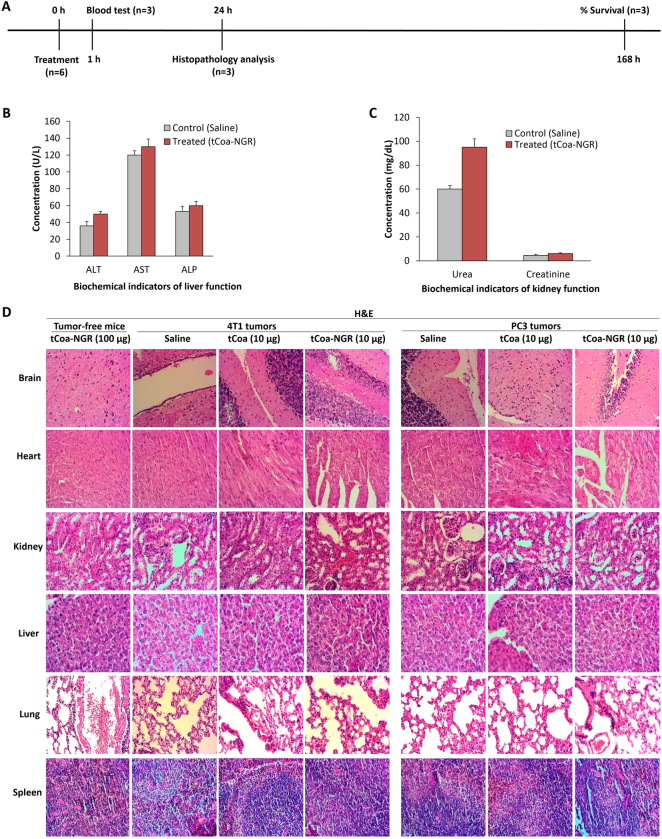
Toxicological/drug tolerability studies in mice. a Timing schedule of toxicological experiments in healthy mice injected with a high dose (100 μg) of tCoa-NGR or saline. b, c Serological and biochemical analysis of healthy mice injected with a high dose of tCoa-NGR or saline. d H&E staining of organs (brain, heart, kidney, liver, lung and spleen) from the cancerous mice treated with saline, tCoa (10 µg), and tCoa-NGR (10 µg) to demonstrate toxicity profiles of the fusion proteins compared to the control (saline). Histological sections of normal organs from healthy mice injected with a high dose of tCoa-NGR fusion proteins (100 µg) is also presented to demonstrate drug tolerability. Magnification (×40). AST aspartate transaminase, ALP alkaline phosphatase, ALT alanine aminotransferase

References

    1. Jahanban-Esfahlan R, Seidi K, Zarghami N. Tumor vascular infarction: prospects and challenges. Int J Hematol. 2017;105:244–56. doi: 10.1007/s12185-016-2171-3. - DOI - PubMed
    1. Bieker R, Kessler T, Schwoppe C, Padro T, Persigehl T, Bremer C, et al. Infarction of tumor vessels by NGR-peptide-directed targeting of tissue factor: experimental results and first-in-man experience. Blood. 2009;113:5019–27. doi: 10.1182/blood-2008-04-150318. - DOI - PubMed
    1. Brand C, Schliemann C, Ring J, Kessler T, Bäumer S, Angenendt L, et al. NG2 proteoglycan as a pericyte target for anticancer therapy by tumor vessel infarction with retargeted tissue factor. Oncotarget. 2016;7:6774–89. doi: 10.18632/oncotarget.6725. - DOI - PMC - PubMed
    1. Hu P, Yan J, Sharifi J, Bai T, Khawli LA, Epstein AL. Comparison of three different targeted tissue factor fusion proteins for inducing tumor vessel thrombosis. Cancer Res. 2003;63:5046–53. - PubMed
    1. Huang FY, Li YN, Wang H, Huang YH, Lin YY, Tan GH. A fusion protein containing murine vascular endothelial growth factor and tissue factor induces thrombogenesis and suppression of tumor growth in a colon carcinoma model. J Zhejiang Univ Sci B. 2008;9:602–9. doi: 10.1631/jzus.B0820120. - DOI - PMC - PubMed

Publication types

MeSH terms