


The Length of SNCA Rep1 Microsatellite May Influence Cognitive Evolution in Parkinson's Disease
- PMID: 29662465
- PMCID: PMC5890103
- DOI: 10.3389/fneur.2018.00213
The Length of SNCA Rep1 Microsatellite May Influence Cognitive Evolution in Parkinson's Disease
Abstract
Background: Alpha-synuclein is a constituent of Lewy bodies and mutations of its gene cause familial Parkinson's disease (PD). A previous study showed that a variant of the alpha-synuclein gene (SNCA), namely the 263 bp allele of Rep1 was associated with faster motor progression in PD. On the contrary, a recent report failed to detect a detrimental effect of Rep1 263 on both motor and cognitive outcomes in PD. Aim of this study was to evaluate the influence of the Rep1 variants on disease progression in PD patients.
Methods: We recruited and genotyped for SNCA Rep1 426 PD patients with age at onset ≥40 years and disease duration ≥4 years. We then analyzed frequency and time of occurrence of wearing-off, dyskinesia, freezing of gait, visual hallucinations, and dementia using a multivariate Cox's proportional hazards regression model.
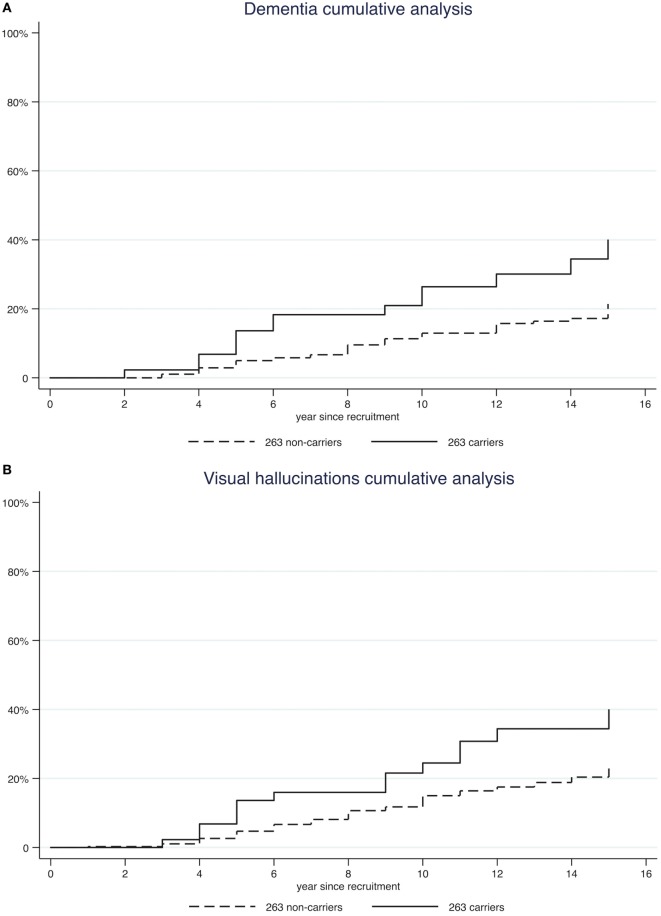
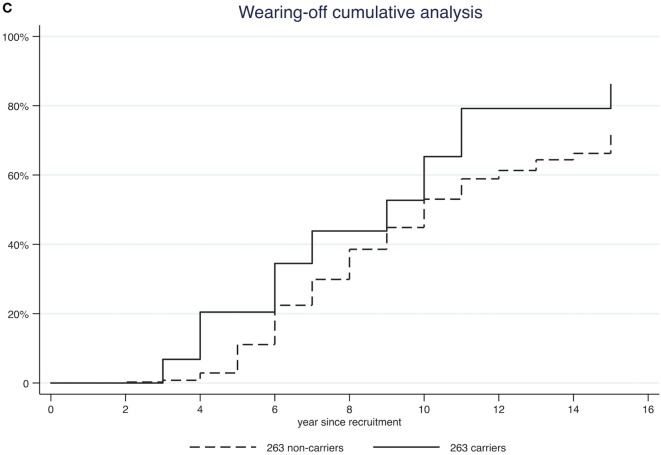
Results: SNCA Rep1 263 carriers showed significantly increased risk of both dementia (HR = 3.03) and visual hallucinations (HR = 2.69) compared to 263 non-carriers. Risk of motor complications did not differ in the two groups.
Conclusion: SNCA Rep1 263 allele is associated with a worse cognitive outcome in PD.
Keywords: Parkinson’s disease; dementia; disease progression; genetic markers; hallucinations.
Figures
References
LinkOut - more resources
Full Text Sources
Other Literature Sources
Miscellaneous
