


Sex-Dependent Effects of Developmental Lead Exposure on the Brain
- PMID: 29662502
- PMCID: PMC5890196
- DOI: 10.3389/fgene.2018.00089
Sex-Dependent Effects of Developmental Lead Exposure on the Brain
Abstract
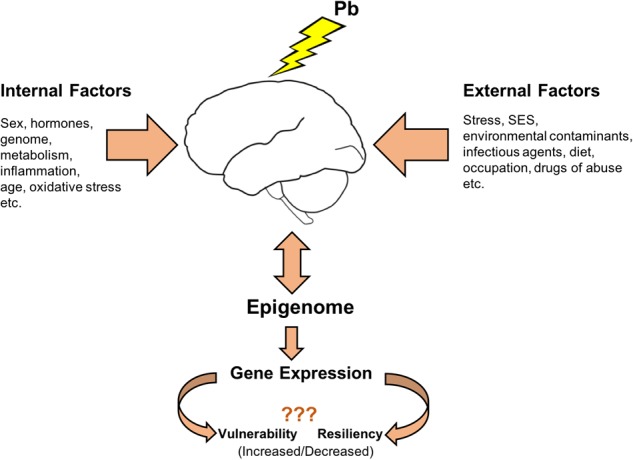
The role of sex as an effect modifier of developmental lead (Pb) exposure has until recently received little attention. Lead exposure in early life can affect brain development with persisting influences on cognitive and behavioral functioning, as well as, elevated risks for developing a variety of diseases and disorders in later life. Although both sexes are affected by Pb exposure, the incidence, manifestation, and severity of outcomes appears to differ in males and females. Results from epidemiologic and animal studies indicate significant effect modification by sex, however, the results are not consistent across studies. Unfortunately, only a limited number of human epidemiological studies have included both sexes in independent outcome analyses limiting our ability to draw definitive conclusions regarding sex-differentiated outcomes. Additionally, due to various methodological differences across studies, there is still not a good mechanistic understanding of the molecular effects of lead on the brain and the factors that influence differential responses to Pb based on sex. In this review, focused on prenatal and postnatal Pb exposures in humans and animal models, we discuss current literature supporting sex differences in outcomes in response to Pb exposure and explore some of the ideas regarding potential molecular mechanisms that may contribute to sex-related differences in outcomes from developmental Pb exposure. The sex-dependent variability in outcomes from developmental Pb exposure may arise from a combination of complex factors, including, but not limited to, intrinsic sex-specific molecular/genetic mechanisms and external risk factors including sex-specific responses to environmental stressors which may act through shared epigenetic pathways to influence the genome and behavioral output.
Keywords: brain; developmental exposure; epigenetics; gene; lead; neurotoxicity; prenatal stress; sex.
Figures
References
-
- ACCLPP (2012). CDC Response to Advisory Committee on Childhood Lead Poisoning Prevention Recommendations in “Low Level Lead Exposure Harms Children: A Renewed Call of Primary Prevention”. Atlanta: Centers for Disease Control and Prevention.
-
- Ajarem J. S., Abu-Taweel Q. M., Ahmad M. (2003). Effect of postnatal lead exposure on the development and behavior of mice offspring. Saudi. J. Biol. Sci. 10 12–24.
Publication types
Grants and funding
LinkOut - more resources
Full Text Sources
Other Literature Sources
