


New York Physicians' Perspectives and Knowledge of the State Medical Marijuana Program
- PMID: 29662957
- PMCID: PMC5899285
- DOI: 10.1089/can.2017.0046
New York Physicians' Perspectives and Knowledge of the State Medical Marijuana Program
Abstract
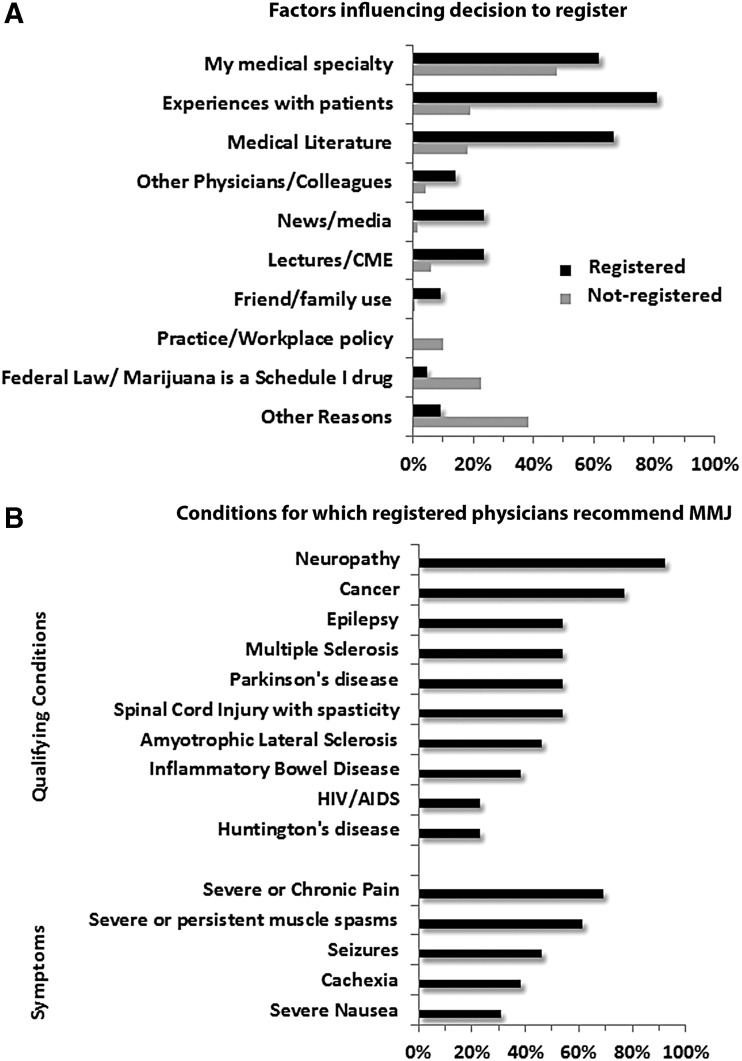
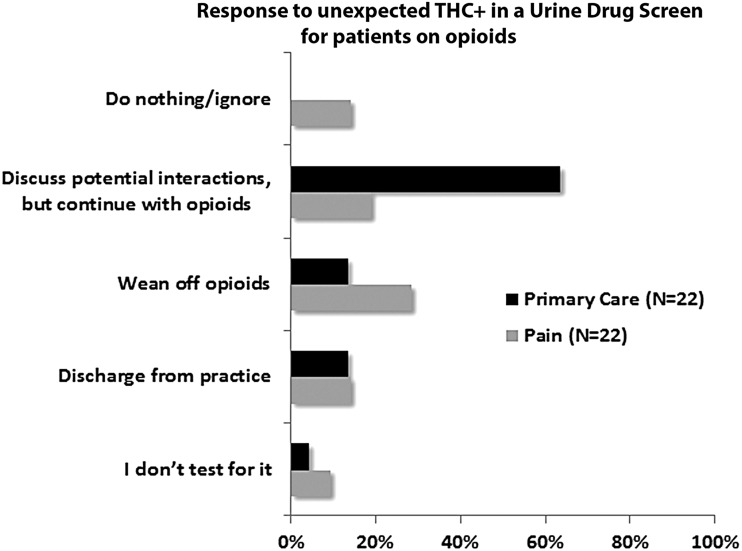
Introduction: In 2014, New York (NY) became the 23rd state to legalize medical marijuana (MMJ). The purpose of this survey was to collect data about practicing NY physicians' comfort level, opinions, and experience in recommending or supporting patient use of MMJ. Materials and Methods: An anonymous web-based survey was distributed to medical societies and to academic departments in medical schools within NY. Results: A total of 164 responses were analyzed. Physician participants were primarily located in New York City and surrounding areas. The majority (71%) agreed that MMJ should be an option available to patients. Most respondents were not registered to certify MMJ in NY, but were willing to refer patients to registered physicians. Common reasons for not registering included specialty and federal status of cannabis. More than 75% reported having patients who used cannabis for symptom control, and 50% reported having patients who inquired about MMJ within the past year. Most respondents are willing to discuss MMJ with their patients, but had little familiarity with the state program and a modest knowledge of the endocannabinoid system. Pain was a common symptom for which cannabis was recommended by registered physicians (69%) and purportedly used by patients (83%). Most respondents would consider MMJ as an adjuvant to opioids, and 84% believed opioids have greater risks than MMJ. Conclusion: Given that the majority of surveyed physicians support MMJ as an option for patients, few are registered and have adequate knowledge of MMJ. Although our study sample is small and geographically limited, our survey results highlight key physician issues that are likely applicable to practitioners in other states. Concerted efforts are needed at the federal, state, and academic levels to provide practitioners with evidence-based guidelines for the safe use of MMJ.
Keywords: New York; medical marijuana; opioids; pain; physicians; survey.
Conflict of interest statement
No competing financial interests exist.
Figures

References
-
- New York State Department of Health (NYSDOH). New York State Medical Marijuana Program. 2017. Available at www.health.ny.gov/regulations/medical_marijuana (accessed August8, 2017)
-
- Prescription Drug Abuse Policy System (PDAPS). Medical Marijuana Laws for Patients. 2017. Available at www.pdaps.org/datasets/medical-marijuana-patient-related-laws-1501600783 (accessed October30, 2017)
-
- Americans for Safe Access. Legal Information By State & Federal Law. Available at www.safeaccessnow.org/state_and_federal_law (accessed October30, 2017)
-
- CSA. Title 21 United States Code (USC) Controlled Substances Act. 2012. Available at www.deadiversion.usdoj.gov/21cfr/21usc/812.htm (accessed August7, 2017)
-
- Mead A. The legal status of cannabis (marijuana) and cannabidiol (CBD) under U.S. law. Epilepsy Behav. 2017;70(Pt B):288–291 - PubMed
LinkOut - more resources
Full Text Sources
Other Literature Sources
Miscellaneous
