


The relation of maternal hypothyroidism and hypothyroxinemia during pregnancy on preterm birth: An updated systematic review and meta-analysis
- PMID: 29662962
- PMCID: PMC5894470
The relation of maternal hypothyroidism and hypothyroxinemia during pregnancy on preterm birth: An updated systematic review and meta-analysis
Abstract
Background: The clinical consequences of hypothyroidism and hypothyroxinemia during pregnancy such as preterm birth are not still clear.
Objective: The aim of this meta-analysis was to estimate the relation of clinical and subclinical hypothyroidism and hypothyroxinemia during pregnancy and preterm birth.
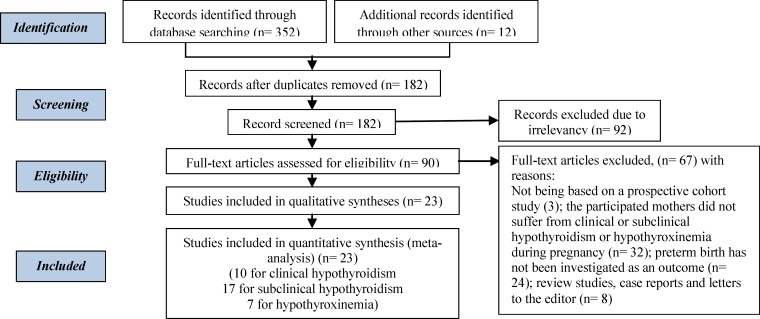
Materials and methods: In this meta-analysis, Preferred Reporting Items for Systematic review and Meta-Analysis were utilized. Searching the cohort studies were done by two researchers independently without any restrictions on Scopus, PubMed, Science Direct, Embase, Web of Science, CINAHL, Cochrane, EBSCO and Google Scholar databases up to 2017. The heterogeneity of the studies was checked by the Cochran's Q test and I2 index. Both random and fixed-effects models were used for combining the relative risk and 95% confidence intervals. Data were analyzed using Comprehensive Meta-Analysis software version 2.
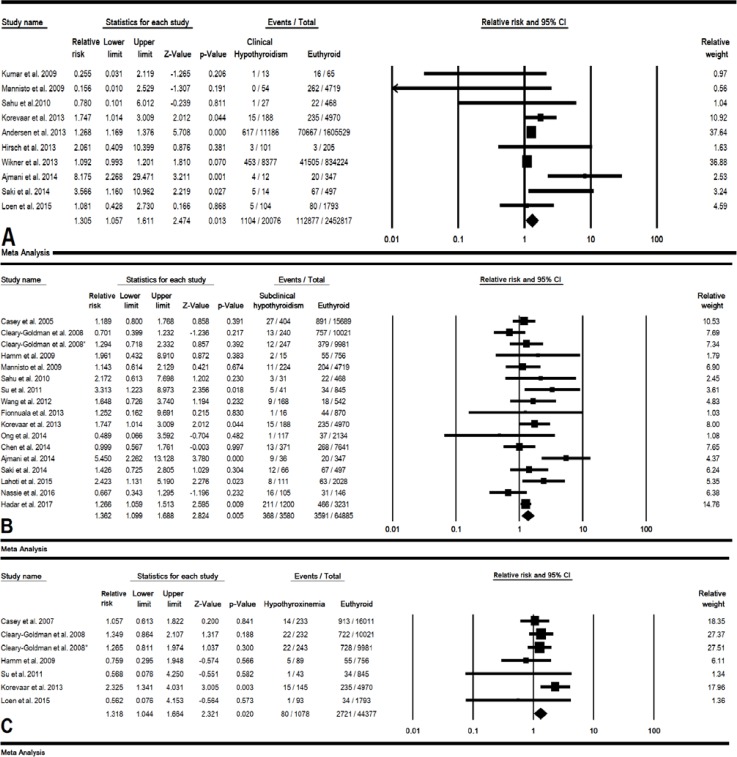
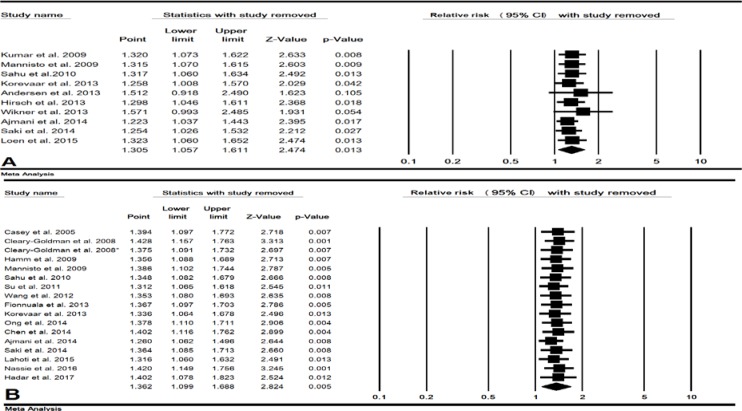
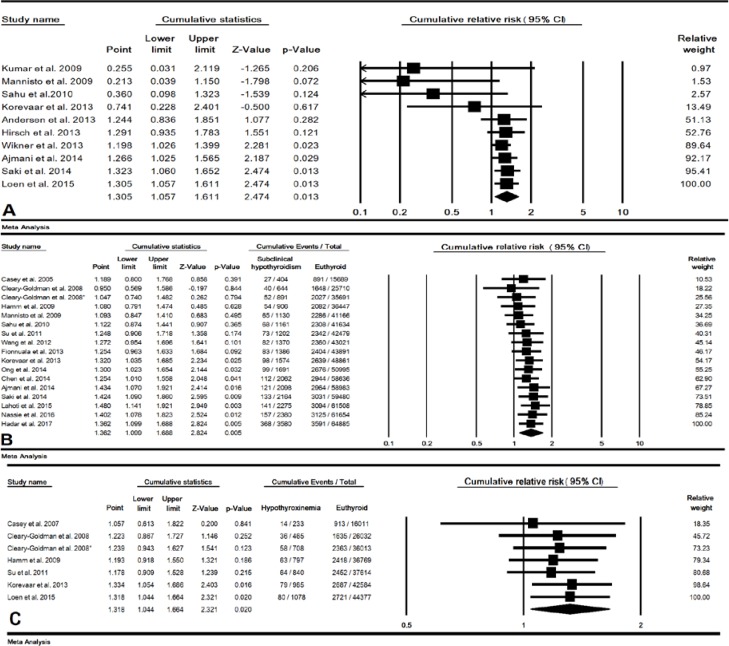
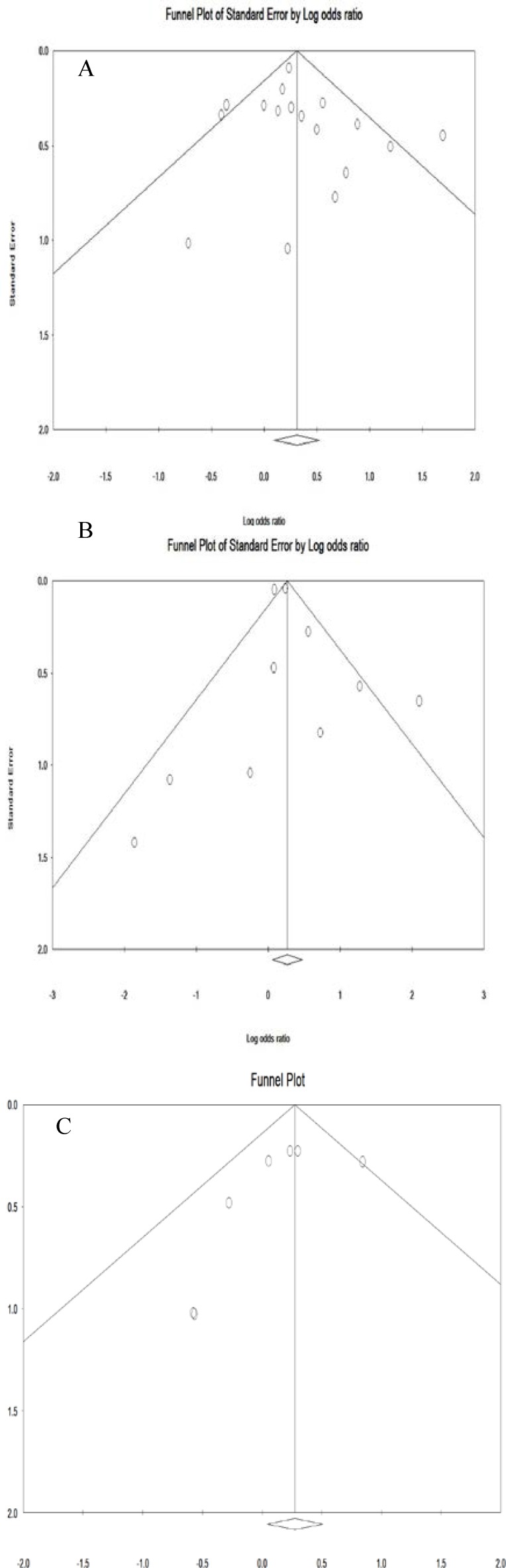
Results: Twenty-three studies were included in the meta-analysis. The relative risks of the clinical hypothyroidism, subclinical hypothyroidism and hypothyroxinemia during pregnancy on preterm birth was estimated 1.30 (95% CI: 1.05-1.61, p=0.013, involving 20079 cases and 2452817 controls), 1.36 (95% CI: 1.09-1.68, p=0.005, involving 3580 cases and 64885 controls) and 1.31 (95% CI: 1.04-1.66, p=0.020, involving 1078 cases and 44377 controls), respectively.
Conclusion: The incidence of preterm birth was higher among mothers with clinical and subclinical hypothyroidism or hypothyroxinemia during pregnancy compared to euthyroid mothers, and these relations were significant. Therefore, gynecologists and endocrinologists should manage these patients to control the incidence of adverse pregnancy outcomes such as preterm birth.
Keywords: Cohort; Hypothyroidism; Meta-analysis; Pregnancy; Preterm birth.
Conflict of interest statement
All authors declare that there is no conflict of interest.
Figures
References
-
- Laurberg P, Andersen SL, Pedersen IB, Andersen S, Carle A. Screening for overt thyroid disease in early pregnancy may be preferable to searching for small aberrations in thyroid function tests. Clin Endocrinol (Oxf) 2013;79:297–304. - PubMed
-
- Glinoer D. The regulation of thyroid function in pregnancy: pathways of endocrine adaptation from physiology to pathology. Endocr Rev. 1997;18:404–433. - PubMed
-
- Karakosta P, Alegakis D, Georgiou V, Roumeliotaki T, Fthenou E, Vassilaki M, et al. Thyroid dysfunction and autoantibodies in early pregnancy are associated with increased risk of gestational diabetes and adverse birth outcomes. J Clin Endocrinol Metab. 2012;97:4464–4472. - PubMed
-
- Skjoldebrand L, Brundin J, Carlstrom A, Pettersson T. Thyroid associated components in serum during normal pregnancy. Acta Endocrinol (Copenh) 1982;100:504–511. - PubMed
Publication types
LinkOut - more resources
Full Text Sources