


When tractography meets tracer injections: a systematic study of trends and variation sources of diffusion-based connectivity
- PMID: 29663135
- PMCID: PMC5997540
- DOI: 10.1007/s00429-018-1663-8
When tractography meets tracer injections: a systematic study of trends and variation sources of diffusion-based connectivity
Abstract
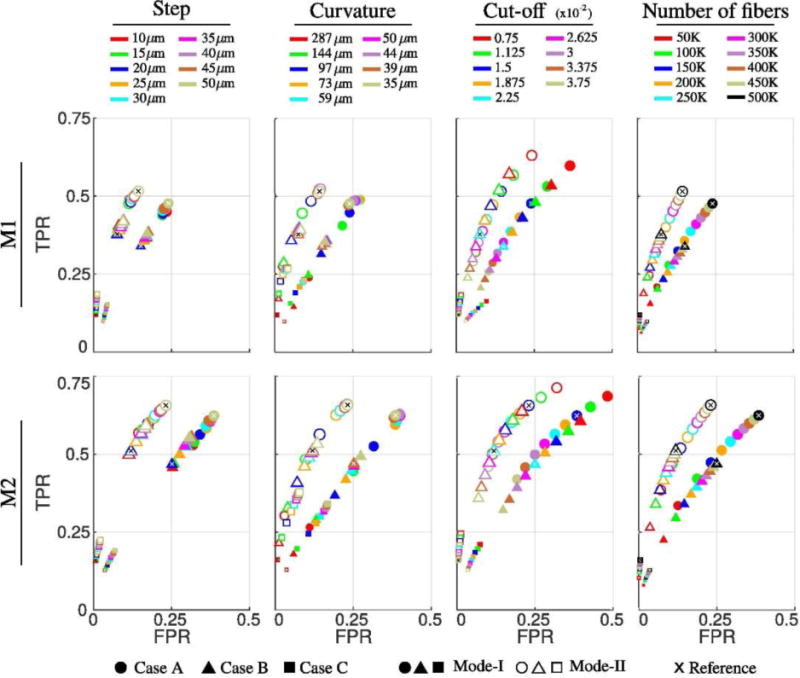
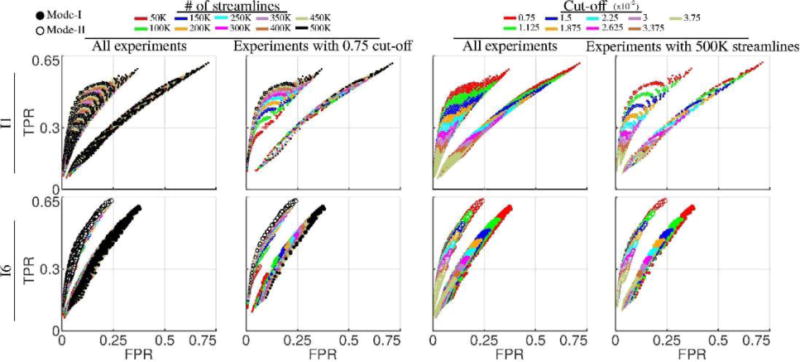
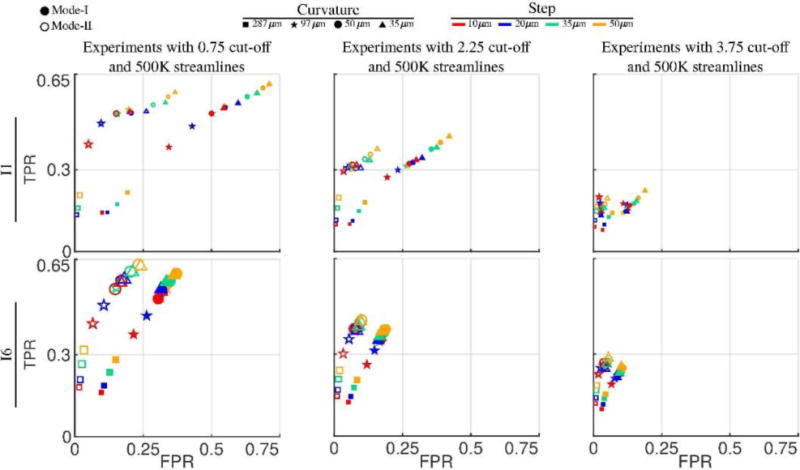
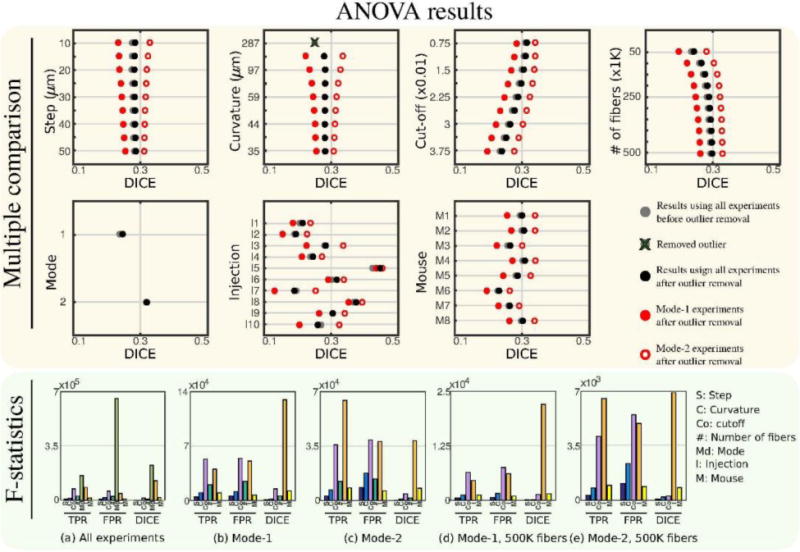
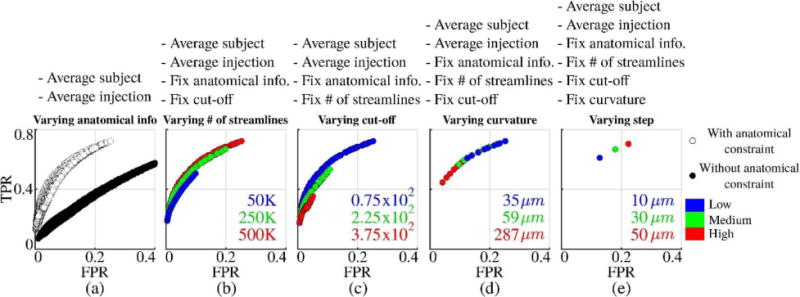
Tractography is a powerful technique capable of non-invasively reconstructing the structural connections in the brain using diffusion MRI images, but the validation of tractograms is challenging due to lack of ground truth. Owing to recent developments in mapping the mouse brain connectome, high-resolution tracer injection-based axonal projection maps have been created and quickly adopted for the validation of tractography. Previous studies using tracer injections mainly focused on investigating the match in projections and optimal tractography protocols. Being a complicated technique, however, tractography relies on multiple stages of operations and parameters. These factors introduce large variabilities in tractograms, hindering the optimization of protocols and making the interpretation of results difficult. Based on this observation, in contrast to previous studies, in this work we focused on quantifying and ranking the amount of performance variation introduced by these factors. For this purpose, we performed over a million tractography experiments and studied the variability across different subjects, injections, anatomical constraints and tractography parameters. By using N-way ANOVA analysis, we show that all tractography parameters are significant and importantly performance variations with respect to the differences in subjects are comparable to the variations due to tractography parameters, which strongly underlines the importance of fully documenting the tractography protocols in scientific experiments. We also quantitatively show that inclusion of anatomical constraints is the most significant factor for improving tractography performance. Although this critical factor helps reduce false positives, our analysis indicates that anatomy-informed tractography still fails to capture a large portion of axonal projections.
Keywords: ANOVA; Connectome; Mouse; Tractography; Validation.
Conflict of interest statement
Figures
References
-
- Albi A, Meola A, Zhang F, Kahali P, Rigolo L, Tax CMW, Ciris PA, Essayed WI, Unadkat P, Norton I, Rathi Y, Olubiyi O, Golby AJ, O’Donnell LJ. Image Registration to Compensate for EPI Distortion in Patients with Brain Tumors: An Evaluation of Tract-Specific Effects. J Neuroimaging. 2018 doi: 10.1111/jon.12485. - DOI - PMC - PubMed
-
- Aydogan DB, Shi Y. Probabilistic Tractography for Topographically Organized Connectomes. In: Ourselin S, Joskowicz L, Sabuncu MR, Unal G, Wells W, editors. Medical Image Computing and Computer-Assisted Intervention – MICCAI 2016. Springer International Publishing; Cham: 2016. pp. 201–209. (19th International Conference, Athens, Greece, October 17–21, 2016, Proceedings, Part I). - DOI - PMC - PubMed
MeSH terms
Grants and funding
- P41 EB015922/EB/NIBIB NIH HHS/United States
- P50AG005142/National Institute on Aging
- U01 AG051218/AG/NIA NIH HHS/United States
- P50 AG005142/AG/NIA NIH HHS/United States
- P41EB015922/National Institute of Biomedical Imaging and Bioengineering
- U01EY025864/National Eye Institute
- U01 EY025864/EY/NEI NIH HHS/United States
- K01 EB013633/EB/NIBIB NIH HHS/United States
- U01AG051218/National Institute on Aging
- R01 EB022744/EB/NIBIB NIH HHS/United States
- K01EB013633/National Institute of Biomedical Imaging and Bioengineering
- R01EB022744/National Institute of Biomedical Imaging and Bioengineering
LinkOut - more resources
Full Text Sources
Other Literature Sources
