


The Potential Role of SGLT2 Inhibitors in the Treatment of Type 1 Diabetes Mellitus
- PMID: 29663292
- PMCID: PMC6429906
- DOI: 10.1007/s40265-018-0901-y
The Potential Role of SGLT2 Inhibitors in the Treatment of Type 1 Diabetes Mellitus
Abstract
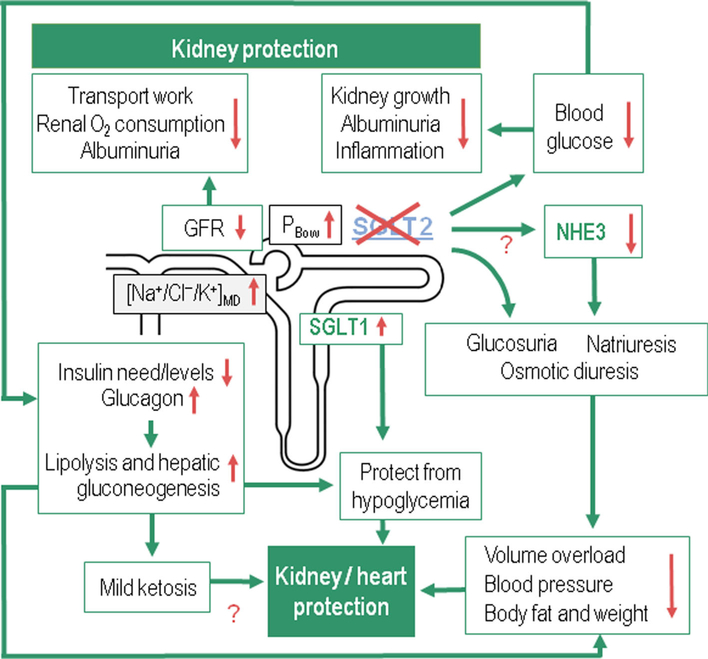
Type 1 diabetes mellitus is a difficult disease to treat due to the relative paucity of therapeutic options other than injectable insulin. The latter, however, can induce hypoglycemia, which has been linked to enhanced cardiovascular risk. Sodium glucose cotransporter 2 (SGLT2) inhibitors are a new class of oral anti-hyperglycemic medications that do not increase the hypoglycemia risk and are US Food and Drug Administration (FDA) approved in type 2 diabetes mellitus. SGLT2 inhibitors may also be of benefit in type 1 diabetic patients, in addition to insulin, although they have not yet been approved for this indication. By blocking SGLT2 in the early proximal tubules of the kidney, these drugs decrease renal glucose retention, which is enhanced in hyperglycemia, thereby improving blood glucose control, in type 1 and type 2 diabetic patents. Their low hypoglycemia risk is due to the compensating reabsorption capacity of another glucose transporter, SGLT1, in the downstream late proximal tubule and the body's metabolic counter-regulation, which remains intact during SGLT2 inhibition. When insulin dosage is lowered too much, SGLT2 inhibitors can enhance ketogenesis to the extent that the risk of diabetic ketoacidosis increases, particularly in type 1 diabetic patients. SGLT2 inhibitors improve the renal and cardiovascular outcome in type 2 diabetic patients. The mechanisms likely include a reduction in glomerular hyperfiltration, blood pressure, volume overload, and body weight, as well as lowering blood glucose without increasing the hypoglycemia risk. The same mechanistic effects are induced in type 1 diabetic patients. More studies are needed with SGLT2 inhibitors in type 1 diabetic patients, including renal and cardiovascular clinical outcome trials, to fully evaluate their therapeutic potential in this specific population.
Conflict of interest statement
Compliance with Ethical Standards
Figures
References
-
- Heerspink HJL, Perkins BA, Fitchett DH, et al. Sodium glucose cotransporter 2 inhibitors in the treatment of diabetes mellitus. Circulation. 2016;134:752–72. - PubMed
-
- Norton L, Shannon CE, Fourcaudot M, et al. Sodium-glucose cotransporter (SGLT) and glucose transporter (GLUT) expression in the kidney of type 2 diabetic subjects. Diabetes Obes Metab. 2017;19:1322–6. - PubMed
-
- Solini A, Rossi C, Mazzanti CM, et al. Sodium-glucose cotransporter (SGLT)2 and SGLT1 renal expression in patients with type 2 diabetes. Diabetes Obes Metab. 2017;19:1289–94. - PubMed
Publication types
MeSH terms
Substances
Grants and funding
LinkOut - more resources
Full Text Sources
Other Literature Sources
Medical
