Liraglutide Enhances Autophagy and Promotes Pancreatic β Cell Proliferation to Ameliorate Type 2 Diabetes in High-Fat-Fed and Streptozotocin-Treated Mice
- PMID: 29664069
- PMCID: PMC5917824
- DOI: 10.12659/msm.906286
Liraglutide Enhances Autophagy and Promotes Pancreatic β Cell Proliferation to Ameliorate Type 2 Diabetes in High-Fat-Fed and Streptozotocin-Treated Mice
Abstract
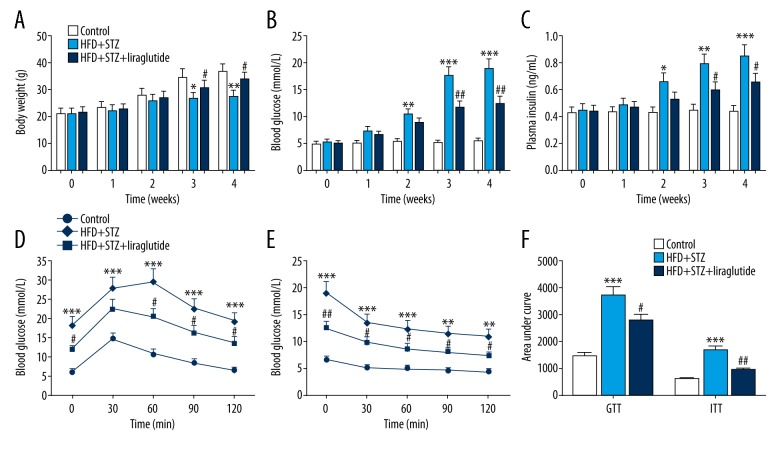
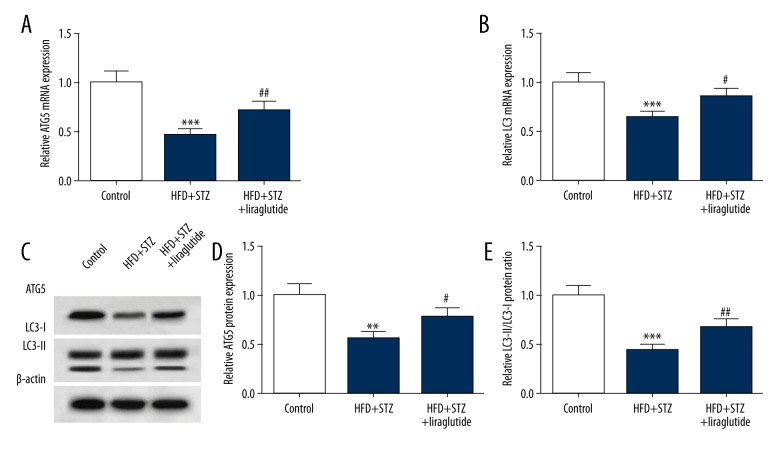
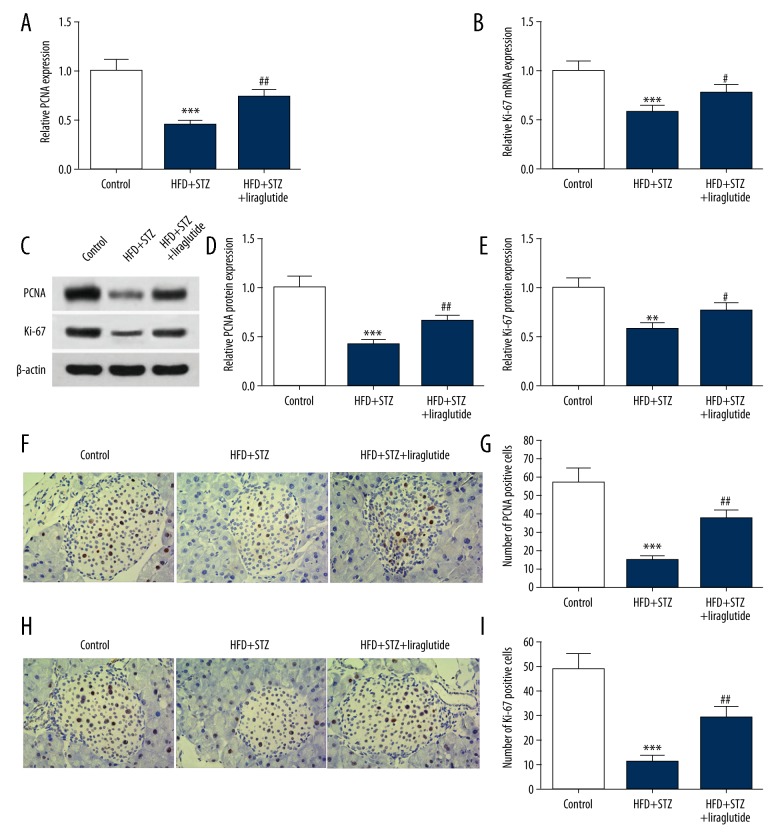
BACKGROUND Clinical and experimental studies have revealed that liraglutide has multiple anti-diabetes biological effects. However, little is known about its role in autophagy and pancreatic β cell proliferation. This study aimed to assessed the effects of liraglutide on pancreatic b cell proliferation and autophagy in a mouse model of type 2 diabetes. MATERIAL AND METHODS The effect of liraglutide on autophagy and proliferation in pancreatic β cells was investigated using a high-fat-fed and streptozotocin-induced mouse model of type 2 diabetes. RESULTS Liraglutide significantly improved the symptoms of high-fat-fed (HFD) and streptozotocin (STZ)-induced type 2 diabetic mice, as indicated by body weight gain, reduction of blood glucose and plasma insulin, and enhanced sensitivity to insulin. The results of quantitative real-time polymerase chain reaction and Western blot analysis showed that liraglutide upregulated AGT5 expression and promoted the conversion of LC3-I to LC3-II, thus improving the defective autophagy. In addition, we observed that both mRNA and protein expressions of PCNA and Ki-67 were upregulated by liraglutide treatment. Immunocytochemical staining results showed that the number of PCNA- or Ki-67-positive cells in pancreatic islet tissues in the HFD + STZ + liraglutide group were increased compared with the HFD + STZ group. CONCLUSIONS These results strongly suggest that liraglutide is able to enhance autophagy and promote pancreatic β cell proliferation. This study improves our insights into the mechanism by which liraglutide treatment relieves diabetes, and provides experimental evidence for clinical utilization of liraglutide in type 2 diabetes treatment.
Conflict of interest statement
None.
Figures
References
-
- Aranda-González I, Moguel-Ordóñez Y, Chel-Guerrero L, et al. Evaluation of the antihyperglycemic effect of minor steviol glycosides in normoglycemic and induced-diabetic wistar rats. J Med Food. 2016;19(9):844–52. - PubMed
-
- Shen KP, Su CH, Lu TM, et al. Effects of Grifola frondosa non-polar bioactive components on high-fat diet fed and streptozotocin-induced hyperglycemic mice. Pharm Biol. 2015;53(5):705–9. - PubMed
-
- Ahn EH, Kim DW, Shin MJ, et al. Tat-ATOX1 inhibits streptozotocin-induced cell death in pancreatic RINm5F cells and attenuates diabetes in a mouse model. Int J Mol Med. 2016;38(1):217–24. - PubMed
MeSH terms
Substances
LinkOut - more resources
Full Text Sources
Medical
Miscellaneous