


The (gradual) rise of memory inflation
- PMID: 29664577
- PMCID: PMC5947157
- DOI: 10.1111/imr.12653
The (gradual) rise of memory inflation
Abstract
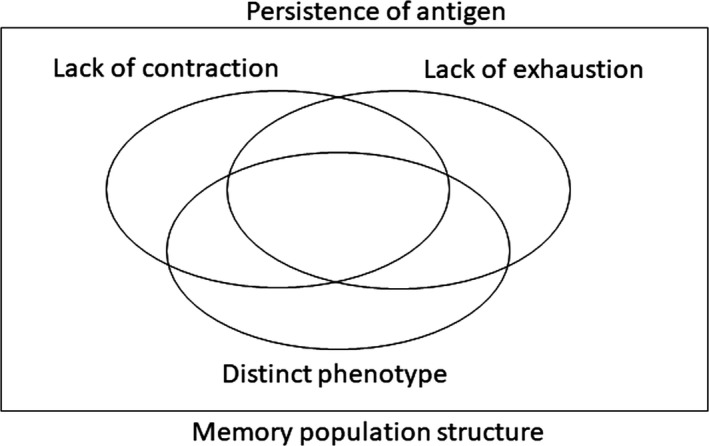
Memory inflation, as a term, has been used for 15 years now to describe the longitudinal development of stable, expanded CD8+ T memory pools with a distinct phenotype and functional profile which emerge in specific infection and vaccine settings. These settings have in common the persistence of antigen, especially cytomegalovirus infection but also more recently adenoviral vector vaccination. However, in contrast to chronic infections which lead to "exhaustion" the repeated antigen encounters experienced by CD8+ T cells lead to development of a robust T-cell population structure which maintains functionality and size. In this review, I will discuss how the ideas around this form of memory have evolved over time and some new models which can help explain how these populations are induced and sustained. These models are relevant to immunity against persistent viruses, to novel vaccine strategies and to concepts about aging.
Keywords: CD8+ T cell; adenovirus; cytomegalovirus; exhaustion; inflation; memory; vaccination.
© 2018 The Author. Immunological Reviews Published by John Wiley & Sons Ltd.
Figures

References
-
- Karrer U, Sierro S, Wagner M, et al. Memory inflation: continuous accumulation of antiviral CD8 + T cells over time. J Immunol. 2003;170:2022‐2029. - PubMed
-
- Sierro S, Rothkopf R, Klenerman P. Evolution of diverse antiviral CD8 + T cell populations after murine cytomegalovirus infection. Eur J Immunol. 2005;35:1113‐1123. - PubMed
-
- Munks MW, Cho KS, Pinto AK, Sierro S, Klenerman P, Hill AB. Four distinct patterns of memory CD8 T cell responses to chronic murine cytomegalovirus infection. J Immunol. 2006;177:450‐458. - PubMed
-
- Seckert CK, Griessl M, Buttner JK, et al. Viral latency drives ‘memory inflation’: a unifying hypothesis linking two hallmarks of cytomegalovirus infection. Med Microbiol Immunol. 2012;201:551‐566. - PubMed
Publication types
MeSH terms
Grants and funding
LinkOut - more resources
Full Text Sources
Other Literature Sources
Research Materials
