


An observational study of immigrant mortality differences in Norway by reason for migration, length of stay and characteristics of sending countries
- PMID: 29665802
- PMCID: PMC5905163
- DOI: 10.1186/s12889-018-5435-4
An observational study of immigrant mortality differences in Norway by reason for migration, length of stay and characteristics of sending countries
Abstract
Background: Knowledge of mortality differentials in immigrant groups depending on their reason for migration, length of stay in host countries and characteristics of sending countries may be beneficial for policy interventions aimed to improve various immigrant groups' health and welfare.
Methods: We employed discrete-time hazard regression models with time-varying covariates to compare the death risk of immigrants to those of Norwegian-born natives using linked register data on the Norwegian population aged 25-79 during 1990-2015. More than 492,000 deaths occurred in around 4.6 million individuals. All analyses were adjusted for sex, age, calendar time and sociodemographic characteristics.
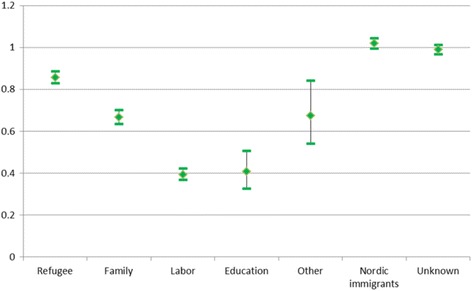
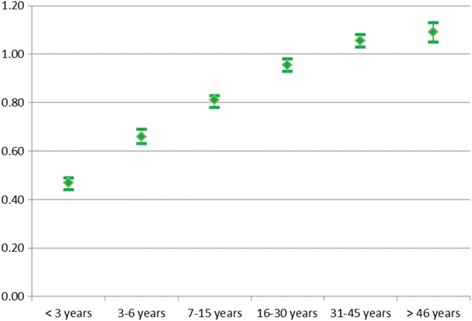
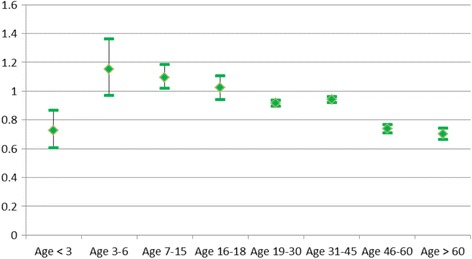
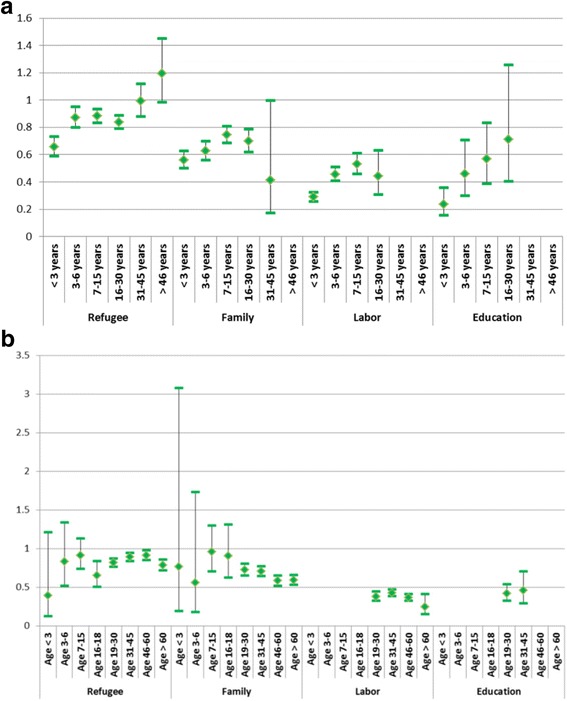
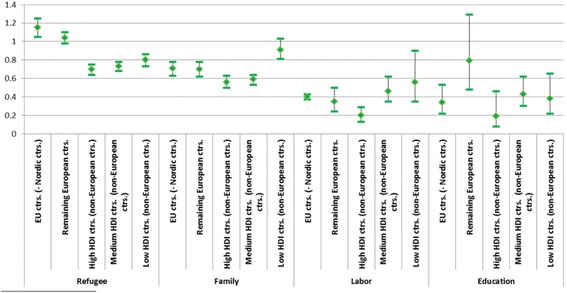
Results: Immigrants had an 11% survival advantage overall. Those immigrating due to work or education had the lowest death risk, whereas refugees had the highest death risk (albeit lower than that of natives). Death risks increased markedly with length of stay, and were most pronounced for those having spent more than 40% of their lives in Norway. Net of reason for migration, only minor differences were observed depending on Human Development Index characteristics of sending countries.
Conclusion: Independent of reason for migration and characteristics of sending countries, those who immigrate to Norway in adulthood appear to be particularly healthy. The higher death risk associated with prolonged lengths of stay suggests that disadvantageous 'acculturation' or stress factors related to the post-migration period may play a role in the long run. The health and welfare of long-term immigrants thus warrants further research.
Keywords: Acculturation; Healthy migrant; Immigrant; Length of stay; Mortality; Norway; Reason for migration; Social causation.
Conflict of interest statement
Authors’ information
AS is a Senior Researcher at Statistics Norway, focusing on inequalities in health, morbidity and mortality. She holds a PhD in community medicine. MTD is a Senior Advisor and responsible for immigration statistics at Statistics Norway. She holds detailed knowledge of the data sources used, including their strengths and weaknesses. BNK is a MD/PHD. She is a Researcher at the Norwegian Centre for Migration and Health (NAKMI), at the Norwegian Institute of Public Health (NIPH), and an Associate Professor at the Department of Global Health at the University of Oslo. ED is a MD/PhD with a specialization in Family Medicine. She is the Deputy Director of NAKMI, NIPH, and is an Associate Professor at the Department for Global Public Health and Primary Care at the University of Bergen.
Ethics approval and consent to participate
The data linkage and analyses have been conducted in accordance with the Norwegian 1989 Statistics Act, §3–1 c, conf. §§ 1–1 and 2–2, and has been approved by the Norwegian Board of Ethics. As only administrative data were used, the Norwegian Board of Ethics waived the need for informed consent. The research was carried out in compliance with the Helsinki Declaration.
Competing interests
The authors declare that they have no competing interests.
Publisher’s Note
Springer Nature remains neutral with regard to jurisdictional claims in published maps and institutional affiliations.
Figures
References
Publication types
MeSH terms
Grants and funding
LinkOut - more resources
Full Text Sources
Other Literature Sources
Medical
