


IL-1 Family Cytokine Pathways Underlying NAFLD: Towards New Treatment Strategies
- PMID: 29665983
- PMCID: PMC5939989
- DOI: 10.1016/j.molmed.2018.03.005
IL-1 Family Cytokine Pathways Underlying NAFLD: Towards New Treatment Strategies
Abstract
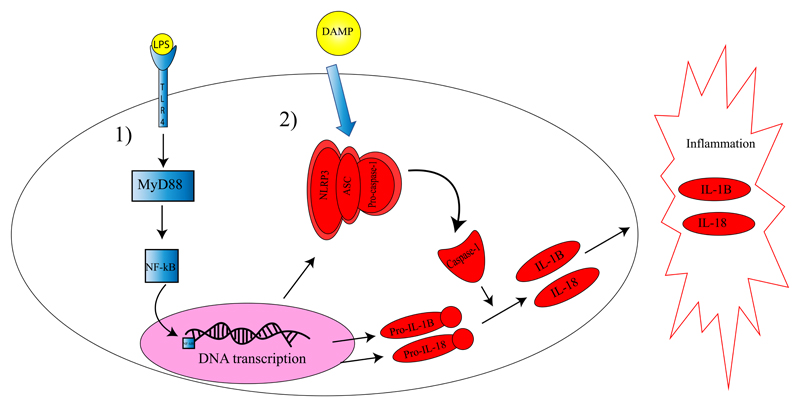
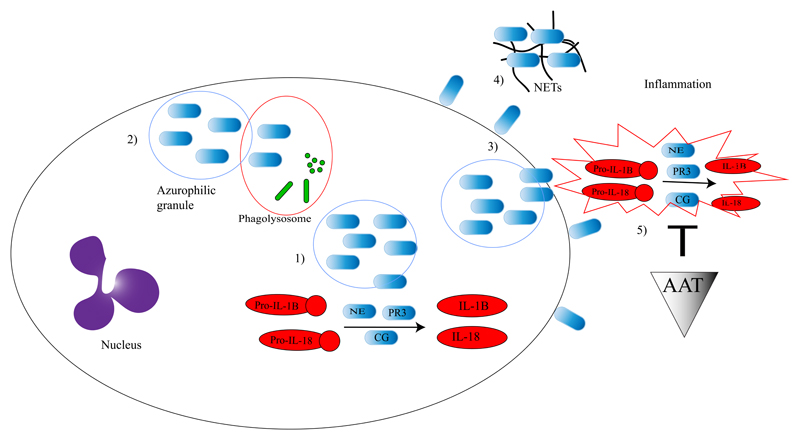
Nonalcoholic fatty liver disease (NAFLD) is the most common liver disease worldwide. Pathways responsible for the activation of IL-1 family cytokines are key in the development of NAFLD but underlying mechanisms are not fully understood. Many studies have focused on the inflammasome-caspase-1 pathway and have shown that this pathway is an important inducer of inflammation in NAFLD. However, this pathway is not solely responsible for the activation of proinflammatory cytokines. Also, neutrophil serine proteases (NSPs) are capable of activating cytokines and recent studies reported that these proteases also contribute to NAFLD. These studies provided, for the first time, evidence that this inflammasome-independent pathway is involved in NAFLD. In our opinion, these new insights open up new approaches for therapeutic intervention.
Keywords: inflammasome; inflammation; interleukin-1; neutrophil serine proteases; nonalcoholic fatty liver disease; obesity.
Copyright © 2018 Elsevier Ltd. All rights reserved.
Conflict of interest statement
The authors declare to have no competing interests
Figures
Comment in
-
Effect of dapagliflozin against NAFLD and dyslipidemia in type 2 diabetic albino rats: possible underlying mechanisms.Eur Rev Med Pharmacol Sci. 2023 Sep;27(17):8101-8109. doi: 10.26355/eurrev_202309_33570. Eur Rev Med Pharmacol Sci. 2023. PMID: 37750638
References
-
- European Association for the Study of the L, European Association for the Study of D, European Association for the Study of O. EASL-EASD-EASO Clinical Practice Guidelines for the management of non-alcoholic fatty liver disease. Journal of hepatology. 2016;64(6):1388–402. - PubMed
-
- Kakino S, Ohki T, Nakayama H, Yuan X, Otabe S, Hashinaga T, et al. Pivotal Role of TNF-alpha in the Development and Progression of Nonalcoholic Fatty Liver Disease in a Murine Model. Horm Metab Res. 2017 - PubMed
-
- Szabo G, Petrasek J. Inflammasome activation and function in liver disease. Nature reviews Gastroenterology & hepatology. 2015;12(7):387–400. - PubMed
Publication types
MeSH terms
Substances
LinkOut - more resources
Full Text Sources
Other Literature Sources
Medical
