A cluster of two human cases of tick-borne encephalitis (TBE) transmitted by unpasteurised goat milk and cheese in Germany, May 2016
- PMID: 29667575
- PMCID: PMC6836198
- DOI: 10.2807/1560-7917.ES.2018.23.15.17-00336
A cluster of two human cases of tick-borne encephalitis (TBE) transmitted by unpasteurised goat milk and cheese in Germany, May 2016
Abstract
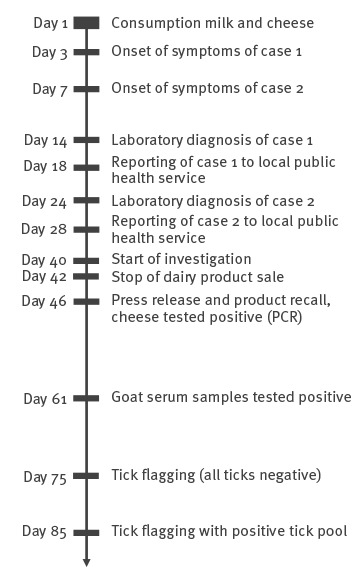
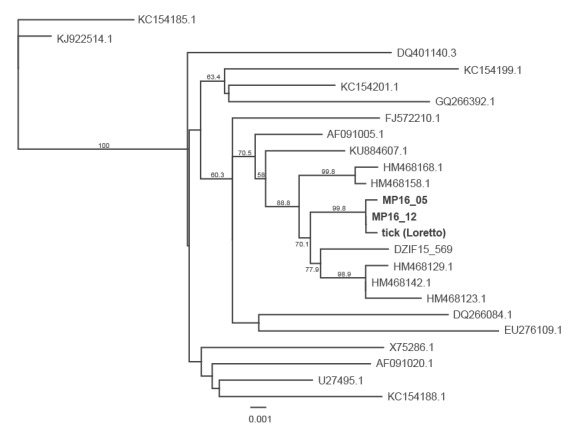
In May 2016, two cases of tick-borne encephalitis (TBE) were confirmed by serology (positive IgM and IgG antibodies against TBE virus (TBEV) in serum), with a possible link to raw milk and cheese from a goat farm in a region in Baden-Württemberg, Germany not previously known as TBE-endemic. The outbreak investigation identified 32 consumers of goat dairy products (29 consumers, one farm employee, two owners) of whom none had IgM antibodies against TBEV 3-8 weeks after consumption. Of the 27 notified TBE cases in the State, none reported consumption of raw goat milk or cheese from the suspected farm. Five of 22 cheese samples from 18 different batches were RT-qPCR-positive for TBEV -genome, and two of the five samples were confirmed by virus isolation, indicating viability of TBEV in the cheese. Nine of the 45 goats had neutralising TBEV antibodies, two of them with a high titre indicating recent infection. One of 412 Ixodes ricinus was RT-qPCR-positive, and sequencing of the E gene from nucleic acid extracted from the tick confirmed TBEV. Phylogenetic analyses of tick and cheese isolates showed 100% amino acid homology in the E gene and a close relation to TBEV strains from Switzerland and Austria.
Keywords: TBE; Tick-borne encephalitis; unpasteurised.
Conflict of interest statement
Figures
References
-
- Klaus C, Hoffmann D, Hoffmann B, Beer M. Frühsommer-Meningoenzephalitis-Virus-Infektionen bei Tieren – Klinik, Diagnostik und epidemiologische Bedeutung. [Tick-borne encephalitis infections in animals – clinical symptoms, diagnostics and epidemiological relevance] Berl Munch Tierarztl Wochenschr. 2016; advance online publication. German. 10.2376/0005-9366-16062 - DOI
MeSH terms
Substances
LinkOut - more resources
Full Text Sources
Other Literature Sources