


Cardiorespiratory health effects of gaseous ambient air pollution exposure in low and middle income countries: a systematic review and meta-analysis
- PMID: 29669550
- PMCID: PMC5907176
- DOI: 10.1186/s12940-018-0380-3
Cardiorespiratory health effects of gaseous ambient air pollution exposure in low and middle income countries: a systematic review and meta-analysis
Abstract
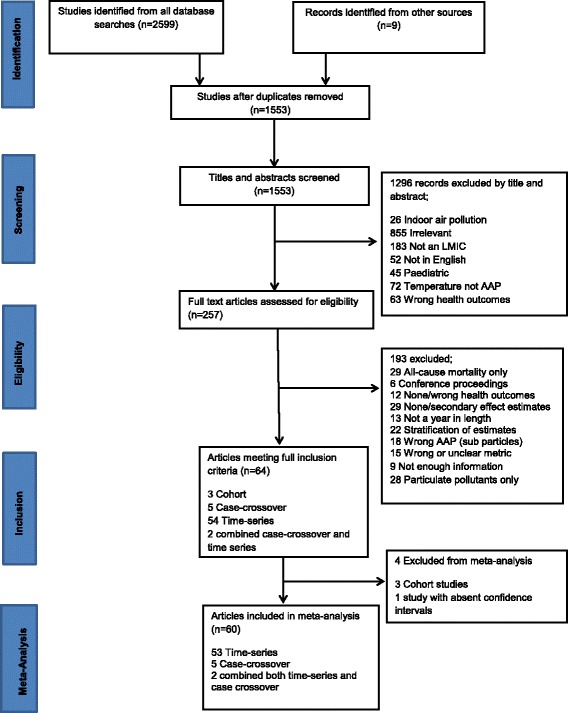
Background: Lack of research on the effects of gaseous pollutants (nitrogen oxides [NOx], sulfur dioxide [SO2], carbon monoxide [CO] and ozone [O3]) in the ambient environment on health outcomes from within low and middle income countries (LMICs) is leading to reliance on results from studies performed within high income countries (HICs). This systematic review and meta-analysis examines the cardiorespiratory health effects of gaseous pollutants in LMICs exclusively.
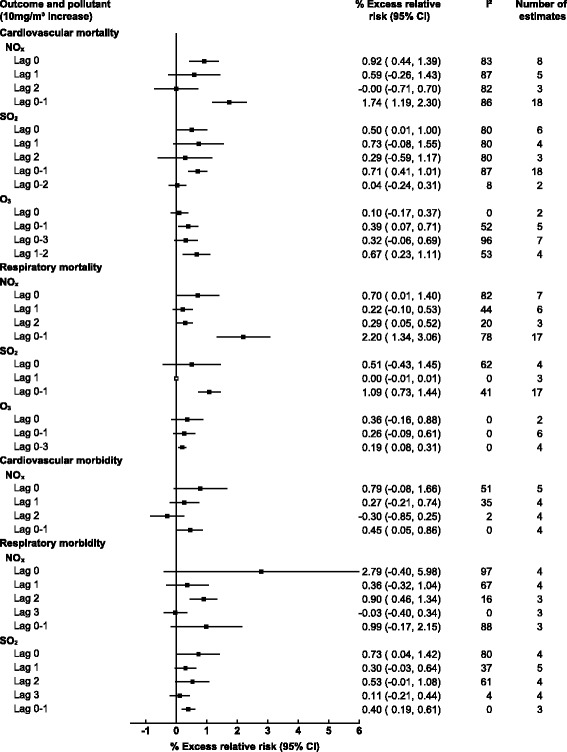
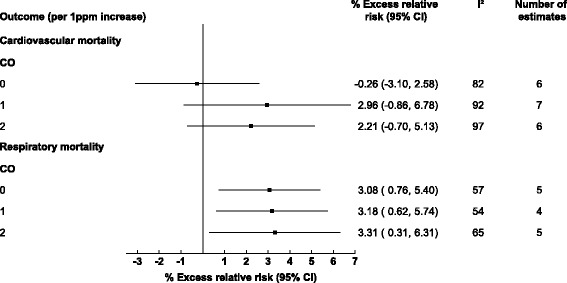
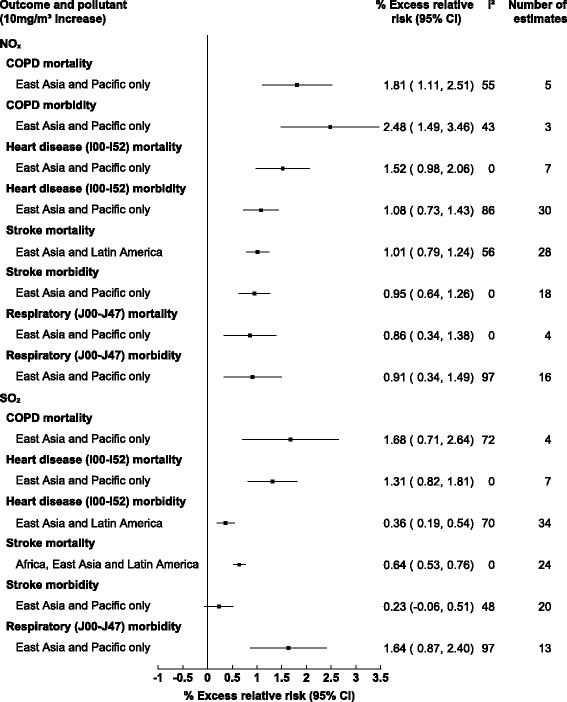
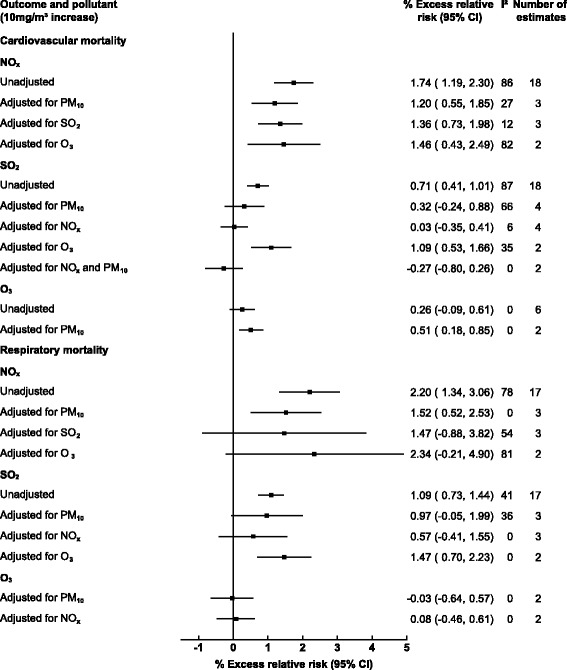
Methods: Systematic searching was carried out and estimates pooled by pollutant, lag and outcome, and presented as excess relative risk per 10 μg/m3 (NOx, SO2, O3) or 1 ppm (CO) increase pollutant. Sub-group analysis was performed examining estimates by specific outcomes, city and co-pollutant adjustment.
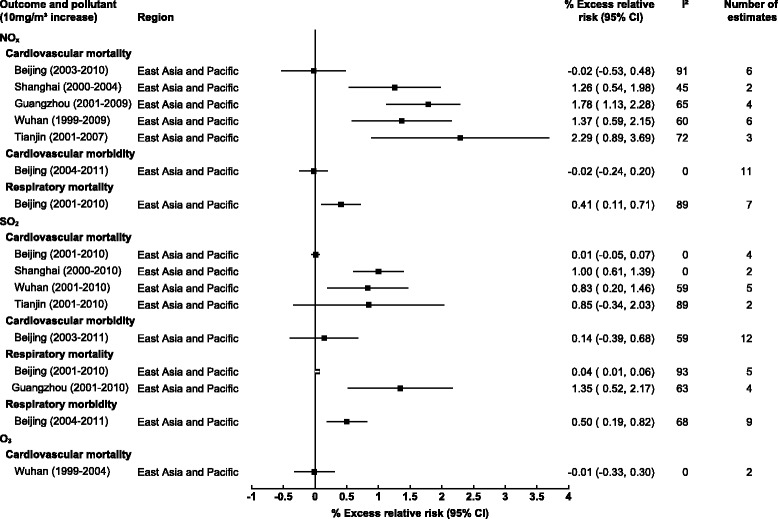
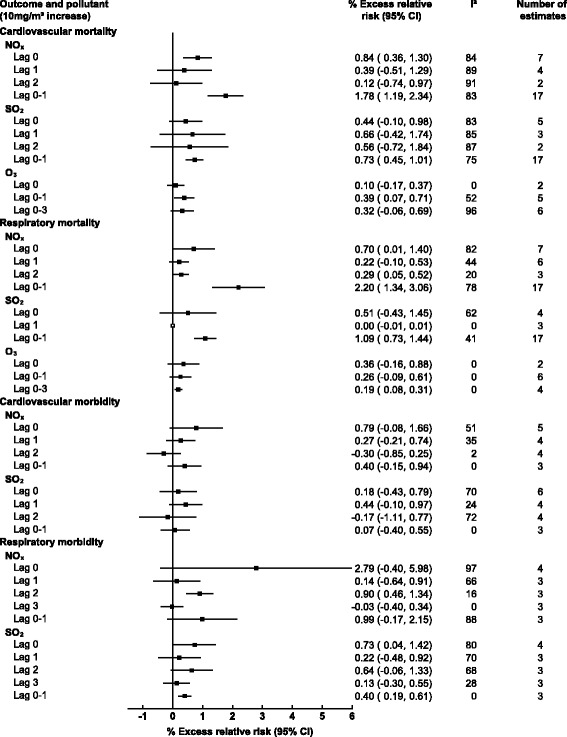
Results: Sixty studies met the inclusion criteria, most (44) from the East Asia and Pacific region. A 10 μg/m3 increase in same day NOx was associated with 0.92% (95% CI: 0.44, 1.39), and 0.70% (0.01, 1.40) increases in cardiovascular and respiratory mortality respectively, same day NOx was not associated with morbidity. Same day sulfur dioxide was associated with 0.73% (0.04, 1.42) and 0.50% (0.01, 1.00) increases in respiratory morbidity and in cardiovascular mortality respectively.
Conclusions: Acute exposure to gaseous ambient air pollution (AAP) is associated with increases in morbidity and mortality in LMICs, with greatest associations observed for cardiorespiratory mortality.
Keywords: Air pollution; Cardiovascular; LMICs; Meta-analysis; Respiratory; Systematic review.
Conflict of interest statement
Competing interests
The authors declare that they have no competing interests.
Publisher’s Note
Springer Nature remains neutral with regard to jurisdictional claims in published maps and institutional affiliations.
Figures
References
-
- Katsouyanni K, Touloumi G, Spix C, Schwartz J, Balducci F, Medina S, et al. Short term effects of ambient Sulphur dioxide and particulate matter on mortality in 12 European cities: results from time series data from the APHEA project. BMJ. 1997;314(7095):1658. doi: 10.1136/bmj.314.7095.1658. - DOI - PMC - PubMed
Publication types
MeSH terms
Substances
Grants and funding
LinkOut - more resources
Full Text Sources
Other Literature Sources
Medical
Miscellaneous
