


Locomotor activity in males of Aedes aegypti can shift in response to females' presence
- PMID: 29669591
- PMCID: PMC5907381
- DOI: 10.1186/s13071-018-2635-9
Locomotor activity in males of Aedes aegypti can shift in response to females' presence
Abstract
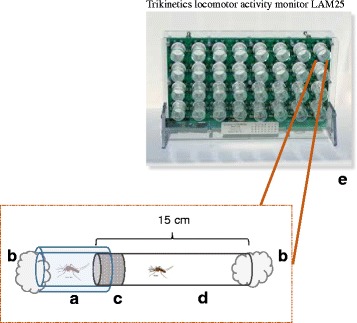
Background: The study of physiological and behavioral traits of mosquito vectors has been of growing relevance for the proposition of alternative methods for controlling vector-borne diseases. Despite this, most studies focus on the female's traits, including the behavior of host seeking, the physiology of disease transmission and the site-choice for oviposition. However, understanding the factors that lead to males' reproductive success is of utmost importance, since it can help building new strategies for constraining population growth. Male behavior towards mating varies widely among species and the communication between males and females is the first aspect securing a successful encounter. Here we used an automated monitoring system to study the profile of locomotor activity of Aedes aegypti males in response to female's presence in an adapted confinement tube. We propose a new method to quantify male response to the presence of females, which can be potentially tested as an indicator of the success of one male in recognizing a female for mating.
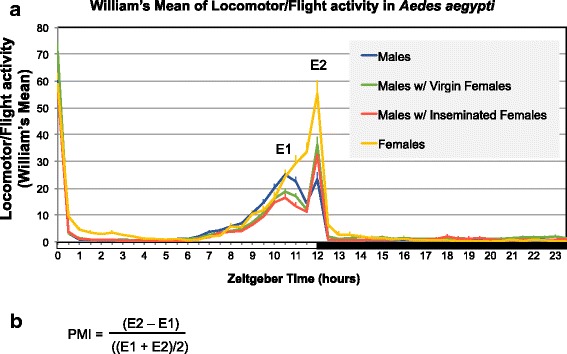
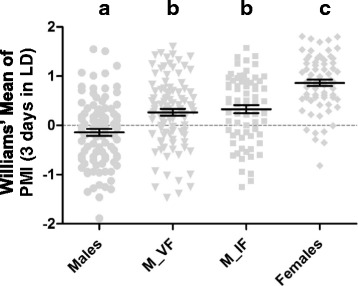
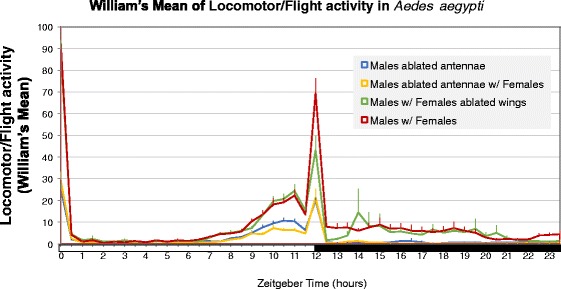
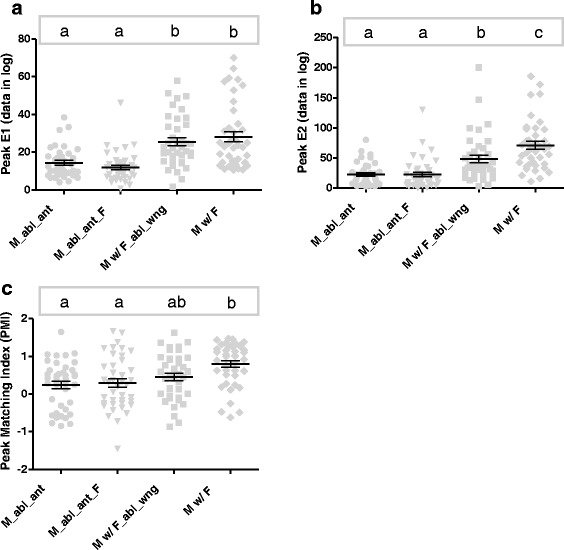
Results: Locomotor activity varies in daily cycles regulated by an endogenous clock and synchronized by external factors, such as light and temperature. Our results show the previously described startle response to light, which is displayed as a steep morning activity peak immediately when lights are on. Activity drops during the day and begins to rise again right before evening, happening about 1.5 h earlier in males than in females. Most interestingly, males' activity shows a double peak, and the second peak is very subtle when males are alone and relatively more pronounced when females are present in the confinement tubes. The switch in the peak of activity, measured by the herein suggested Peak Matching Index (PMI), was significantly different between males with and without females.
Conclusions: The adapted monitoring system used here allowed us to quantify the response of individual males to nearby females in terms of the extent of the activity peak displacement. In this direction, we created the peak matching index (PMI), a new parameter that we anticipate could be interpreted as the inclination of males to respond to females' presence, and further tested as an indicator of the potential for finding females for mating.
Keywords: Aedes aegypti; Circadian activity; Mate recognition; Mosquitoes; Reproductive behavior; Vector control.
Conflict of interest statement
Ethics approval and consent to participate
Not applicable, since we did not use blood-fed females in our experiments.
Consent for publication
Not applicable.
Competing interests
The authors declare that they have no competing interests.
Publisher’s Note
Springer Nature remains neutral with regard to jurisdictional claims in published maps and institutional affiliations.
Figures
References
-
- Belton P. Attractton of male mosquttoes to sound. J Am Mosq Control Assoc. 1994;10:297–301. - PubMed
-
- Rowland M. Changes in the circadian flight activity of the mosquito Anopheles stephensi associated with insemination, blood-feeding, oviposition and nocturnal light intensity. Physiol Entomol. 1989;14:77–84. doi: 10.1111/j.1365-3032.1989.tb00939.x. - DOI
Publication types
MeSH terms
LinkOut - more resources
Full Text Sources
Other Literature Sources
