Review
. 2018 Apr 18;23(4):942.
doi: 10.3390/molecules23040942.

Pectin and Pectin-Based Composite Materials: Beyond Food Texture

Affiliations
Review

Pectin and Pectin-Based Composite Materials: Beyond Food Texture

Claudia Lara-Espinoza et al. Molecules. .

Abstract

Pectins are plant cell wall natural heteropolysaccharides composed mainly of α-1-4 d-galacturonic acid units, which may or may not be methyl esterified, possesses neutral sugars branching that harbor functional moieties. Physicochemical features as pH, temperature, ions concentration, and cosolute presence, affect directly the extraction yield and gelling capacity of pectins. The chemical and structural features of this polysaccharide enables its interaction with a wide range of molecules, a property that scientists profit from to form new composite matrices for target/controlled delivery of therapeutic molecules, genes or cells. Considered a prebiotic dietary fiber, pectins meetmany regulations easily, regarding health applications within the pharmaceutical industry as a raw material and as an agent for the prevention of cancer. Thus, this review lists many emergent pectin-based composite materials which will probably palliate the impact of obesity, diabetes and heart disease, aid to forestall actual epidemics, expand the ken of food additives and food products design.

Keywords: drug delivery system; pectin; pectin composites; therapeutic properties.


Conflict of interest statement

The authors declare no conflict of interest.

Figures
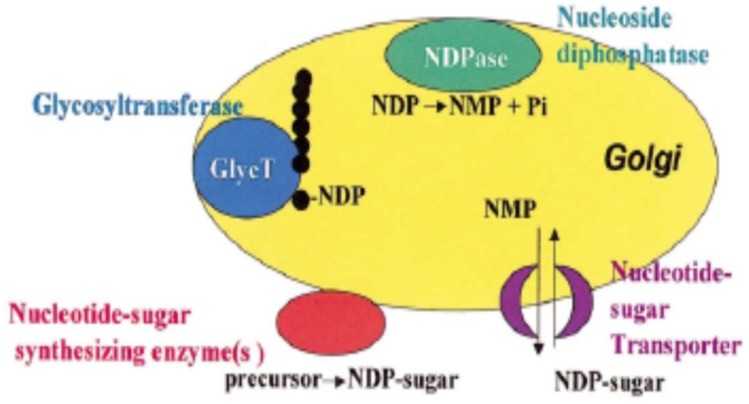
Figure 1
Figure 1
Pectin biosynthesis [26]. The model stablishes that pectin biosynthesis ocurrs in the cytosyolic side of the Golgi apparatus.
Figure 2
Figure 2
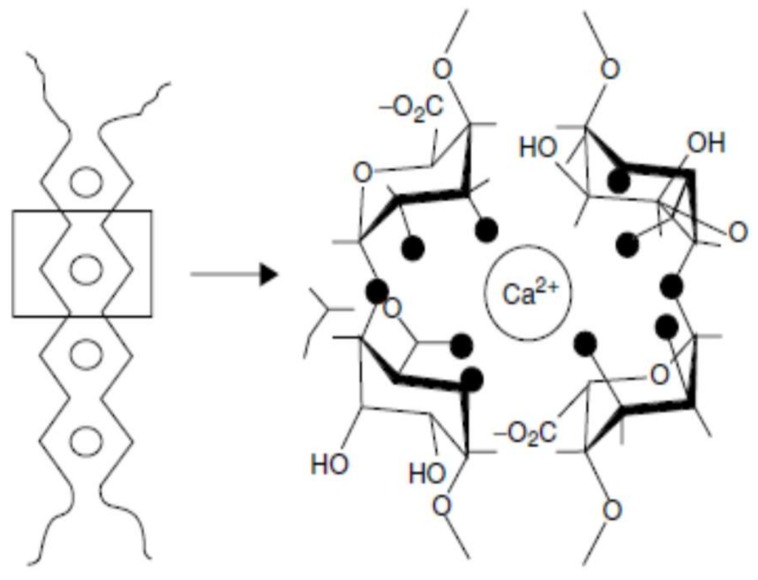
Structure of pectin of low methoxyl as call “the egg box” model. Adapted from [34].
Figure 3
Figure 3
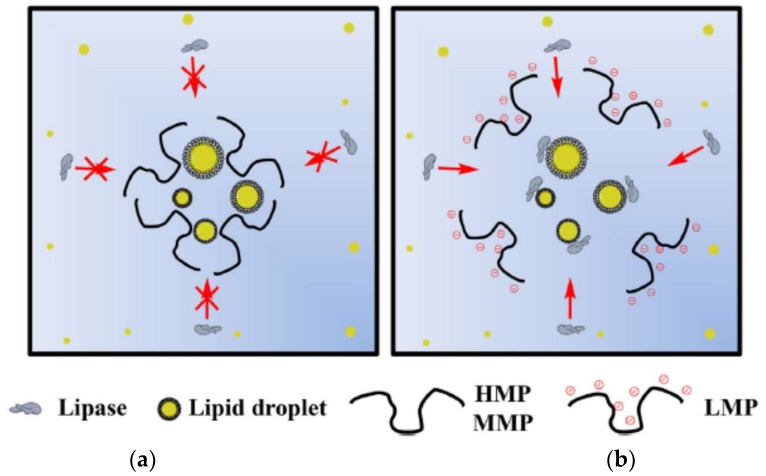
Inhibition o lipid droplet digestion by pectin isolated from banana passion fruit. (a) High and medium methoxyl pectins; (b) low methoxyl pectins [153].
Figure 4
Figure 4
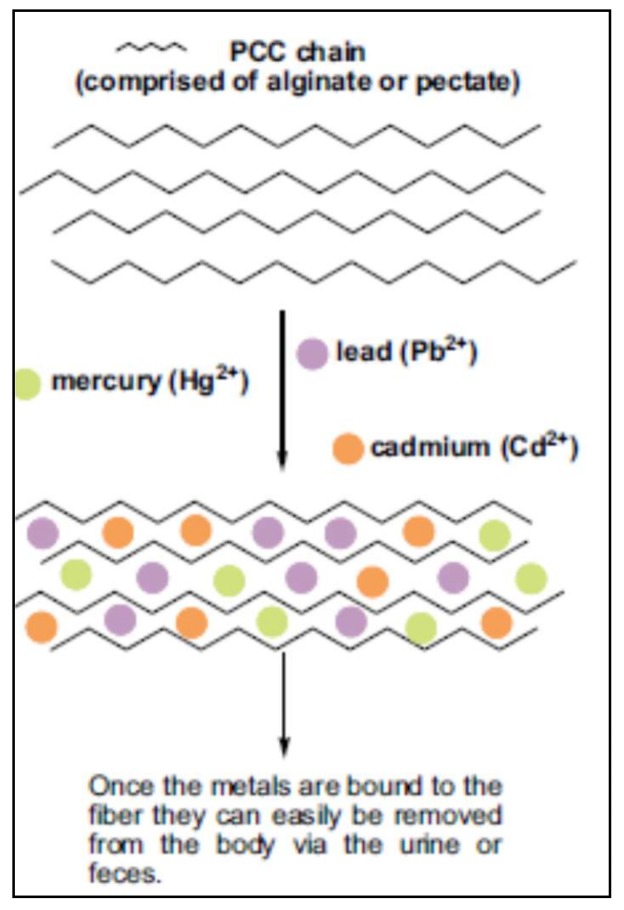
Entrapment of toxic metals in the call “egg box” structure formed by pectate or alginate. The positively charged metals are bound to the fiber chains and eliminated from the body [159].
Figure 5
Figure 5
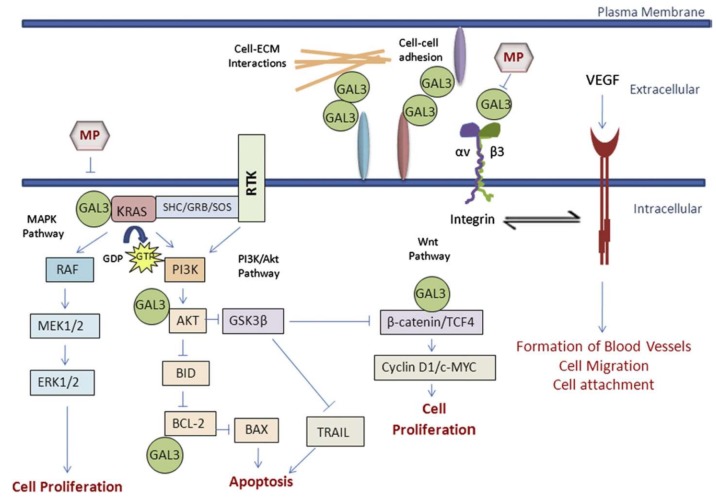
Roles of galectin-3 at extracellular and intracellular levels. At extracellular level Gal3 participates in cell adhesion. In intracellular level Gal3 activates different signalization pathways as MAPK, PI3K/Akt and Wnt that induces cell proliferations, apoptosis or bind to integrin receptors that activate VEGF to induce angiogenesis [198].
Figure 6
Figure 6
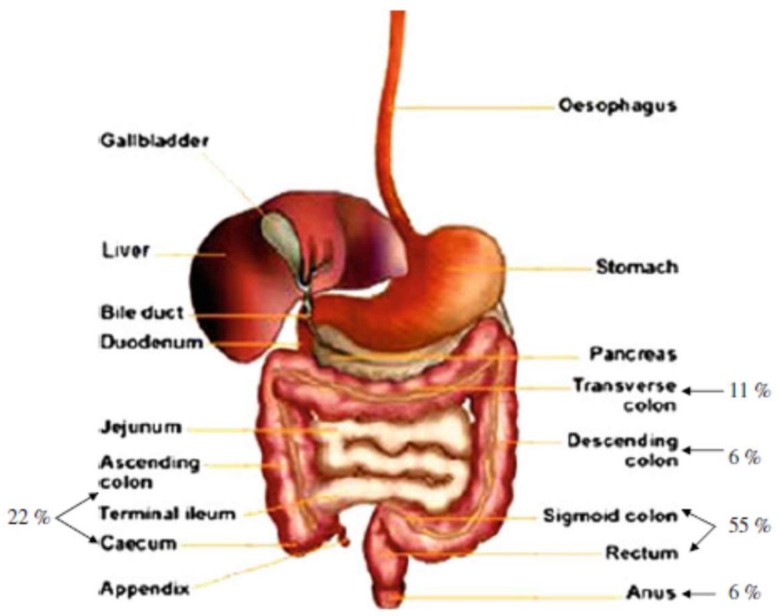
The gastrointestinal tract and its probable distribution in the percentage of colon cancer [195].
Figure 7
Figure 7
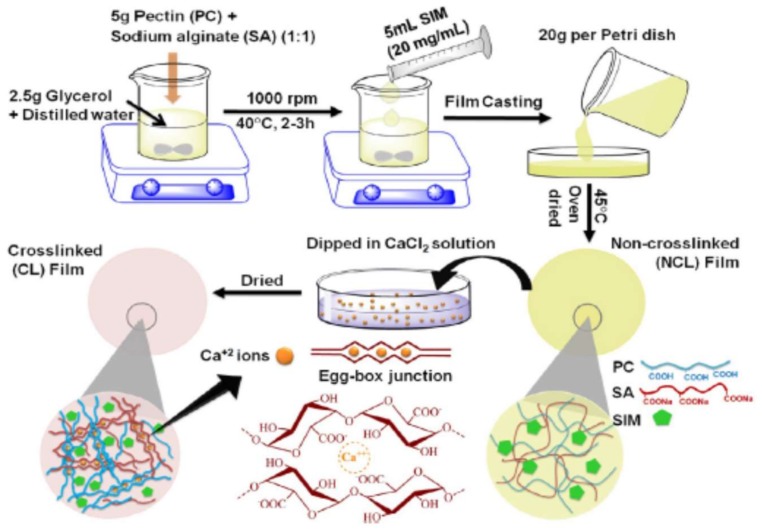
Diagram of pectin and sodium alginate film preparation and crosslinking process forming an egg-box junction between the Ca2+ ions [207].
Figure 8
Figure 8
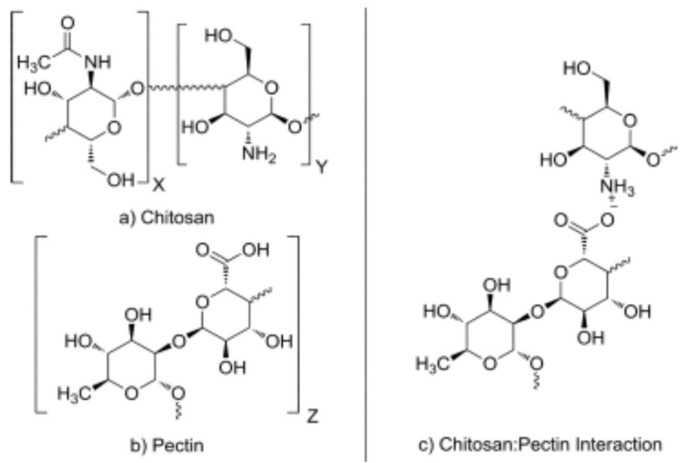
Chemical structure of (a) polycation chitosan and (b) RG-I region of polyanion pectin and (c) electrostatic interactions between pectin-chitosan [221].
Figure 9
Figure 9
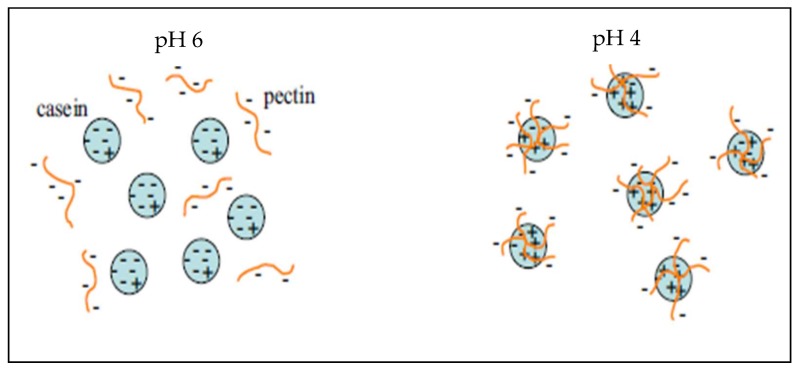
Stabilization of casein molecule with the pectin network. At pH 6.6 both polymers are negatively charged and repeal each other. At pH 4, pectin bound electrostatically to the positively charged areas of casein particles, preventing casein aggregates [252].
Figure 10
Figure 10
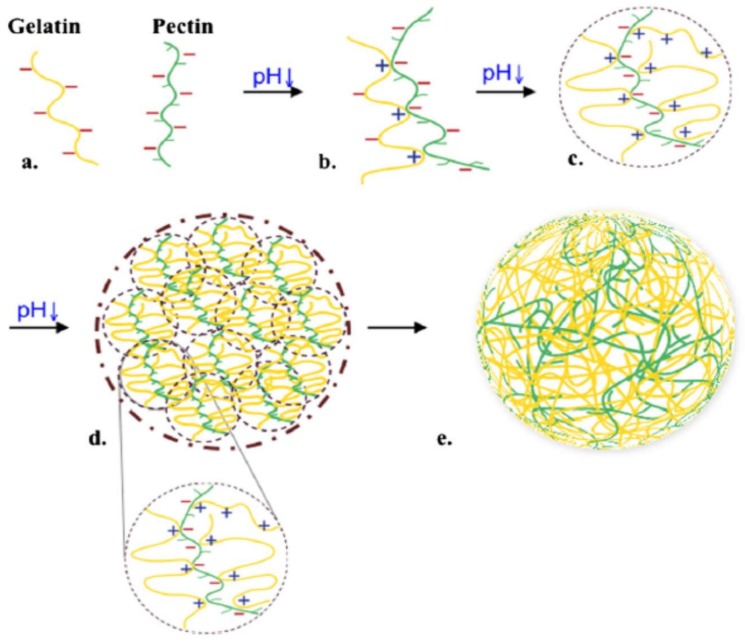
Schematic illustration of the electrostatic interactions that occur during acidification of gelatin and pectin mixtures (a) gelatin and pectin molecules exist as individual molecules in solution due to electrostatic repulsion; (b) gelatin–pectin soluble complexes are formed due to electrostatic attraction between positive charges on gelatin and negative charges on pectin; (c) soluble complexes merge and form gelatin–pectin complexes; (d) hydrogel particles form due to coalescence of sub-units; and (e) setting of internal structure as temperature cools down [256].
Figure 11
Figure 11
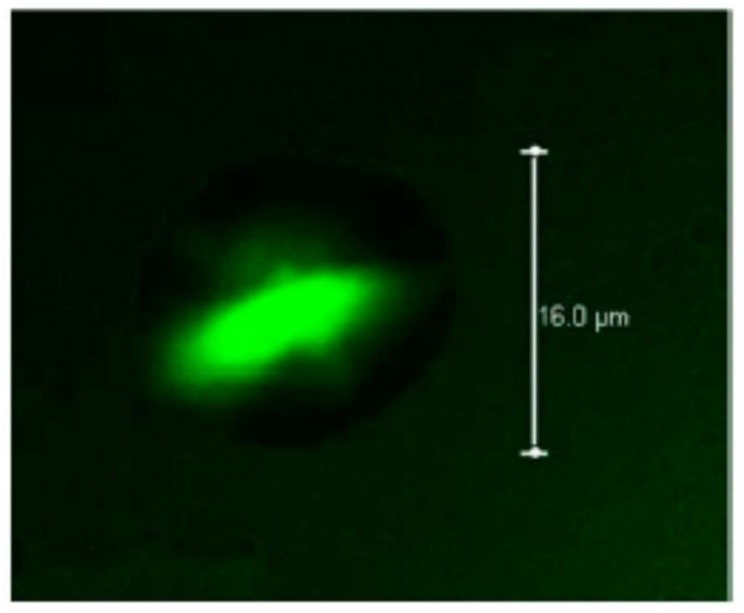
Confocal Laser Scanning Microscopy image. Protein insulin autofluorescence showed in the center of pectin/arabinoxylan bead (intense color) [149].

References

    1. Harholt J., Suttangkakul A., Scheller H.V. Biosynthesis of Pectin. Plant Physiol. 2010;153:384–395. doi: 10.1104/pp.110.156588. - DOI - PMC - PubMed
    1. Willats W.T., McCartney L., Mackie W., Knox J.P. Pectin: Cell Biologyand Prospects for Functional Analysis. Plant Mol. Biol. 2001;47:9–27. doi: 10.1023/A:1010662911148. - DOI - PubMed
    1. Mellerowicz E.J., Sundberg B. Wood Cell Walls: Biosynthesis, Developmental Dynamics and their Implications for Wood Properties. Curr. Opin. Plant Biol. 2008;11:293–300. doi: 10.1016/j.pbi.2008.03.003. - DOI - PubMed
    1. Van Buren J.P. Function of Pectin in Plant Tissue Structure and Firmness. In: Walter R.H., editor. The Chemistry and Technology of Pectin. Academic Press, Inc.; San Diego, CA, USA: 1991.
    1. Northcote D.H. Chemistry of the Plant Cell Wall. Annu. Rev. Plant Physiol. 1972;23:113–132. doi: 10.1146/annurev.pp.23.060172.000553. - DOI