. 2018 Apr 19;13(4):e0195349.
doi: 10.1371/journal.pone.0195349. eCollection 2018.

Stress pre-conditioning with temperature, UV and gamma radiation induces tolerance against phosphine toxicity

Affiliations

Stress pre-conditioning with temperature, UV and gamma radiation induces tolerance against phosphine toxicity

Saad M Alzahrani et al. PLoS One. .

Abstract

Phosphine is the only general use fumigant for the protection of stored grain, though its long-term utility is threatened by the emergence of highly phosphine-resistant pests. Given this precarious situation, it is essential to identify factors, such as stress preconditioning, that interfere with the efficacy of phosphine fumigation. We used Caenorhabditis elegans as a model organism to test the effect of pre-exposure to heat and cold shock, UV and gamma irradiation on phosphine potency. Heat shock significantly increased tolerance to phosphine by 3-fold in wild-type nematodes, a process that was dependent on the master regulator of the heat shock response, HSF-1. Heat shock did not, however, increase the resistance of a strain carrying the phosphine resistance mutation, dld-1(wr4), and cold shock did not alter the response to phosphine of either strain. Pretreatment with the LD50 of UV (18 J cm-2) did not alter phosphine tolerance in wild-type nematodes, but the LD50 (33 J cm-2) of the phosphine resistant strain (dld-1(wr4)) doubled the level of resistance. In addition, exposure to a mild dose of gamma radiation (200 Gy) elevated the phosphine tolerance by ~2-fold in both strains.


Conflict of interest statement

Competing Interests: The authors have declared that no competing interests exist.

Figures

Fig 1
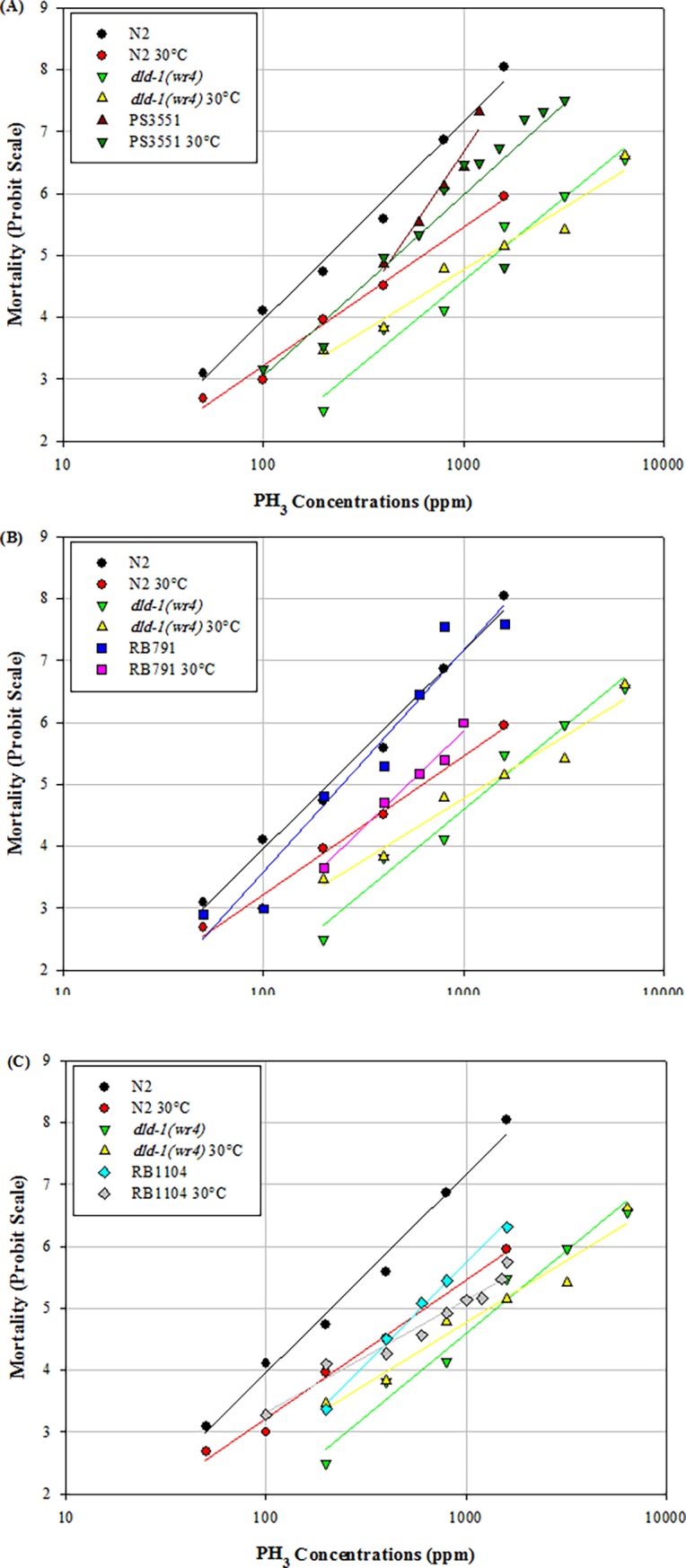
Fig 1. Heat shock preconditioning against phosphine-induced mortality of C. elegans in wild-type, phosphine-resistant and heat shock response mutants.
A four-hour heat shock at 30C was followed by a 4 hour recovery period, after which the nematodes were subjected to 24 hour exposure to phosphine. Mortality was scored after a further 48 hour recovery period, either without or with heat shock preconditioning. Wild-type (N2), phosphine-resistant (dld-1(wr4)). (A) PS3551 (hsf-1) (B) RB791 (hsp-16.48) (C) RB1104 (hsp-3).
Fig 2
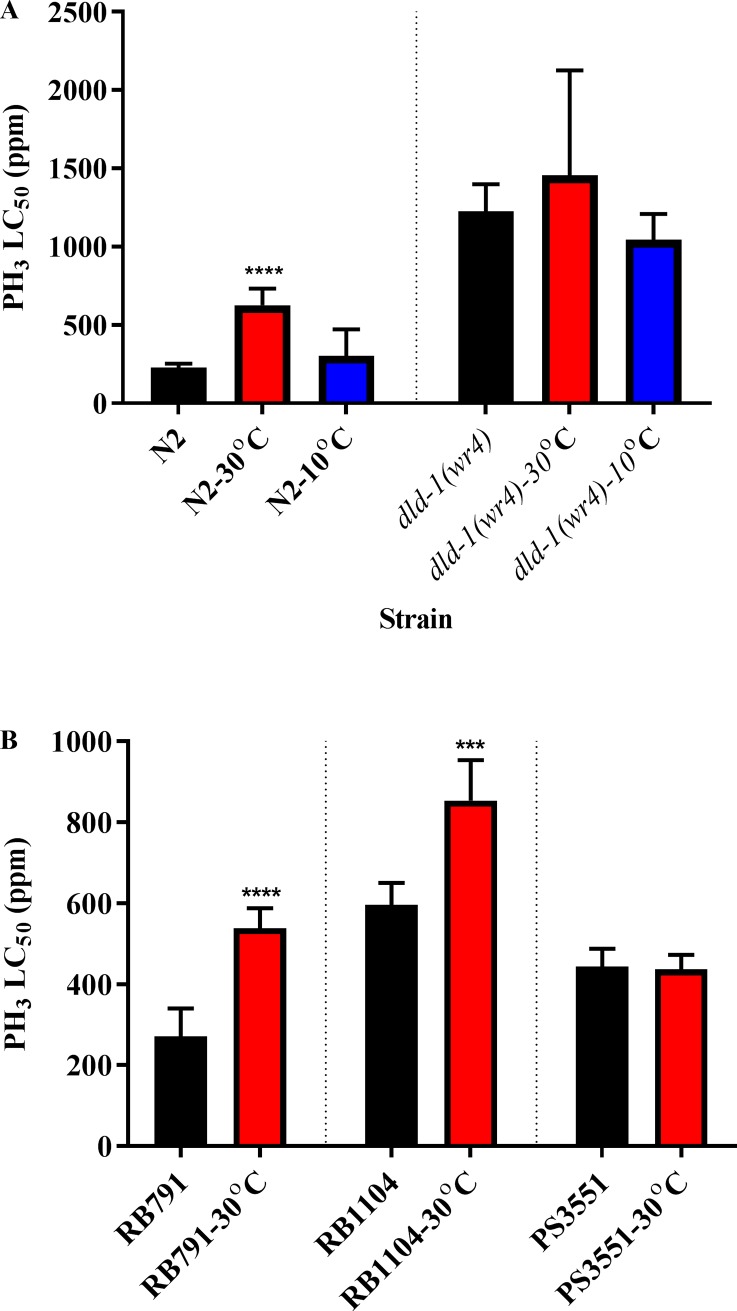
Fig 2. Analysis of LC50 value for heat shock preconditioning against phosphine-induced mortality of C. elegans.
(A) Comparison of the wild-type and the phosphine-resistant mutant and (B) heat shock mutants either without or with heat or cold preconditioning. A four-hour heat shock at 30C was followed by a 4 hour recovery period, after which the nematodes were subjected to phosphine exposure for 24 hours. Mortality was scored after a further 48 hour recovery period. The LC50 value for each strain is shown, either without or with heat shock preconditioning. Error bars represent the 95% confidence intervals for each LC50 data point. One-way ANOVA followed by Dunnett’s multiple comparisons for the LC50 values, ****p < 0.0001. Wild-type (N2), phosphine-resistant (dld-1(wr4)). Unpaired t-test was used to compare the LC50 values of each heat shock mutant strain, ****p < 0.0001, ***p < 0.001. RB791 (hsp-16.48), RB1104 (hsp-3) and PS3551 (hsf-1).
Fig 3
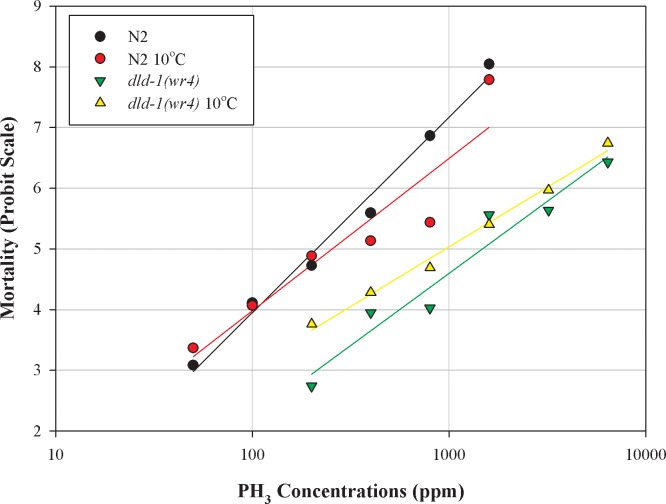
Fig 3. Effect of cold shock on phosphine-induced mortality of wild-type C. elegans and the phosphine-resistant dld-1 mutant.
A four-hour cold shock at 10C was followed by a 4 hour recovery period, after which the nematodes were subjected to 24 hour exposure to phosphine. Mortality was scored after a further 48 hour recovery period. Wild-type (N2), phosphine-resistant (dld-1(wr4)).
Fig 4
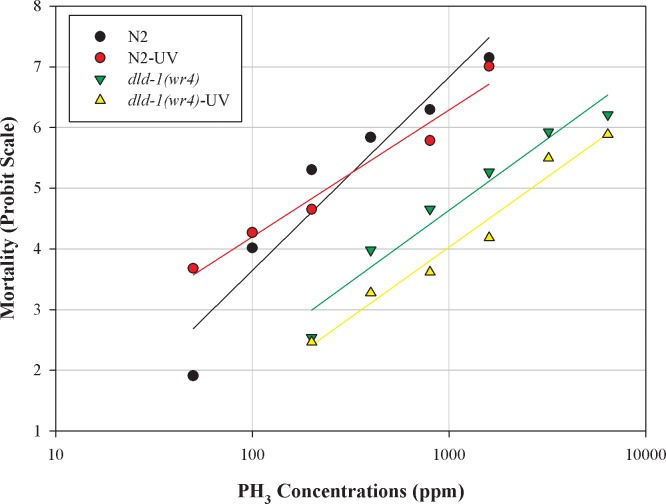
Fig 4. Effect of UV light on phosphine-induced mortality of wild-type C. elegans and the phosphine-resistant dld-1 mutant.
C. elegans were exposed to 18 and 33 J cm-2 UV radiation 24 hours, after which the nematodes were subjected to 24 hour phosphine exposure. Mortality was scored after a further 48 hour recovery period. Wild-type (N2), phosphine-resistant (dld-1(wr4)).
Fig 5
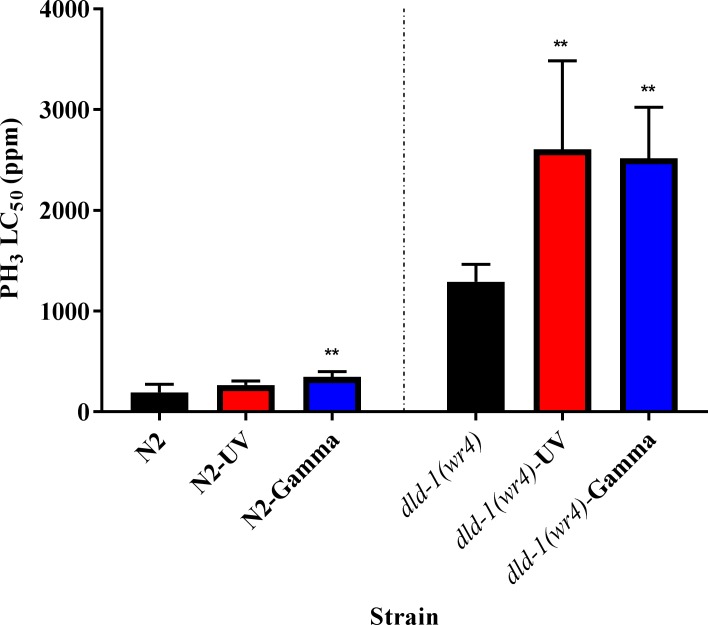
Fig 5. Effect of UV and gamma radiation on phosphine-induced mortality of C. elegans in wild-type and the phosphine-resistant dld-1 mutant.
Nematodes were exposed to a range of dosages of either UV light or gamma radiation at the L1 stage. Mortality was assessed 48hrs after exposure as lack of movement in response to a bright light stimulus. LC50 values are shown and the error bars represent the 95% confidence intervals for each LC50 data point. Wild-type (N2), phosphine-resistant (dld-1(wr4)). One-way ANOVA followed by Dunnett’s multiple comparison test for the LC50 values, **p < 0.01.
Fig 6
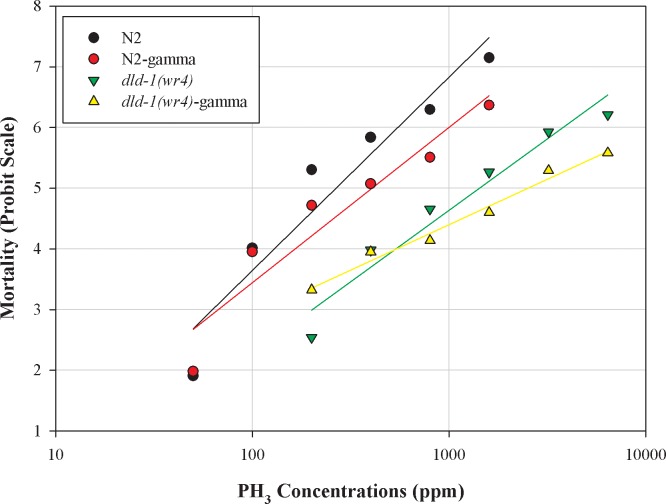
Fig 6. Exposure to gamma radiation induces tolerance to phosphine exposure in the wild-type and the phosphine-resistant worms. C. elegans were exposed to 200 Gy gamma radiation 24 hours, after which the nematodes were subjected to 24 hour exposure to phosphine.
Mortality was scored after a further 48 hour recovery period. Wild-type (N2), phosphine-resistant (dld-1(wr4)).

References

    1. Collins P, Daglish G, Nayak M, Ebert P, Schlipalius D, Chen W, et al. , editors. Combating resistance to phosphine in Australia. International conference on controlled atmoshphere and fumigation in stored products; 2001: Executive Printing Services.
    1. Cheng Q, Valmas N, Reilly PE, Collins PJ, Kopittke R, Ebert PR. Caenorhabditis elegans mutants resistant to phosphine toxicity show increased longevity and cross-resistance to the synergistic action of oxygen. Toxicol Sci. 2003;73(1):60–5. doi: 10.1093/toxsci/kfg049 . - DOI - PubMed
    1. Zuryn S, Kuang J, Ebert P. Mitochondrial modulation of phosphine toxicity and resistance in Caenorhabditis elegans. Toxicol Sci. 2008;102(1):179–86. doi: 10.1093/toxsci/kfm278 . - DOI - PubMed
    1. Nath NS, Bhattacharya I, Tuck AG, Schlipalius DI, Ebert PR. Mechanisms of phosphine toxicity. J Toxicol. 2011;2011:494168 doi: 10.1155/2011/494168 ; PubMed Central PMCID: PMCPMC3135219. - DOI - PMC - PubMed
    1. Hsu CH, Chi BC, Casida JE. Melatonin reduces phosphine-induced lipid and DNA oxidation in vitro and in vivo in rat brain. J Pineal Res. 2002;32(1):53–8. . - PubMed

Publication types

LinkOut - more resources