Factors and misperceptions of routine childhood immunization service uptake in Ethiopia: findings from a nationwide qualitative study
- PMID: 29675124
- PMCID: PMC5903705
- DOI: 10.11604/pamj.2017.28.290.14133
Factors and misperceptions of routine childhood immunization service uptake in Ethiopia: findings from a nationwide qualitative study
Abstract
Introduction: While the routine childhood immunization program might be affected by several factors, its identification using qualitative evidence of caretakers is generally minimal. This article explores the various factors and misperceptions of routine childhood immunization service uptake in Ethiopia and provides possible recommendations to mitigate them.
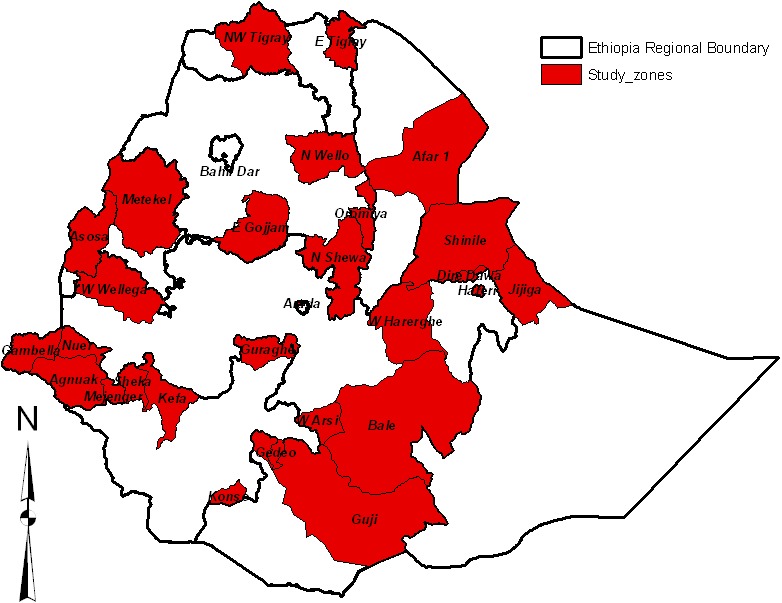
Methods: In this study, we used a qualitative multiple case study design collecting primary data from 63 focus group discussions (FGDs) conducted with a purposefully selected sample of children's caretakers (n = 630).
Results: According to the results of this study, the use of routine childhood immunization is dependent on four major factors: caretakers' behavior, family characteristics, information and communication and immunization service system. In addition, the participants had some misperceptions about routine childhood immunization. For example, immunization should be taken when the child gets sick and a single dose vaccine is enough for a child. These factors and misperceptions are complex and sometimes context-specific and vary between categories of caretakers.
Conclusion: Our interpretations suggest that no single factor affects immunization service uptake alone in a unique way. Rather, it is the synergy among the factors that has a collective influence on the childhood immunization system. Therefore, intervention efforts should target these multiple factors simultaneously. Importantly, this study recommends improving the quality of existing childhood immunization services and building awareness among caretakers as crucial components.
Keywords: Childhood immunization; Ethiopia; factors; qualitative study.
Figures
References
-
- Hussein J, McCaw-Binns A, Webber R. Maternal and perinatal health in developing countries. Wallingford, Oxfordshire: CABI; 2012.
-
- Campbell S. Increasing immunisation coverage in developing countries. Primary Health Care. 2006;16(1):25–9.
-
- UNICEF . The state of the world's children 2012: a fair chance for every child. Technical report, United Nations Children's Fund (UNICEF; 2016.
-
- FMOH . Ethiopia National Expanded Programme on Immunization: Comprehensive Multi-Year Plan 2016 – 2020. Addis Ababa: Federal Ministry of Health; 2015.
-
- The Federal Democratic Republic of Ethiopia Ministry of Health . HSTP: health Sector Transformation Plan: 2015/16-2019/20 (2008-2012 EFY. Addis Ababa: Federal Democratic Republic of Ethiopia Ministry of Health; 2015. p. 182.
MeSH terms
Substances
Grants and funding
LinkOut - more resources
Full Text Sources
Other Literature Sources
Medical