


Bilateral herpes simplex keratitis reactivation after lacrimal gland botulinum toxin injection
- PMID: 29676321
- PMCID: PMC5939169
- DOI: 10.4103/ijo.IJO_904_17
Bilateral herpes simplex keratitis reactivation after lacrimal gland botulinum toxin injection
Abstract
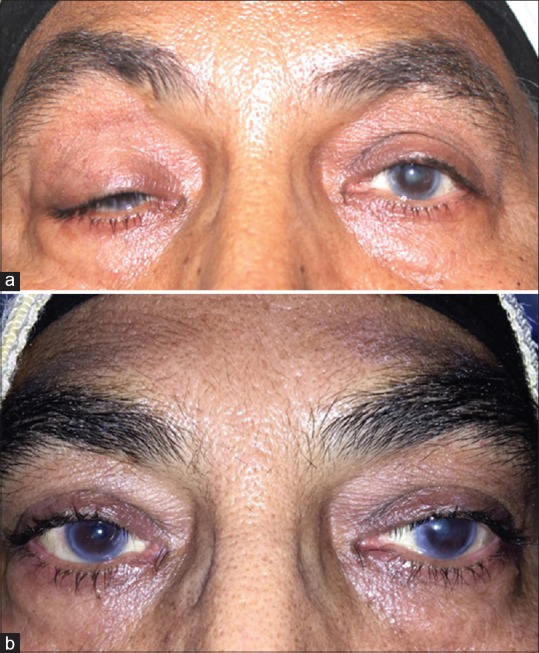
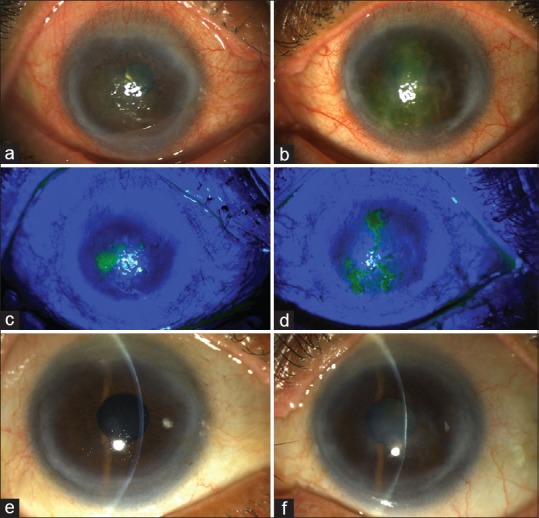
Botulinum toxin A (BTA) injections into lacrimal gland are being used for refractory epiphora due to intractable lacrimal disorders with success rates reported from 18% to 86%. Most common side effects are transient ptosis and diplopia. We report a case of a 59-year-old female injected with 2.5 units of BTA injection in each lacrimal gland for functional epiphora. The patient had a history of herpes simplex viral keratitis that was quiescent for more than 2 years. After 3 weeks, she developed reactivation of viral keratitis bilaterally, which was successfully managed with antivirals and topical steroids. Reactivation of quiescent herpes simplex keratitis is a possibility after lacrimal gland BTA and caution should be exercised in such cases.
Keywords: Botulinum toxin; functional epiphora; herpes simplex keratitis; lacrimal gland; reactivation.
Conflict of interest statement
There are no conflicts of interest
Figures
References
-
- Singh S, Ali MJ, Paulsen F. A review on use of botulinum toxin for intractable lacrimal drainage disorders. EyInt Ophthalmol. 2017 [Epub ahead of print] - PubMed
Publication types
MeSH terms
Substances
LinkOut - more resources
Full Text Sources
Other Literature Sources
