


Iodine Deficiency in a Study Population of Norwegian Pregnant Women-Results from the Little in Norway Study (LiN)
- PMID: 29677112
- PMCID: PMC5946298
- DOI: 10.3390/nu10040513
Iodine Deficiency in a Study Population of Norwegian Pregnant Women-Results from the Little in Norway Study (LiN)
Abstract
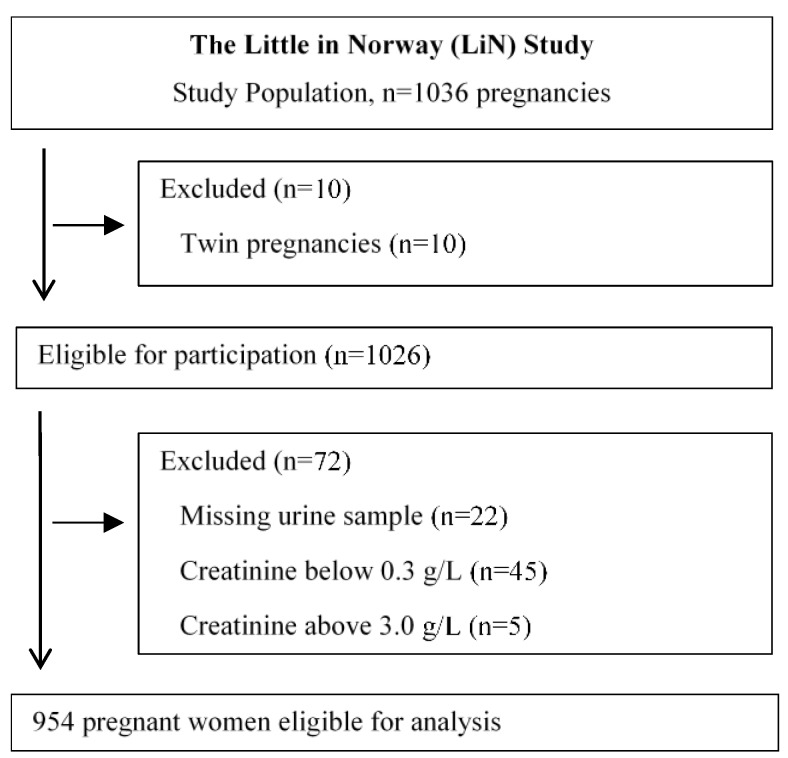
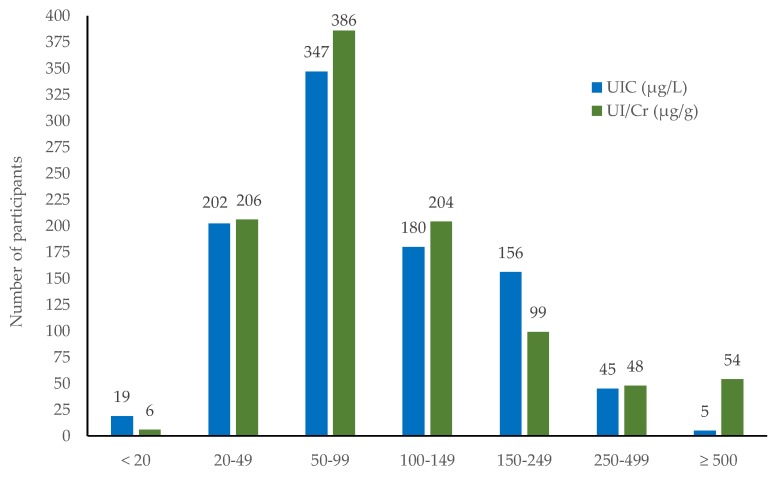
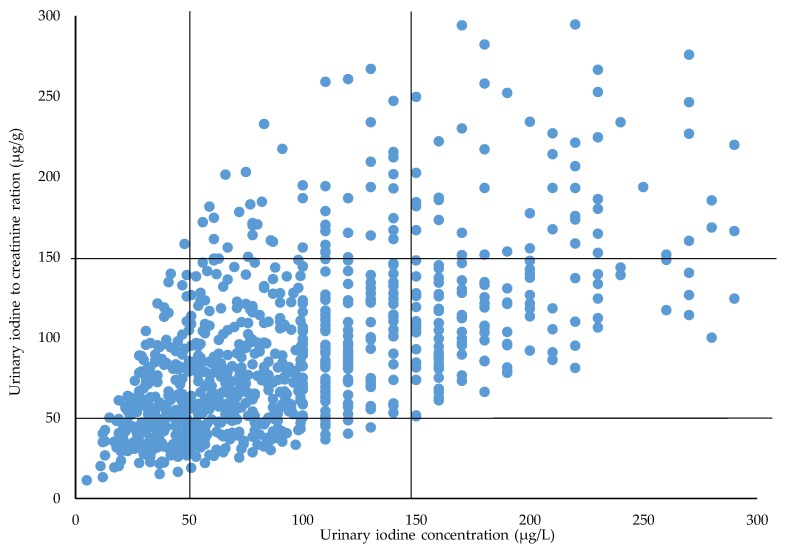
Iodine sufficiency is particularly important in pregnancy, where median urinary iodine concentration (UIC) in the range of 150⁻250 µg/L indicates adequate iodine status. The aims of this study were to determine UIC and assess if dietary and maternal characteristics influence the iodine status in pregnant Norwegian women. The study comprises a cross-sectional population-based prospective cohort of pregnant women (Little in Norway (LiN)). Median UIC in 954 urine samples was 85 µg/L and 78.4% of the samples (n = 748) were ≤150 µg/L. 23.2% (n = 221) of the samples were ≤50 µg/L and 5.2% (n = 50) were above the requirements of iodine intake (>250 µg/L). Frequent iodine-supplement users (n = 144) had significantly higher UIC (120 µg/L) than non-frequent users (75 µg/L). Frequent milk and dairy product consumers (4⁻9 portions/day) had significantly higher UIC (99 µg/L) than women consuming 0⁻1 portion/day (57 µg/L) or 2⁻3 portions/day (83 µg/L). Women living in mid-Norway (n = 255) had lowest UIC (72 µg/L). In conclusion, this study shows that the diet of the pregnant women did not necessarily secure a sufficient iodine intake. There is an urgent need for public health strategies to secure adequate iodine nutrition among pregnant women in Norway.
Keywords: iodine status; iodine to creatinine ratio; milk and dairy products; pregnant; seafood; supplement; urinary iodine concentration.
Conflict of interest statement
The authors declare no conflict of interest. The founding sponsors had no role in the design of the study; in the collection, analyses, or interpretation of data; in the writing of the manuscript, or in the decision to publish the results.
Figures
References
-
- Bath S.C., Steer C.D., Golding J., Emmett P., Rayman M.P. Effect of inadequate iodine status in UK pregnant women on cognitive outcomes in their children: Results from the Avon Longitudinal Study of Parents and Children (ALSPAC) Lancet. 2013;382:331–337. doi: 10.1016/S0140-6736(13)60436-5. - DOI - PubMed
-
- Hynes K.L., Otahal P., Burgess J.R., Oddy W.H., Hay I. Reduced educational outcome persist into adolescence following mild iodine deficiency in utero, despite adequacy in childhood: 15-year follow-up of the gestational iodine cohort investigating auditory processing speed and working memory. Nutrients. 2017;9:1354. doi: 10.3390/nu9121354. - DOI - PMC - PubMed
-
- Nordic Council of Ministers . Nordic Nutrition Recommendations 2012. In: Ministers N., editor. Integrating Nutrition and Physical Activity. 5th ed. Norden; Copenhagen, Denmark: 2012.
MeSH terms
Substances
LinkOut - more resources
Full Text Sources
Other Literature Sources
Medical
