Review
. 2018 Apr 20;17(1):82.
doi: 10.1186/s12943-018-0831-z.

Emerging role of exosome-derived long non-coding RNAs in tumor microenvironment

Affiliations
Review

Emerging role of exosome-derived long non-coding RNAs in tumor microenvironment

Zhenqiang Sun et al. Mol Cancer. .

Abstract

Exosomes are extracellular vesicles released by many cell types and have been attributed for their roles in many diseases including cancer. Exosomes secreted by tumor cells and stromal cells are critical mediators of intercellular communication in tumor microenvironments. Long noncoding RNAs (lncRNAs) are selectively sorted into exosomes and can regulate cancer onset and progression in a variety of ways. In this review, we summarize the characteristics of exosomal lncRNAs and their dysregulation in multiple types of cancer. We provide an overview of current research on exosomal lncRNAs in tumor microenvironments, especially the functions of exosomal lncRNAs in regulating tumor biology. A deeper understanding of the role of exosomal lncRNAs in the tumor microenvironment may help provide new diagnostic and prognostic markers for cancer.

Keywords: Biomarker; Cancer; Exosomes; Long non-coding RNA; Tumor microenvironment.


Conflict of interest statement

Ethics approval and consent to participate

Not applicable.

Consent for publication

Not applicable.

Competing interests

The authors declare that they have no competing interests.

Publisher’s Note

Springer Nature remains neutral with regard to jurisdictional claims in published maps and institutional affiliations.

Figures
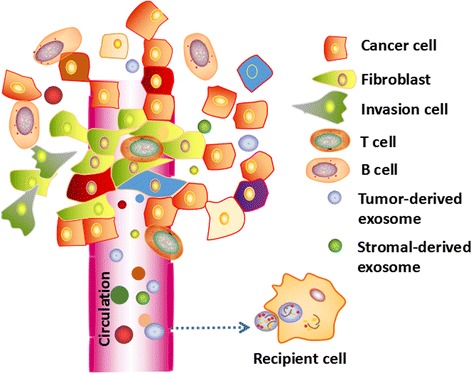
Fig. 1
Fig. 1
Exosomes were serected by cancer cells and stromal cells. Exosomes participate in cell-to-cell communications within tumor microenvironment. Circulating exosomes were tranfered to recipient cells, relesaing contents such as mRNAs, noncoding RNAs (miRNAs, lncRNAs and circRNAs), proteins, lipids, and metabolites
Fig. 2
Fig. 2
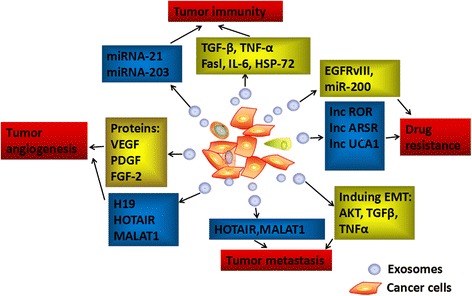
The functional role of exosomes in tumor microenvironment. Cancer cells and stroma utilize exosomes to modify surrounding cells within tumor microenvironment by transferring ncRNAs and proteins, which induce signaling via receptor-ligand interaction
Fig. 3
Fig. 3
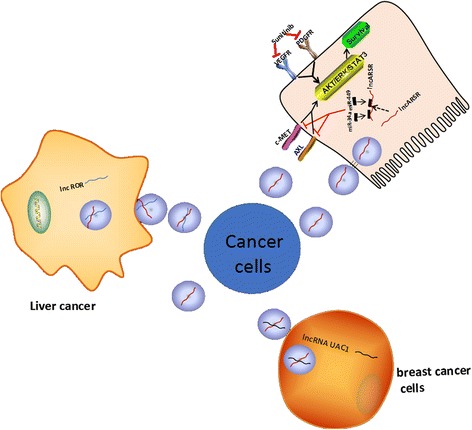
LncARSR can be packaged into exosomes and secreted from sunitinib-resistant RCC cells, transferring resistance to recipient-sensitive cells
Fig. 4
Fig. 4
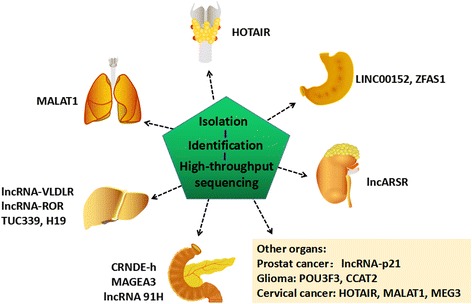
An increasing number of exosomal lncRNAs have been reported to be aberrantly expressed in human cancers. Exosomal lncRNAs may be potential biomarkers for cancers

References

    1. Tkach M, Théry C. Communication by extracellular vesicles: where we are and where we need to go. Cell. 2016;164:1226–1232. doi: 10.1016/j.cell.2016.01.043. - DOI - PubMed
    1. Tomasetti M, Lee W, Santarelli L, Neuzil J. Exosome-derived microRNAs in cancer metabolism: possible implications in cancer diagnostics and therapy. Exp Mol Med. 2017;49:e285. doi: 10.1038/emm.2016.153. - DOI - PMC - PubMed
    1. Raposo G, Stoorvogel W. Extracellular vesicles: exosomes, microvesicles, and friends. J Cell Biol. 2013;200:373–383. doi: 10.1083/jcb.201211138. - DOI - PMC - PubMed
    1. Fujita Y, Yoshioka Y, Ochiya T. Extracellular vesicle transfer of cancer pathogenic components. Cancer Sci. 2016;107(4):385–390. doi: 10.1111/cas.12896. - DOI - PMC - PubMed
    1. Trams EG, Lauter CJ, Salem N, Jr, Heine U. Exfoliation of membrane ectoenzymes in the form of micro-vesicles. Biochim Biophys Acta. 1981;645:63–70. doi: 10.1016/0005-2736(81)90512-5. - DOI - PubMed

Publication types

Substances

LinkOut - more resources