


The Korean eHealth Literacy Scale (K-eHEALS): Reliability and Validity Testing in Younger Adults Recruited Online
- PMID: 29678800
- PMCID: PMC5935806
- DOI: 10.2196/jmir.8759
The Korean eHealth Literacy Scale (K-eHEALS): Reliability and Validity Testing in Younger Adults Recruited Online
Abstract
Background: In this digital era, eHealth literacy is an essential skill set to leverage health information available online to promote health outcomes. South Korea has an advanced health information technology infrastructure, including widespread use of the internet and mobile phones. A few studies have explored eHealth literacy in South Korea using translated versions of the eHEALS; however, they were not fully validated. A unified reliable and valid assessment tool is critical to assess and enhance the eHealth literacy level across the population.
Objective: The aim was to develop a Korean version of eHealth Literacy Scale (K-eHEALS) and evaluate its reliability and validity employing healthy young adults in Korea.
Methods: The K-eHEALS was developed based on eHEALS, a widely used tool that measures eHealth literacy, and was validated using a sample of 500 young adults recruited from a pool of a Korean internet survey panel. Content validity was assessed using the content validity index (CVI) for individual items and for scale. Construct validity was examined using exploratory factor analysis and hypothesis testing. The Cronbach alpha coefficient was used to determine the internal consistency and the Pearson correlation coefficient was used to evaluable the stability of the measure (n=55).
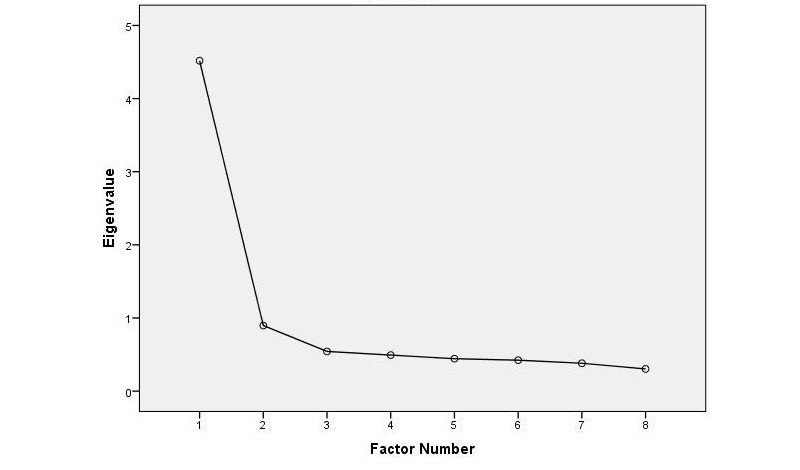
Results: Both individual and scale CVIs were acceptable (individual CVIs>0.67; scale CVI=0.83). Single factors accounting for 50.3% of the variance in the scales were extracted revealing the unidimensional latent structure of K-eHEALS. Hypothesis testing showed significant association between eHealth literacy and hours of internet use per day, supporting the construct validity. Items of the K-eHEALS were internally consistent (Cronbach alpha=.88) and stable over a 1-month period (r=.754, P<.001).
Conclusions: The findings of this study suggest that K-eHEALS is a valid and reliable measure of eHealth literacy in Korean young adults. Additional studies are needed with more diverse groups of adults in Korea.
Keywords: eHEALS; eHealth; literacy; reliability; validity.
©SeonYoon Chung, Bu Kyung Park, Eun-Shim Nahm. Originally published in the Journal of Medical Internet Research (http://www.jmir.org), 20.04.2018.
Conflict of interest statement
Conflicts of Interest: None declared.
References
-
- Norman CD, Skinner HA. eHealth literacy: essential skills for consumer health in a networked world. J Med Internet Res. 2006 Jun 16;8(2):e9. doi: 10.2196/jmir.8.2.e9. http://www.jmir.org/2006/2/e9/ v8i2e9 - DOI - PMC - PubMed
-
- Norman CD, Skinner HA. eHEALS: the eHealth Literacy Scale. J Med Internet Res. 2006 Nov 14;8(4):e27. doi: 10.2196/jmir.8.4.e27. http://www.jmir.org/2006/4/e27/ v8i4e27 - DOI - PMC - PubMed
-
- De Caro W, Corvo E, Marucci AR, Mitello L, Lancia L, Sansoni J. eHealth Literacy Scale: a nursing analysis and Italian validation. Stud Health Technol Inform. 2016;225:949. - PubMed
-
- van Der Vaart R, van Deursen AJ, Drossaert CH, Taal E, van Dijk JA, van De Laar MA. Does the eHealth Literacy Scale (eHEALS) measure what it intends to measure? Validation of a Dutch version of the eHEALS in two adult populations. J Med Internet Res. 2011 Nov 09;13(4):e86. doi: 10.2196/jmir.1840. http://www.jmir.org/2011/4/e86/ v13i4e86 - DOI - PMC - PubMed
Publication types
MeSH terms
LinkOut - more resources
Full Text Sources
Other Literature Sources
Medical
Molecular Biology Databases
