


Vibrio Ecology in the Neuse River Estuary, North Carolina, Characterized by Next-Generation Amplicon Sequencing of the Gene Encoding Heat Shock Protein 60 (hsp60)
- PMID: 29678912
- PMCID: PMC6007114
- DOI: 10.1128/AEM.00333-18
Vibrio Ecology in the Neuse River Estuary, North Carolina, Characterized by Next-Generation Amplicon Sequencing of the Gene Encoding Heat Shock Protein 60 (hsp60)
Abstract
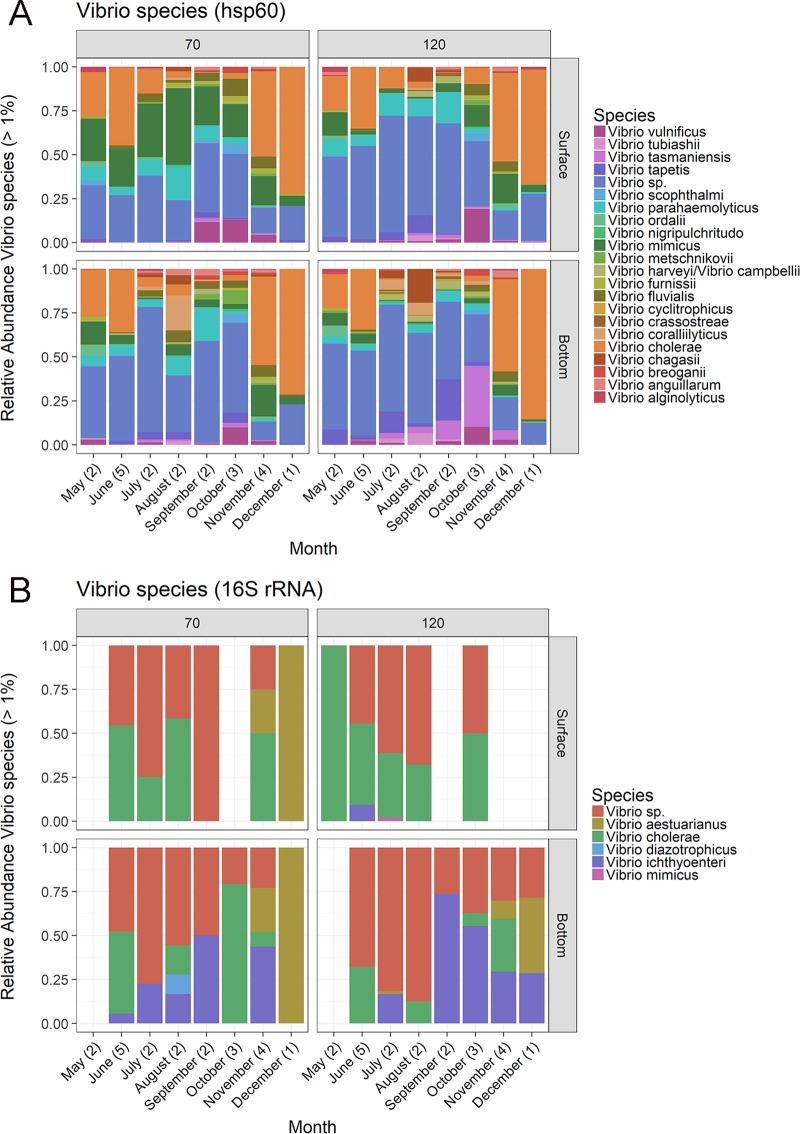
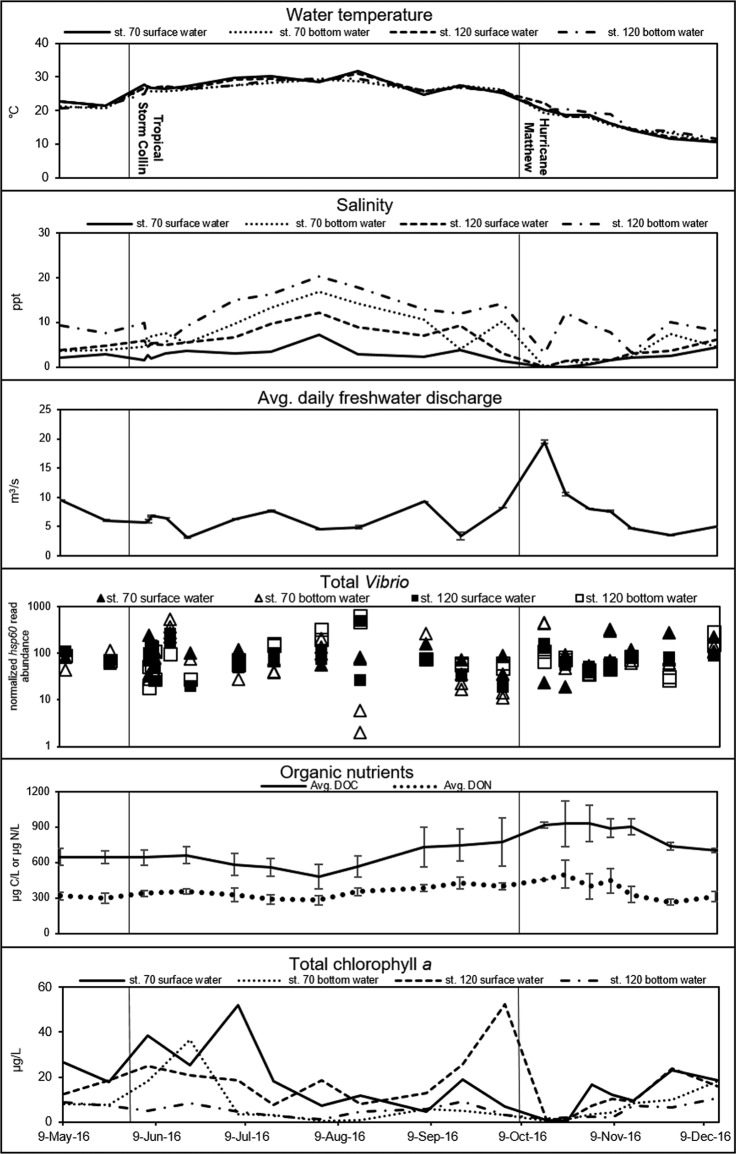
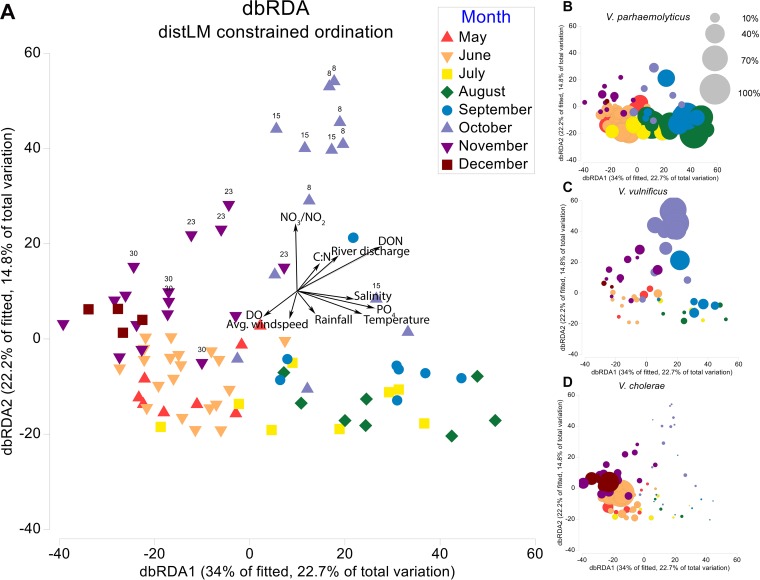
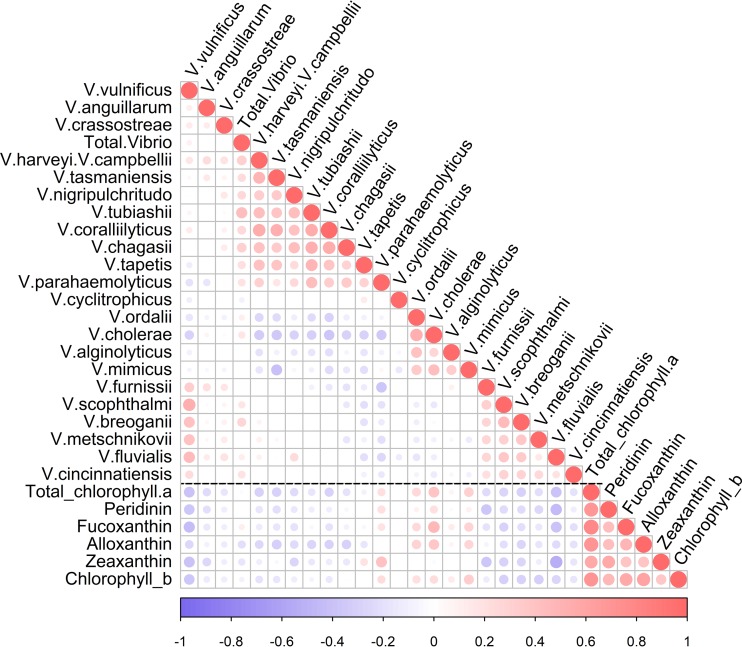
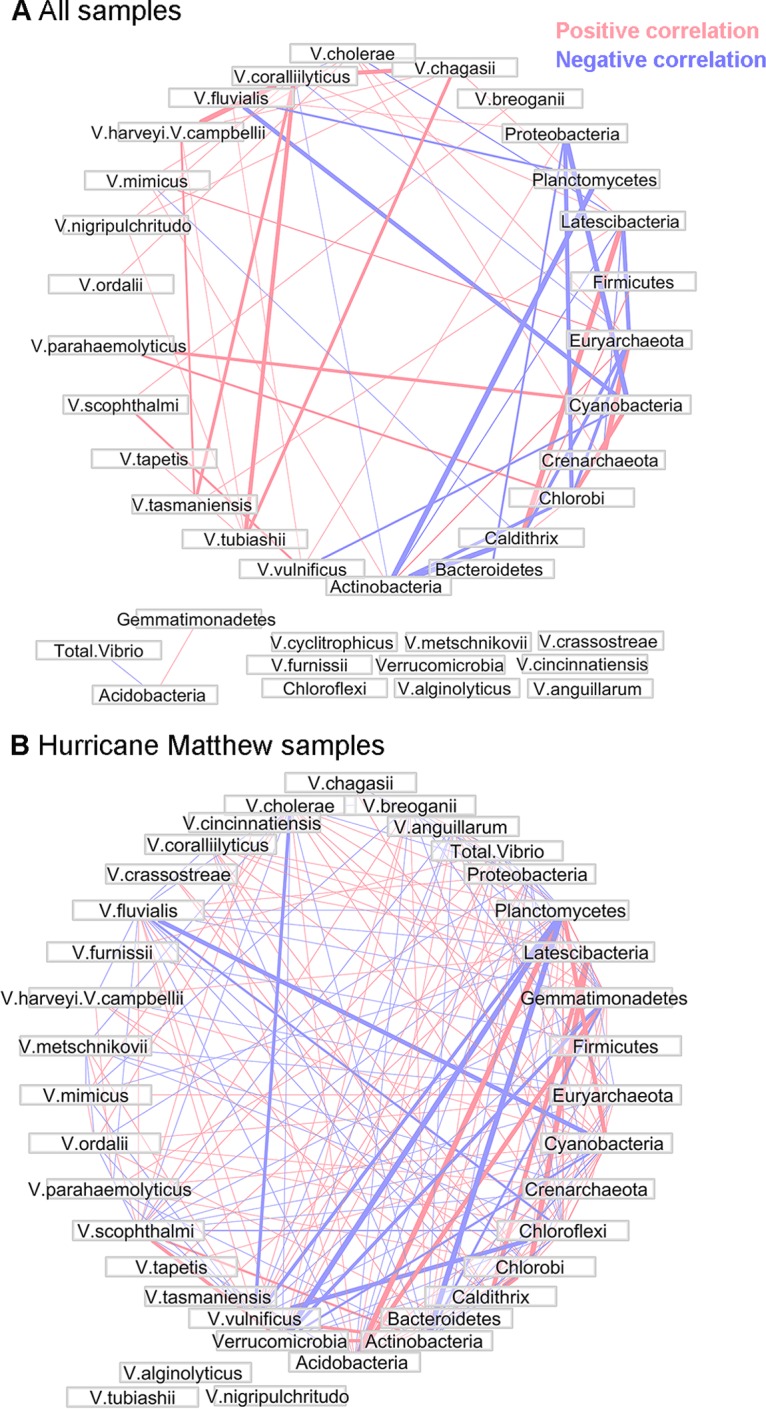
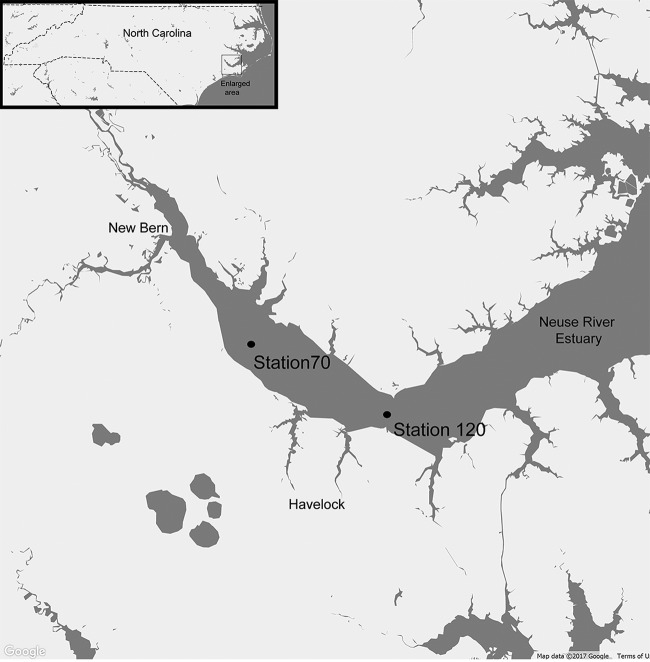
Of marine eubacteria, the genus Vibrio is intriguing because member species are relevant to both marine ecology and human health. Many studies have touted the relationships of Vibrio to environmental factors, especially temperature and salinity, to predict total Vibrio abundance but lacked the taxonomic resolution to identify the relationships among species and the key drivers of Vibrio dynamics. To improve next-generation sequencing (NGS) surveys of Vibrio, we have conducted both 16S small subunit rRNA and heat shock protein 60 (hsp60) amplicon sequencing of water samples collected at two well-studied locations in the Neuse River Estuary, NC. Samples were collected between May and December 2016 with enhanced sampling efforts in response to two named storms. Using hsp60 sequences, 21 Vibrio species were identified, including the potential human pathogens V. cholerae, V. parahaemolyticus, and V. vulnificus Changes in the Vibrio community mirrored seasonal and storm-related changes in the water column, especially in response to an influx of nutrient-rich freshwater to the estuary after Hurricane Matthew, which initiated dramatic changes in the overall Vibrio community. Individual species dynamics were wide ranging, indicating that individual Vibrio taxa have unique ecologies and that total Vibrio abundance predictors are insufficient for risk assessments of potentially pathogenic species. Positive relationships between Vibrio, dinoflagellates, and Cyanobacteria were identified, as were intraspecies associations, which further illuminated the interactions of cooccurring Vibrio taxa along environmental gradients.IMPORTANCE The objectives of this research were to utilize a novel approach to improve sequence-based surveys of Vibrio communities and to demonstrate the usefulness of this approach by presenting an analysis of Vibrio dynamics in the context of environmental conditions, with a particular focus on species that cause disease in humans and on storm effects. The methods presented here enabled the analysis of Vibrio dynamics with excellent taxonomic resolution and could be incorporated into future ecological studies and risk prediction strategies for potentially pathogenic species. Next-generation sequencing of hsp60 and other innovative sequence-based approaches are valuable tools and show great promise for studying Vibrio ecology and associated public health risks.
Keywords: Vibrio; amplicon sequencing; hsp60; microbial ecology; public health.
Copyright © 2018 American Society for Microbiology.
Figures
References
-
- Wetz JJ, Blackwood AD, Fries JS, Williams ZF, Noble RT. 2008. Trends in total Vibrio spp. and Vibrio vulnificus concentrations in the eutrophic Neuse River Estuary, North Carolina, during storm events. Aquat Microb Ecol 53:141–149. doi: 10.3354/ame01223. - DOI
Publication types
MeSH terms
Substances
LinkOut - more resources
Full Text Sources
Other Literature Sources
Research Materials
Miscellaneous
