


Cholesterol and the journey of extracellular vesicles
- PMID: 29678958
- PMCID: PMC6277151
- DOI: 10.1194/jlr.R084210
Cholesterol and the journey of extracellular vesicles
Abstract
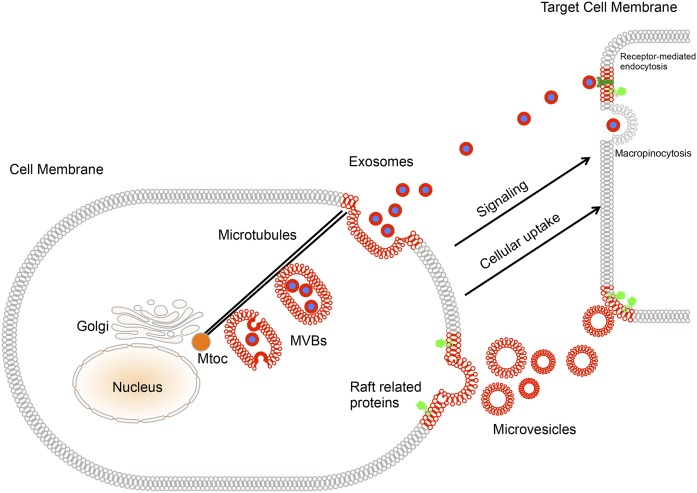
Eukaryotic cells employ distinct means to release specific signals and material. Research within the last decade has identified different types of membrane-enclosed structures collectively called extracellular vesicles (EVs) as one of them. EVs fall into two categories depending on their subcellular origin. Exosomes are generated within the endosomal system and reach the extracellular space upon fusion of multivesicular bodies. Microvesicles or microparticles are generated by shedding of the plasma membrane. Sterols are essential components of eukaryotic membranes and serve as precursors or cofactors of numerous signaling molecules; their content and subcellular distribution are tightly controlled. The prominent roles of sterols in cells raise the question of whether and how these components impact EVs. In this review, we compile evidence for cholesterol accumulation in EVs and discuss its possible contribution to their biogenesis, release, and uptake. We also consider potential implications of EVs in cellular sterol homeostasis and in cholesterol-related diseases.
Keywords: atherosclerosis; cellular cholesterol; cholesterol/efflux; diseases/dyslipidemias; endosome; macrophages/monocytes; multivesicular bodies; platelets.
Copyright © 2018 Pfrieger and Vitale.
Figures
References
-
- Wolf P. 1967. The nature and significance of platelet products in human plasma. Br. J. Haematol. 13: 269–288. - PubMed
-
- Record M., Carayon K., Poirot M., and Silvente-Poirot S.. 2014. Exosomes as new vesicular lipid transporters involved in cell-cell communication and various pathophysiologies. Biochim. Biophys. Acta. 1841: 108–120. - PubMed
-
- Colombo M., Raposo G., and Thery C.. 2014. Biogenesis, secretion, and intercellular interactions of exosomes and other extracellular vesicles. Annu. Rev. Cell Dev. Biol. 30: 255–289. - PubMed
Publication types
MeSH terms
Substances
LinkOut - more resources
Full Text Sources
Other Literature Sources
Medical
