


Parents' uptake of human papillomavirus vaccines for their children: a systematic review and meta-analysis of observational studies
- PMID: 29678965
- PMCID: PMC5914890
- DOI: 10.1136/bmjopen-2017-019206
Parents' uptake of human papillomavirus vaccines for their children: a systematic review and meta-analysis of observational studies
Abstract
Objective: To examine factors associated with parents' uptake of human papillomavirus (HPV) vaccines for their children.
Design: Systematic review and meta-analysis.
Data sources: Cochrane Library, AIDSLINE, CINAHL, EMBASE, PsycINFO, Social Sciences Abstracts, Ovid MEDLINE, Scholars Portal, Social Sciences Citation Index and Dissertation Abstracts International from inception through November 2017.
Methods: We included studies that sampled parents and assessed uptake of HPV vaccines for their children (≤18 years) and/or sociodemographics, knowledge, attitudes or other factors associated with uptake. Study risk of bias was assessed using the Effective Public Health Practice Project tool. We pooled data using random-effects meta-analysis and conducted moderation analyses to examine variance in uptake by sex of child and parent.
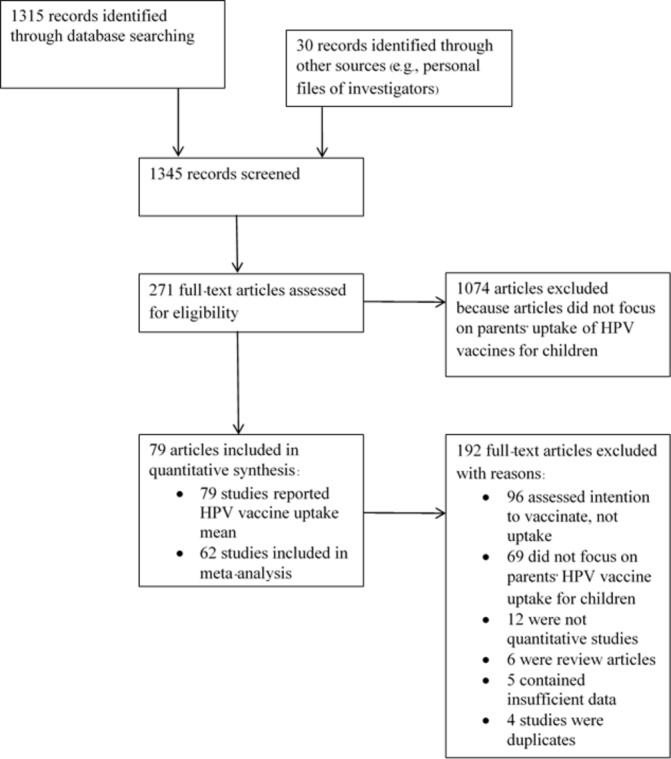
Results: Seventy-nine studies on 840 838 parents across 15 countries were included. The pooled proportion of parents' uptake of HPV vaccines for their children was 41.5% (range: 0.7%-92.8%), twofold higher for girls (46.5%) than for boys (20.3%). In the meta-analysis of 62 studies, physician recommendation (r=0.46 (95% CI 0.34 to 0.56)) had the greatest influence on parents' uptake, followed by HPV vaccine safety concerns (r=-0.31 (95% CI -0.41 to -0.16)), routine child preventive check-up, past 12 months (r=0.22 (95% CI 0.11 to 0.33)) and parents' belief in vaccines (r=0.19 (95% CI 0.08 to 0.29)). Health insurance-covered HPV vaccination (r=0.16 (95% CI 0.04 to 0.29)) and lower out-of-pocket cost (r=-0.15 (95% CI -0.22 to -0.07)) had significant effects on uptake. We found significant moderator effects for sex of child.
Conclusions: Findings indicate suboptimal levels of HPV vaccine uptake, twofold lower among boys, that may be improved by increasing physician recommendations, addressing parental safety concerns and promoting parents' positive beliefs about vaccines, in addition to expanding insurance coverage and reducing out-of-pocket costs. Limitations of this meta-analysis include the lack of intervention studies and high risk of bias in most studies reviewed. Further studies should disaggregate HPV vaccine uptake by sex of child and parent.
Keywords: hpv vaccination; preventive medicine; public health; social medicine; systematic review.
© Article author(s) (or their employer(s) unless otherwise stated in the text of the article) 2018. All rights reserved. No commercial use is permitted unless otherwise expressly granted.
Conflict of interest statement
Competing interests: None declared.
Figures
References
-
- WHO. Immunization Coverage. Fact Sheet. 2016. http://www.who.int/mediacentre/factsheets/fs378/en/ (accessed 5 Jan 2018).
-
- Brotherton JML, Zuber PLF, Bloem PJN. Primary prevention of HPV through vaccination: update on the current global status. Curr Obstet Gynecol Rep 2016;5:210–24. 10.1007/s13669-016-0165-z - DOI
Publication types
MeSH terms
Substances
Grants and funding
LinkOut - more resources
Full Text Sources
Other Literature Sources
Medical
Miscellaneous
