Prevalence and Predictors of Overweight and Obesity Among Kenyan Women
- PMID: 29679481
- PMCID: PMC5912924
- DOI: 10.5888/pcd15.170401
Prevalence and Predictors of Overweight and Obesity Among Kenyan Women
Abstract
Introduction: Overweight and obesity are associated with increased rates of chronic disease and death globally. In Kenya, the prevalence of overweight and obesity among women is high and may be growing. This study aimed to determine the national prevalence and predictors of overweight and obesity among women in Kenya.
Methods: We used cross-sectional data from the 2014 Kenya Demographic and Health Survey (KDHS). Data on body mass index for 13,048 women (aged 15-49 y) were analyzed by using multivariable logistic regression models. Overweight and obesity were classified by using World Health Organization categories (normal weight, 18.5 to <24.9; overweight, 25.0 to <29.9; and obese, ≥30.0).
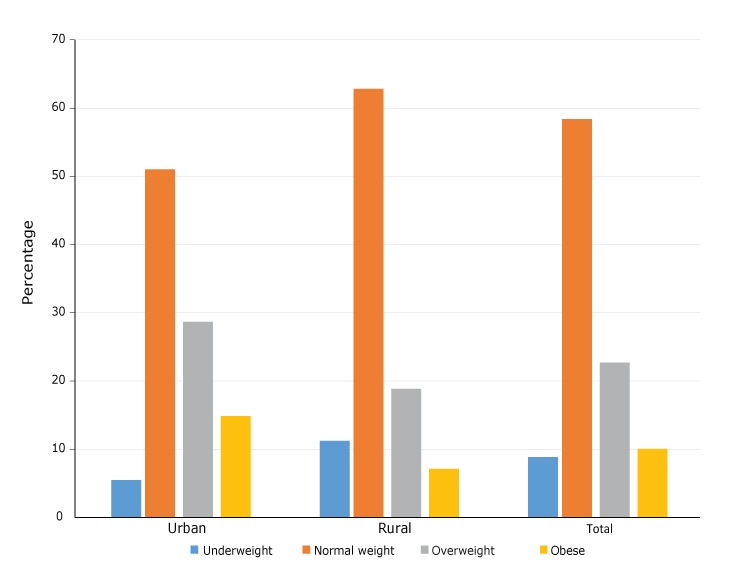
Results: The prevalence of overweight was 20.5%, and the prevalence of obesity, 9.1%. Women aged 35 to 44 (odds ratio [OR] = 3.14; 95% confidence interval [CI], 2.58-3.81), with more than a secondary education (OR = 1.43; 95% CI, 1.05-1.95), married or living with a partner (OR = 1.73; 95% CI, 1.42-2.08), not working (OR = 1.27; 95% CI, 1.10-1.48), in the richest category (OR = 6.50; 95% CI, 5.08-8.30), and who used hormonal contraception (OR = 1.24; 95% CI, 1.07-1.43) were significantly more likely to be overweight or obese.
Conclusion: A high proportion of women in Kenya are overweight or obese. Our study indicates that women from urban areas and women with high socioeconomic status make up the largest proportion of women who are overweight or obese. Targeted and tailored studies and interventions are needed to identify evidence-based obesity prevention strategies for high-risk women in Kenya.
Figures
References
-
- World Health Organization. Obesity and overweight 2016. http://www.who.int/mediacentre/factsheets/fs311/en/. Accessed March 24, 2017.
MeSH terms
LinkOut - more resources
Full Text Sources
Other Literature Sources
Medical