


Circulating inflammatory monocytes contribute to impaired influenza vaccine responses in HIV-infected participants
- PMID: 29683844
- PMCID: PMC8728748
- DOI: 10.1097/QAD.0000000000001821
Circulating inflammatory monocytes contribute to impaired influenza vaccine responses in HIV-infected participants
Abstract
Objective: Antibody responses are often impaired in old age and in HIV-positive (HIV+) infection despite virologic control with antiretroviral therapy but innate immunologic determinants are not well understood.
Design: Monocytes and natural killer cells were examined for relationships to age, HIV infection and influenza vaccine responses.
Methods: Virologically suppressed HIV+ (n = 139) and HIV-negative (HIV-) (n = 137) participants classified by age as young (18-39 years), middle-aged (40-59 years) and old (≥60 years) were evaluated preinfluenza and postinfluenza vaccination.
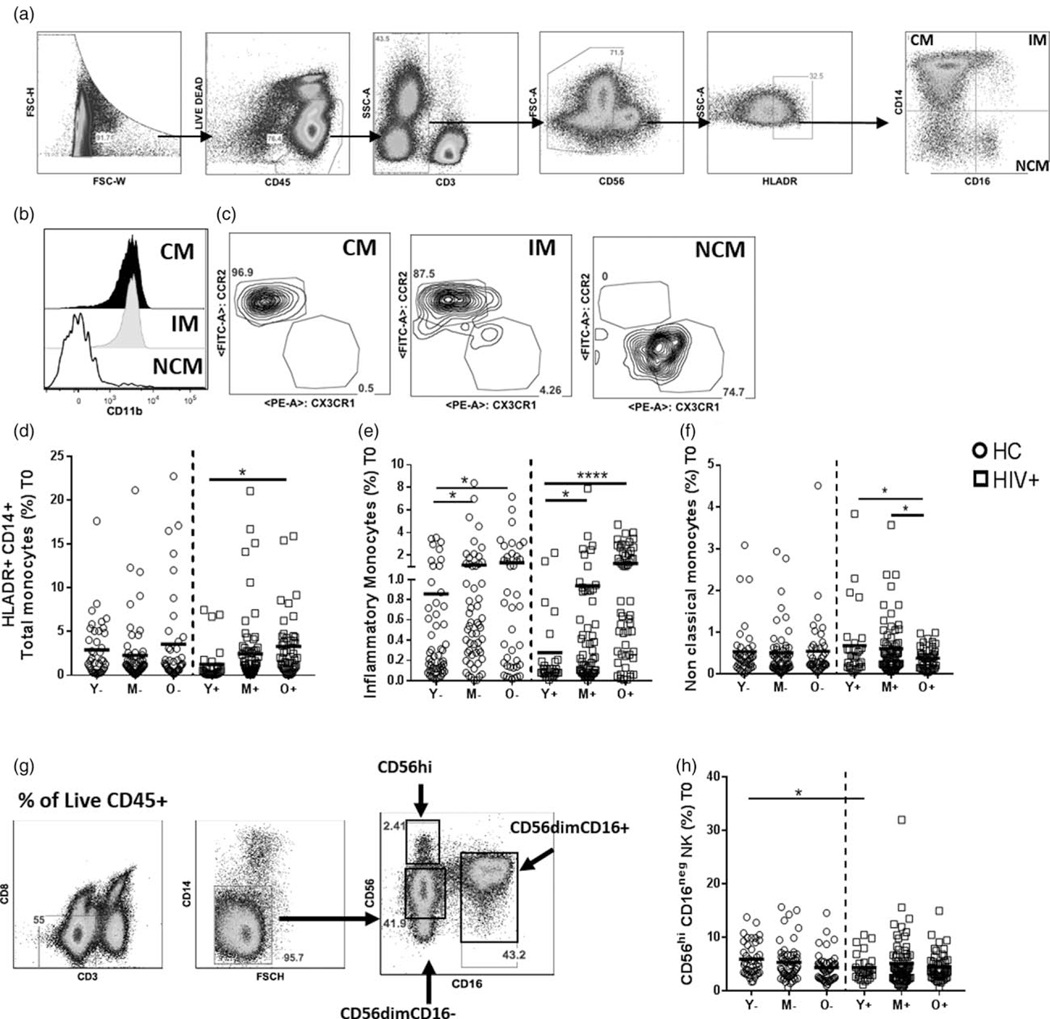
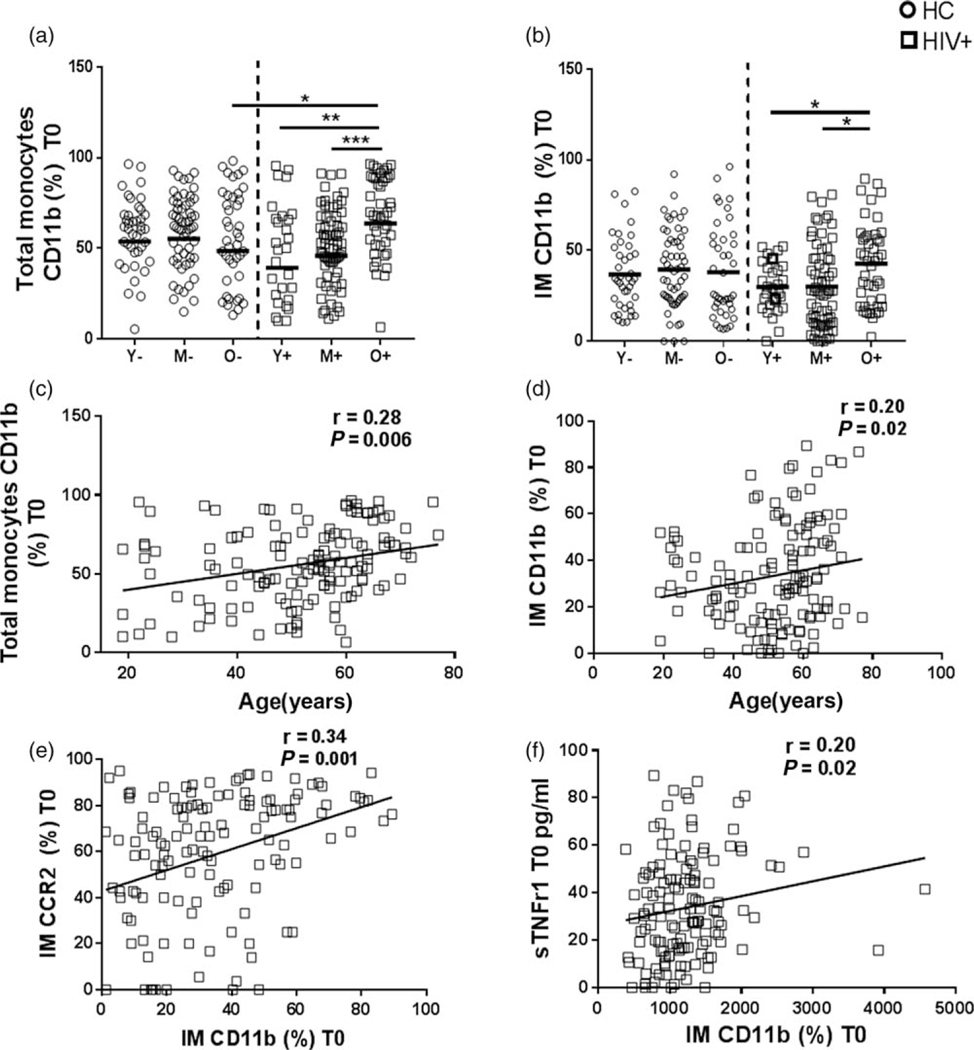
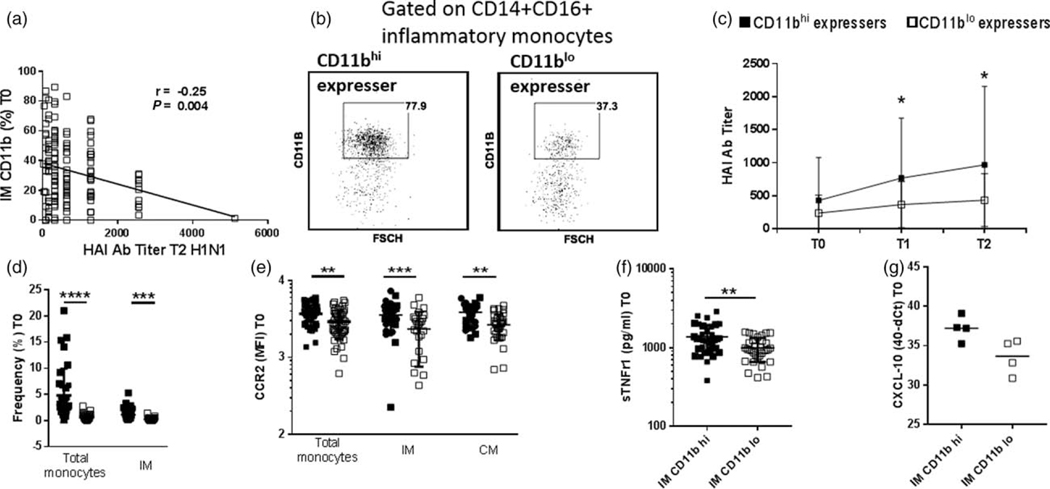
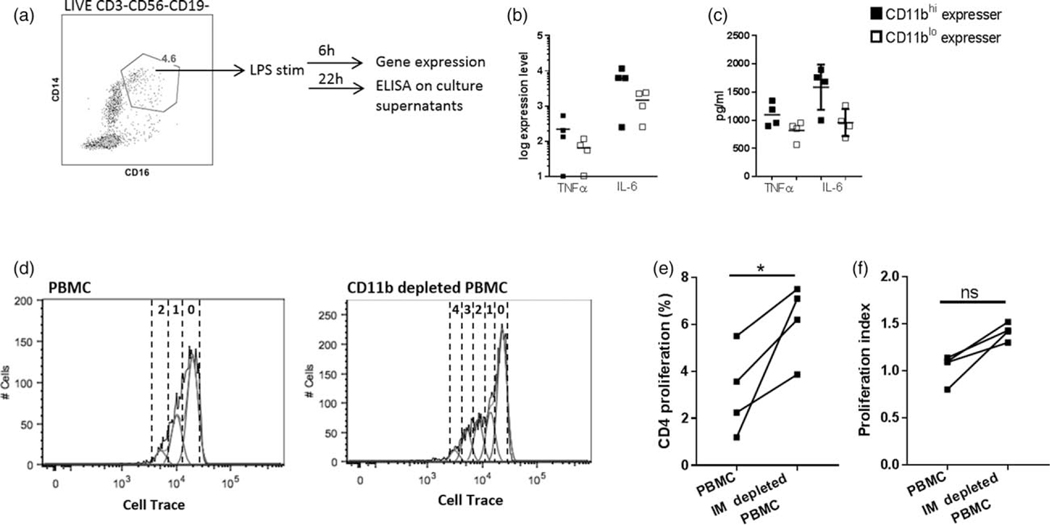
Results: Prevaccination frequencies of inflammatory monocytes were highest in old HIV+ and HIV-, with old HIV+ exhibiting higher frequency of integrin CD11b on inflammatory monocytes that was correlated with age, expression of C-C chemokine receptor-2 (CCR2) and plasma soluble tumor necrosis factor receptor-1 (sTNFR1), with inverse correlation with postvaccination influenza H1N1 antibody titers. Higher frequencies of CD11b+ inflammatory monocytes (CD11b(hi), >48.4%) compared with low frequencies of CD11b+ inflammatory monocytes (<15.8%) was associated with higher prevaccination frequencies of total and inflammatory monocytes and higher CCR2 MFI, higher plasma sTNFR1 and CXCL-10 with higher lipopolysaccharide stimulated expression of TNFα and IL-6, concomitant with lower postvaccination influenza antibody titers. In HIV+ CD11b(hi) expressers, the depletion of inflammatory monocytes from peripheral blood mononuclear cells resulted in enhanced antigen-specific CD4+ T-cell proliferation. Immature CD56(hi) natural killer cells were lower in young HIV+ compared with young HIV- participants.
Conclusion: Perturbations of innate immunity and inflammation signified by high CD11b on inflammatory monocytes are exacerbated with aging in HIV+ and negatively impact immune function involved in Ab response to influenza vaccination.
Conflict of interest statement
Conflicts of interest
There are no conflicts of interest.
Figures
References
-
- Centers for Disease Control and Prevention (CDC). Prevention and Control of Seasonal Influenza with Vaccines: Recommendations of the Advisory Committee on Immunization Practices –— United States, 2013–2014. MMWR Recomm Rep 2013; 62 (RR07):1–43. - PubMed
-
- Kaplan-Lewis E, Aberg JA, Lee M. Aging with HIV in the ART era. Semin Diagn Pathol 2017; 34:384–397. - PubMed
-
- Appay V, Kelleher AD. Immune activation and immune aging in HIV infection. Curr Opin HIV AIDS 2016; 11:242–249. - PubMed
-
- Fulop T, Herbein G, Cossarizza A, Witkowski JM, Frost E, Dupuis G, et al. Cellular senescence, immunosenescence and HIV. Interdiscip Top Gerontol Geriatr 2017; 42:28–46. - PubMed
Publication types
MeSH terms
Substances
Grants and funding
LinkOut - more resources
Full Text Sources
Other Literature Sources
Medical
Research Materials
