


Soluble TREM2 and biomarkers of central and peripheral inflammation in neurodegenerative disease
- PMID: 29685286
- PMCID: PMC6036902
- DOI: 10.1016/j.jneuroim.2018.03.003
Soluble TREM2 and biomarkers of central and peripheral inflammation in neurodegenerative disease
Abstract
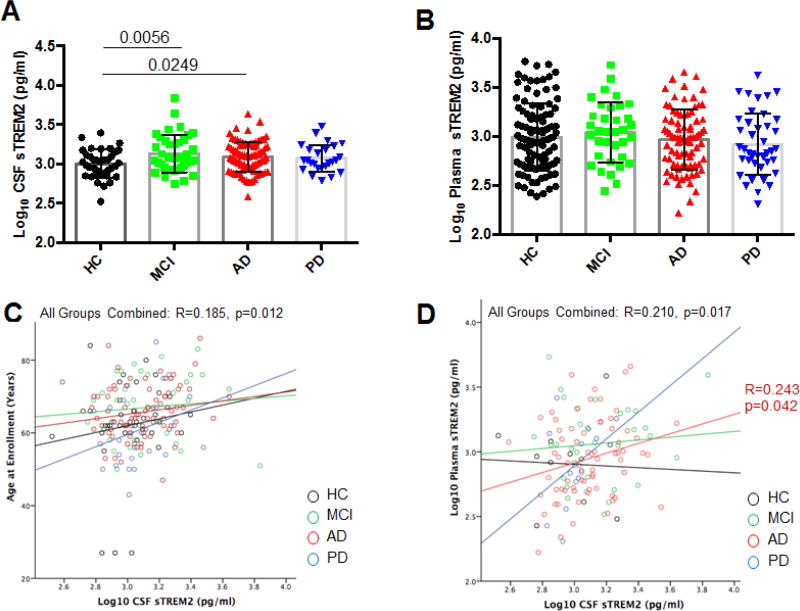
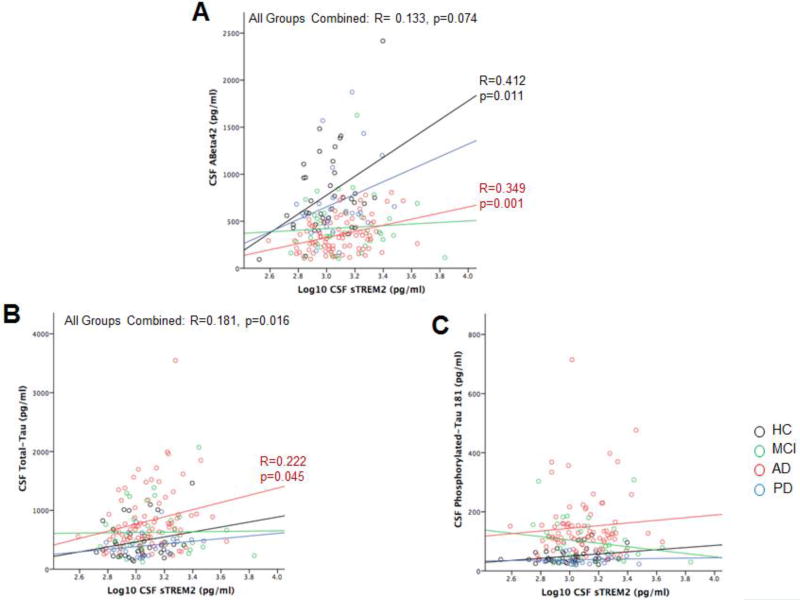
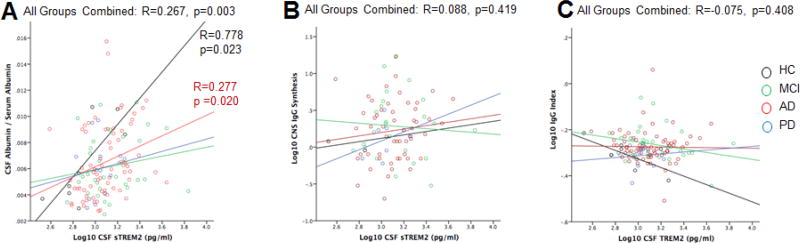
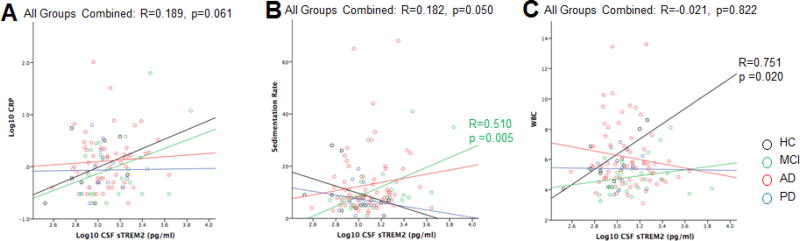
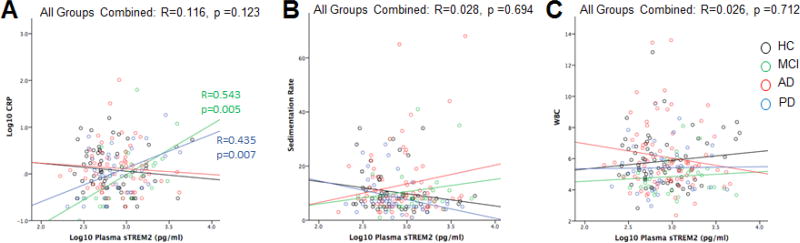
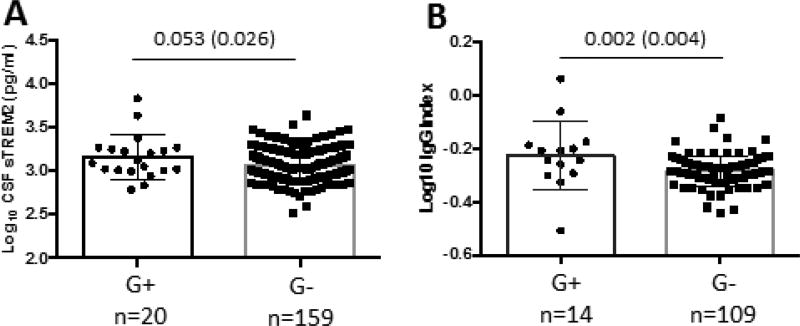
Alzheimer's disease (AD) has been genetically and pathologically associated with neuroinflammation. Triggering receptor expressed on myeloid cells 2 (TREM2) is a microglial receptor involved in innate immunity. TREM2 rare protein coding genetic variants have been linked to AD. A soluble TREM2 (sTREM2) cleavage product is elevated in AD. It is unclear whether there is a relationship between elevated sTREM2 and markers of inflammation. The hypothesis of this investigation was that central and peripheral inflammation play a role in sTREM2 levels in AD. A consistent association of peripheral or central markers of inflammation and CSF sTREM2 levels was not found, suggesting a limited impact of general inflammation on sTREM2 levels. An association between peripheral sTREM2 levels and CSF sTREM2, as well as an association between CSF sTREM2 and a marker of blood brain barrier integrity, was observed in AD, suggesting a potential role of peripheral TREM2 in central TREM2 biology.
Copyright © 2018 Elsevier B.V. All rights reserved.
Figures
References
-
- Kondo T, Takahashi K, Kohara N, Takahashi Y, Hayashi S, Takahashi H, et al. Heterogeneity of presenile dementia with bone cysts (Nasu-Hakola disease): three genetic forms. Neurology. 2002;59(7):1105–7. - PubMed
-
- Chouery E, Delague V, Bergougnoux A, Koussa S, Serre JL, Megarbane A. Mutations in TREM2 lead to pure early-onset dementia without bone cysts. Human mutation. 2008;29(9):E194–204. - PubMed
Publication types
MeSH terms
Substances
Grants and funding
LinkOut - more resources
Full Text Sources
Other Literature Sources
Medical
