


Native iron reduces CO2 to intermediates and end-products of the acetyl-CoA pathway
- PMID: 29686234
- PMCID: PMC5969571
- DOI: 10.1038/s41559-018-0542-2
Native iron reduces CO2 to intermediates and end-products of the acetyl-CoA pathway
Abstract
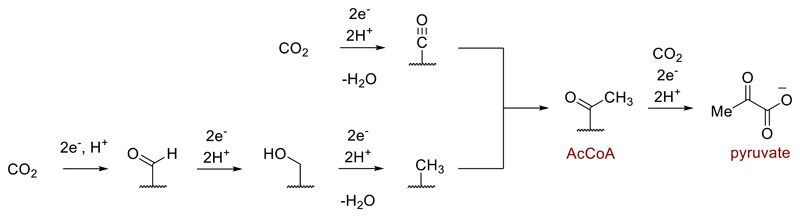
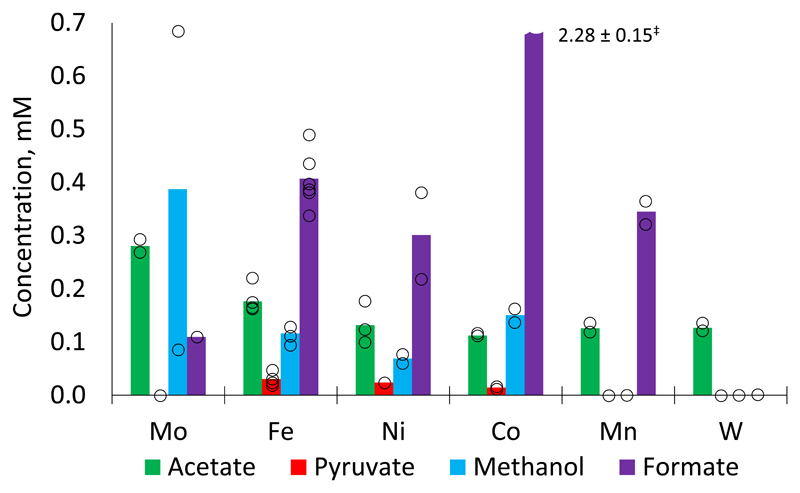
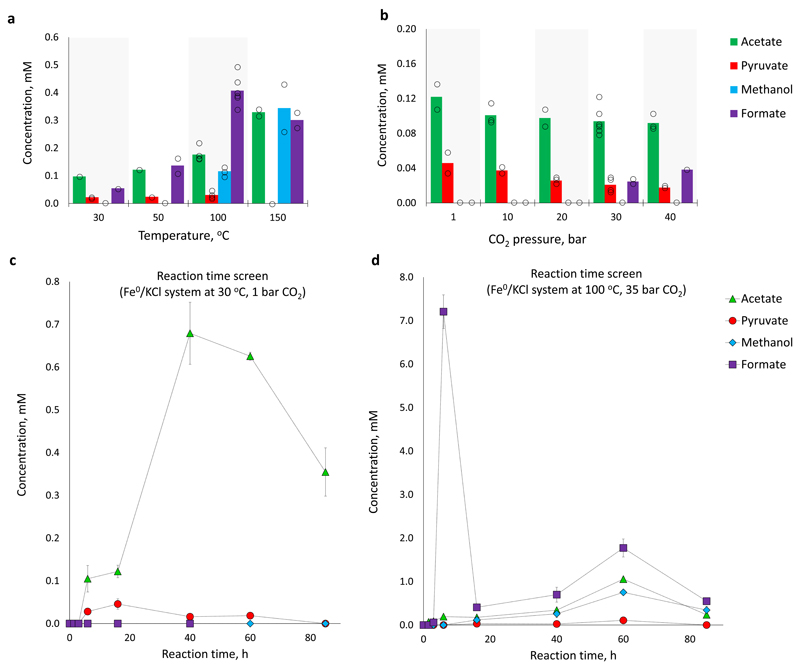
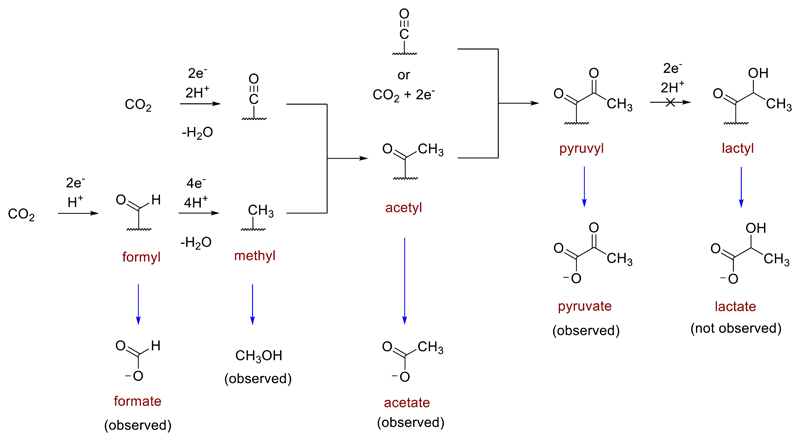
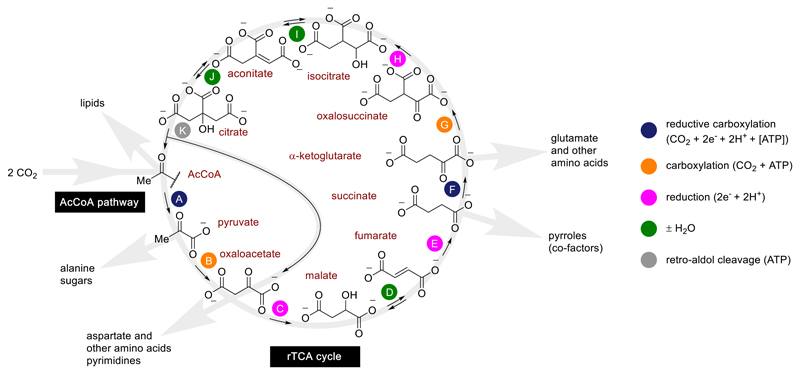
Autotrophic theories for the origin of life propose that CO2 was the carbon source for primordial biosynthesis. Among the six known CO2 fixation pathways in nature, the acetyl-CoA (AcCoA; or Wood-Ljungdahl) pathway is the most ancient, and relies on transition metals for catalysis. Modern microbes that use the AcCoA pathway typically fix CO2 with electrons from H2, which requires complex flavin-based electron bifurcation. This presents a paradox: how could primitive metabolic systems have fixed CO2 before the origin of proteins? Here, we show that native transition metals (Fe0, Ni0 and Co0) selectively reduce CO2 to acetate and pyruvate-the intermediates and end-products of the AcCoA pathway-in near millimolar concentrations in water over hours to days using 1-40 bar CO2 and at temperatures from 30 to 100 °C. Geochemical CO2 fixation from native metals could have supplied critical C2 and C3 metabolites before the emergence of enzymes.
Conflict of interest statement
The authors declare no competing interests.
Figures
References
-
- Ruiz-Mirazo K, Briones C, de la Escosura A. Prebiotic systems chemistry: new perspectives for the origins of life. Chem Rev. 2014;114:285–366. and references therein. - PubMed
-
- Peretó J. Out of fuzzy chemistry: from prebiotic chemistry to metabolic networks. Chem Soc Rev. 2012;41:5394–5403. - PubMed
-
- Sutherland JD. Studies on the origin of life - the end of the beginning. Nat Rev Chem. 2017;1:1.
-
- Berg, et al. Autotrophic carbon fixation in archaea. Nat Rev Microbiol. 2010;8:447–460. - PubMed
-
- Hügler M, Sievert SM. Beyond the Calvin cycle: autotrophic carbon fixation in the ocean. Annu Rev Mar Sci. 2011;3:261–289. - PubMed
Publication types
MeSH terms
Substances
Grants and funding
LinkOut - more resources
Full Text Sources
Other Literature Sources
Medical
Miscellaneous
