


Evolution of high-level resistance during low-level antibiotic exposure
- PMID: 29686259
- PMCID: PMC5913237
- DOI: 10.1038/s41467-018-04059-1
Evolution of high-level resistance during low-level antibiotic exposure
Abstract
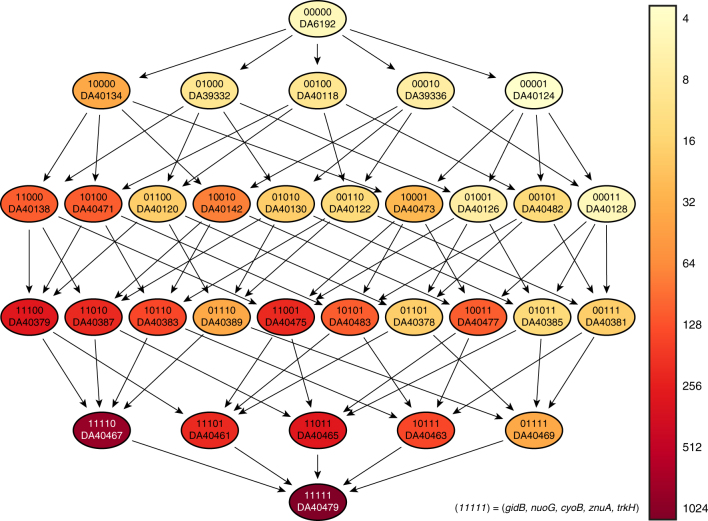
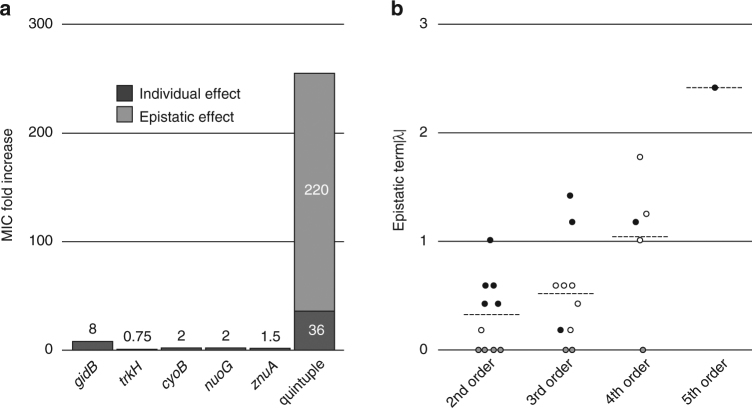
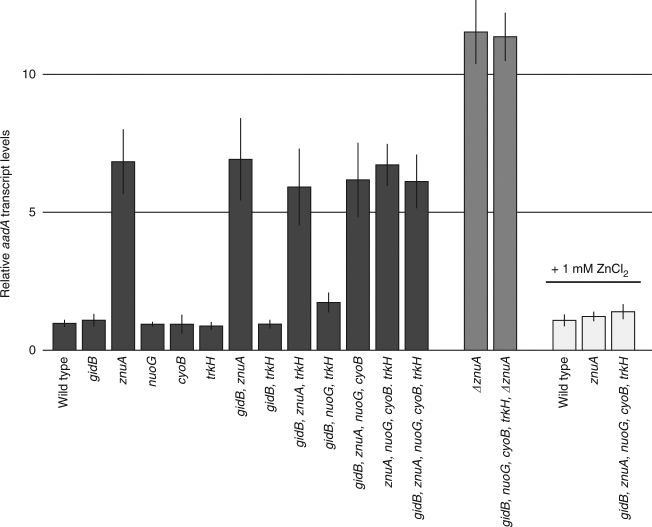
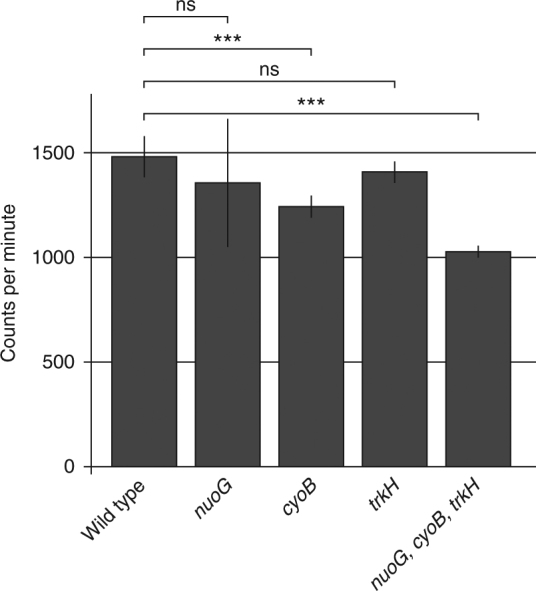
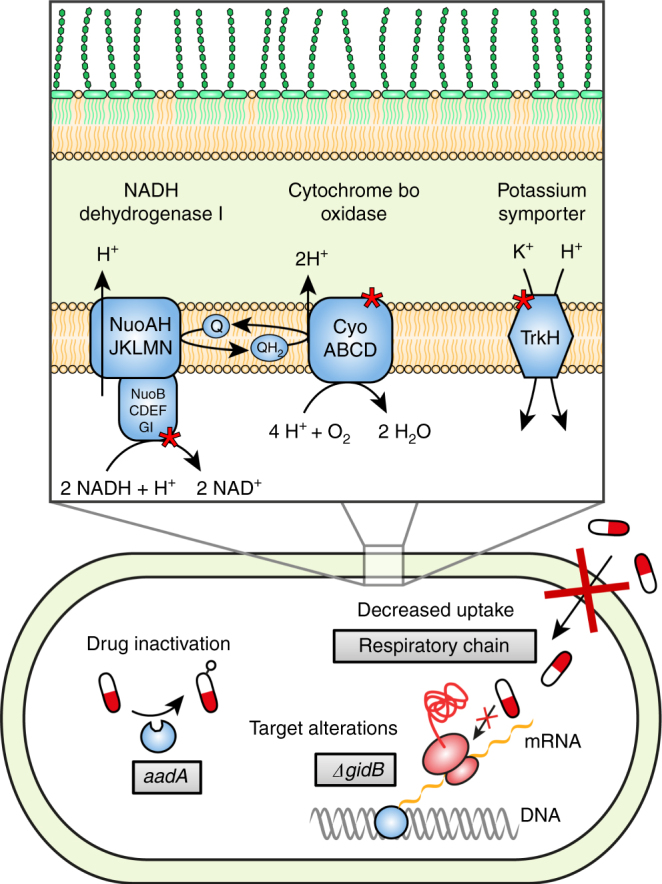
It has become increasingly clear that low levels of antibiotics present in many environments can select for resistant bacteria, yet the evolutionary pathways for resistance development during exposure to low amounts of antibiotics remain poorly defined. Here we show that Salmonella enterica exposed to sub-MIC levels of streptomycin evolved high-level resistance via novel mechanisms that are different from those observed during lethal selections. During lethal selection only rpsL mutations are found, whereas at sub-MIC selection resistance is generated by several small-effect resistance mutations that combined confer high-level resistance via three different mechanisms: (i) alteration of the ribosomal RNA target (gidB mutations), (ii) reduction in aminoglycoside uptake (cyoB, nuoG, and trkH mutations), and (iii) induction of the aminoglycoside-modifying enzyme AadA (znuA mutations). These results demonstrate how the strength of the selective pressure influences evolutionary trajectories and that even weak selective pressures can cause evolution of high-level resistance.
Conflict of interest statement
The authors declare no competing interests.
Figures
References
-
- Thiele-Bruhn S. Pharmaceutical antibiotic compounds in soils—a review. J. Plant Nutr. Soil Sci. 2003;166:145–167. doi: 10.1002/jpln.200390023. - DOI
Publication types
MeSH terms
Substances
LinkOut - more resources
Full Text Sources
Other Literature Sources
Medical
