


Determinants of Antibiotic Consumption - Development of a Model using Partial Least Squares Regression based on Data from India
- PMID: 29686420
- PMCID: PMC5913309
- DOI: 10.1038/s41598-018-24883-1
Determinants of Antibiotic Consumption - Development of a Model using Partial Least Squares Regression based on Data from India
Abstract
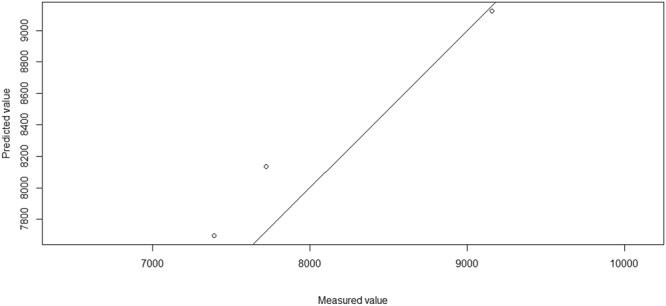
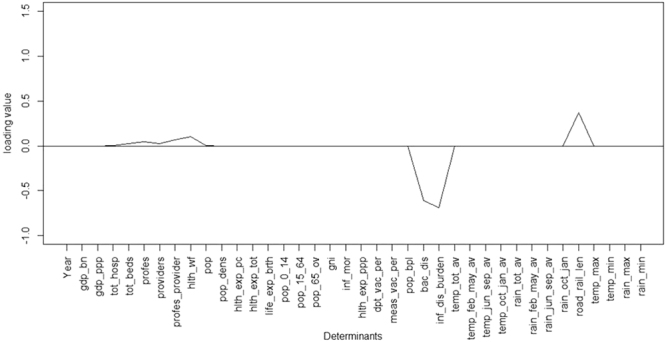
Antibiotic resistance, a consequence of antibiotic use, is a threat to health, with severe consequences for resource constrained settings. If determinants for human antibiotic use in India, a lower middle income country, with one of the highest antibiotic consumption in the world could be understood, interventions could be developed, having implications for similar settings. Year wise data for India, for potential determinants and antibiotic consumption, was sourced from publicly available databases for the years 2000-2010. Data was analyzed using Partial Least Squares regression and correlation between determinants and antibiotic consumption was evaluated, formulating 'Predictors' and 'Prediction models'. The 'prediction model' with the statistically most significant predictors (root mean square errors of prediction for train set-377.0 and test set-297.0) formulated from a combination of Health infrastructure + Surface transport infrastructure (HISTI), predicted antibiotic consumption within 95% confidence interval and estimated an antibiotic consumption of 11.6 standard units/person (14.37 billion standard units totally; standard units = number of doses sold in the country; a dose being a pill, capsule, or ampoule) for India for 2014. The HISTI model may become useful in predicting antibiotic consumption for countries/regions having circumstances and data similar to India, but without resources to measure actual data of antibiotic consumption.
Conflict of interest statement
The authors declare no competing interests.
Figures
References
-
- O’Neill, J. Tackling drug-resistant infections globally: final report and recommendations. The review on antimicrobial resistance. https://amr-review.org/sites/default/files/160518_Final%20paper_with%20c... (2016).
-
- United Nations. Draft Political Declaration of the High – level Meeting of the General Assembly on Antimicrobial Resistance http://www.un.org/pga/71/wp-content/uploads/sites/40/2016/09/Draft-AMR-D... (2016).
-
- World Health Organisation. Global Action Plan on Antimicrobial Resistance http://apps.who.int/iris/handle/10665/193736 (2015).
-
- Touboul-Lundgren P, Jensen S, Drai J, Lindbæk M. Identification of cultural determinants of antibiotic use cited in primary care in Europe: a mixed research synthesis study of integrated design “Culture is all around us”. BMC Public Health. 2015;15:908. doi: 10.1186/s12889-015-2254-8. - DOI - PMC - PubMed
MeSH terms
Substances
LinkOut - more resources
Full Text Sources
Other Literature Sources
Medical
