


Evaluation of a novel thermo-alkaline Staphylococcus aureus lipase for application in detergent formulations
- PMID: 29686504
- PMCID: PMC5910647
- DOI: 10.1016/j.sjbs.2016.10.006
Evaluation of a novel thermo-alkaline Staphylococcus aureus lipase for application in detergent formulations
Abstract
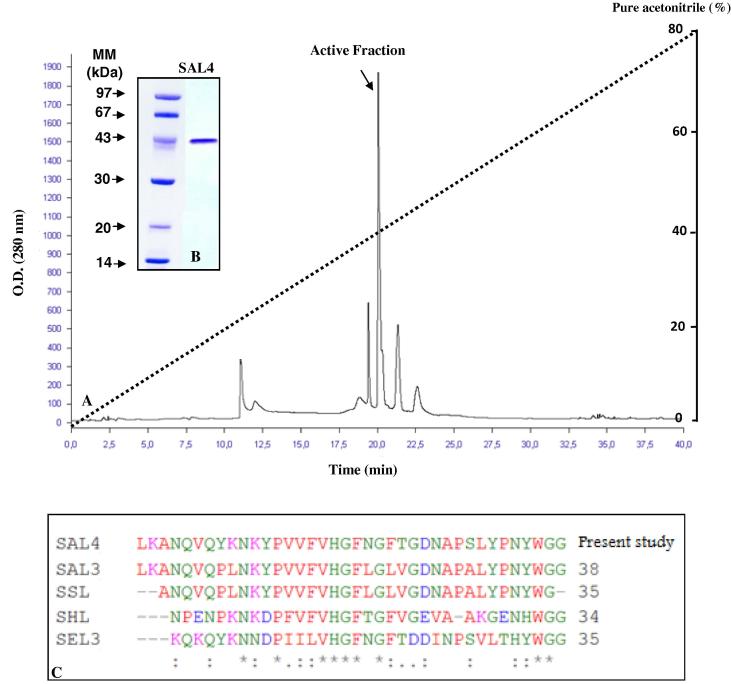
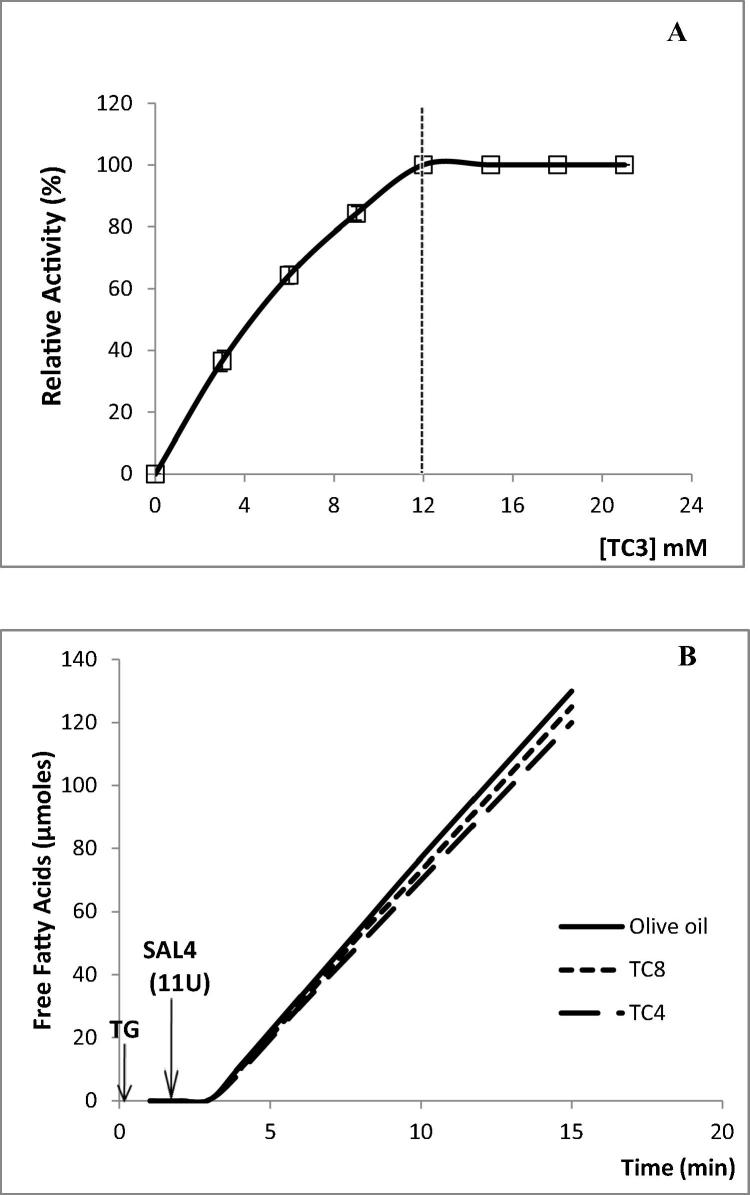
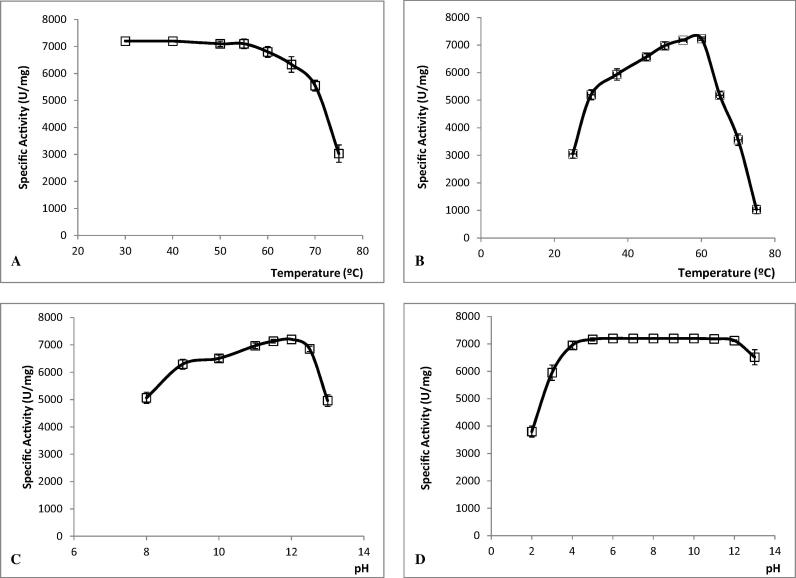
An extracellular lipase of a newly isolated S. aureus strain ALA1 (SAL4) was purified from the optimized culture medium. The SAL4 specific activity determined at 60 °C and pH 12 by using olive oil emulsion or TC4, reached 7215 U/mg and 2484 U/mg, respectively. The 38 NH2-terminal amino acid sequence of the purified enzyme starting with two extra amino acid residues (LK) was similar to known staphylococcal lipase sequences. This novel lipase maintained almost 100% and 75% of its full activity in a pH range of 4.0-12 after a 24 h incubation or after 0.5 h treatment at 70 °C, respectively. Interestingly, SAL4 displayed appreciable stability toward oxidizing agents, anionic and non-ionic surfactants in addition to its compatibility with several commercial detergents. Overall, these interesting characteristics make this new lipase promising for its application in detergent industry.
Keywords: Characterization; Detergent-stable; HPLC, high-performance liquid chromatography; NaDC, sodium deoxycholic acid; NaTDC, sodium taurodeoxy cholic acid; OD, optical density; PCR, polymerase chain reaction; Purification; S. aureus, Staphylococcus aureus; SAL, Staphylococcus aureus lipase; SDS, sodium dodecyl sulfate; SEL, Staphylococcus epidermidis lipase; SHyL, Staphylococcus hyicus lipase; SL1, Staphylococcus sp. lipase; SSL, Staphylococcus simulans lipase; SXL, Staphylococcus xylosus lipase; Staphylococcus aureus lipase; TC18, triolein; TC3, tripropionin; TC4, tributryin; TC8, trioctanoin; TFA, tri fluoroacetic acid; Thermo-alkaline; rDNA, ribosomal deoxy ribo nucleic acid; rpm, revolutions per minute.
Figures
References
-
- Abdelkafi S., Fouquet B., Barouh N., Durner S., Pina M., Scheirlinckx F., Villeneuve P., Carrière F. In vitro comparisons between Carica papaya and pancreatic lipases during test meal lipolysis: potential use of CPL in enzyme replacement therapy. Food Chem. 2009;115:488–494.
-
- Akoh C.C., Lee G.C., Liaw Y.C., Huang Shaw T.H.J.F. GDSL family of serine esterases/lipases. Prog. Lipid Res. 2004;43:534–552. - PubMed
-
- Ben Bacha A., Moubayed N.M.S., Al Assaf A. An organic solvent-stable lipase from a newly isolated Staphylococcus aureus ALA1 strain with potential for use as an industrial biocatalyst. Biotechnol. Appl. Biochem. 2015 - PubMed
-
- Bornscheuer U.T., Kazlauskas R.J. Wiley-VCH; Weinheim: 1999. Hydrolases in Organic Synthesis – Regio- and Stereoselective Biotransformations. 336.
-
- Bouaziz A., Horchani H., Ben Salem N., Gargouri Y., Sayari A. Expression, purification of a novel alkaline Staphylococcus xylosus lipase acting at high temperature. Biochem. Eng. J. 2011;54:93–102.
LinkOut - more resources
Full Text Sources
Other Literature Sources
