


Diaphragm function and weaning from mechanical ventilation: an ultrasound and phrenic nerve stimulation clinical study
- PMID: 29687276
- PMCID: PMC5913054
- DOI: 10.1186/s13613-018-0401-y
Diaphragm function and weaning from mechanical ventilation: an ultrasound and phrenic nerve stimulation clinical study
Abstract
Background: Diaphragm dysfunction is defined by a value of twitch tracheal pressure in response to magnetic phrenic stimulation (twitch pressure) amounting to less than 11 cmH2O. This study assessed whether this threshold or a lower one would predict accurately weaning failure from mechanical ventilation. Twitch pressure was compared to ultrasound measurement of diaphragm function.
Methods: In patients undergoing a first spontaneous breathing trial, diaphragm function was evaluated by twitch pressure and by diaphragm ultrasound (thickening fraction). Receiver operating characteristics curves were computed to determine the best thresholds predicting failure of spontaneous breathing trial.
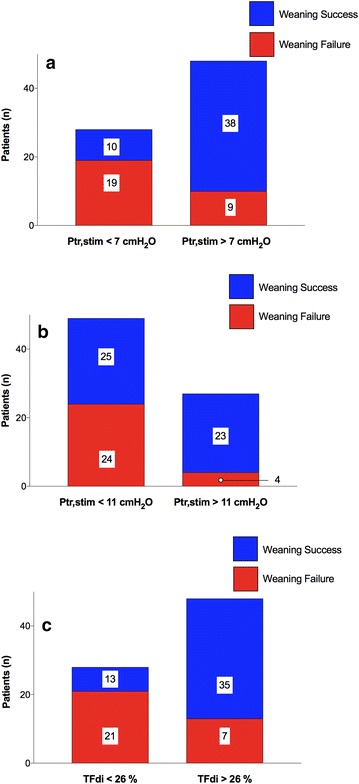
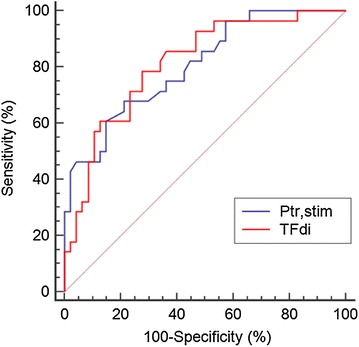
Results: Seventy-six patients were evaluated, 48 (63%) succeeded and 28 (37%) failed the spontaneous breathing trial. The optimal thresholds of twitch pressure and thickening fraction to predict failure of the spontaneous breathing trial were, respectively, 7.2 cmH2O and 25.8%, respectively. The receiver operating characteristics curves were 0.80 (95% CI 0.70-0.89) for twitch pressure and 0.82 (95% CI 0.73-0.93) for thickening fraction. Both receiver operating characteristics curves were similar (p = 0.83). A twitch pressure value lower than 11 cmH2O (the traditional cutoff for diaphragm dysfunction) predicted failure of the spontaneous breathing trial with a sensitivity of 89% (95% CI 72-98%) and a specificity of 45% (95% CI 30-60%).
Conclusions: Failure of spontaneous breathing trial can be predicted with a lower value of twitch pressure than the value defining diaphragm dysfunction. Twitch pressure and thickening fraction had similar strong performance in the prediction of failure of the spontaneous breathing trial.
Keywords: Diaphragm; Extubation; Liberation; Ultrasound; Ventilator; Weakness.
Figures
References
-
- Demoule A, Jung B, Prodanovic H, Molinari N, Chanques G, Coirault C, et al. Diaphragm dysfunction on admission to the intensive care unit. Prevalence, risk factors, and prognostic impact-a prospective study. Am J Respir Crit Care Med. 2013;188:213–219. doi: 10.1164/rccm.201209-1668OC. - DOI - PubMed
-
- Dres M, Dubé B-P, Mayaux J, Delemazure J, Reuter D, Brochard L, et al. Coexistence and impact of limb muscle and diaphragm weakness at time of liberation from mechanical ventilation in medical intensive care unit patients. Am J Respir Crit Care Med. 2017;195:57–66. doi: 10.1164/rccm.201602-0367OC. - DOI - PubMed
LinkOut - more resources
Full Text Sources
Other Literature Sources
Medical
