


Anhedonia in depression and schizophrenia: A transdiagnostic challenge
- PMID: 29687627
- PMCID: PMC6489811
- DOI: 10.1111/cns.12854
Anhedonia in depression and schizophrenia: A transdiagnostic challenge
Abstract
Background: Anhedonia, as a dysregulation of the reward circuit, is present in both Major Depressive Disorder (MDD) and schizophrenia (SZ).
Aims: To elucidate the clinical and neurobiological differences between schizophrenia (SZ) and depression (MDD) in regard to anhedonia, while reconciling the challenges and benefits of assessing anhedonia as a transdiagnostic feature under the Research Domain Criteria (RDoC) framework.
Methods: In this review, we summarize data from publications examining anhedonia or its underlying reward deficits in SZ and MDD. A literature search was conducted in OVID Medline, PsycINFO and EMBASE databases between 2000 and 2017.
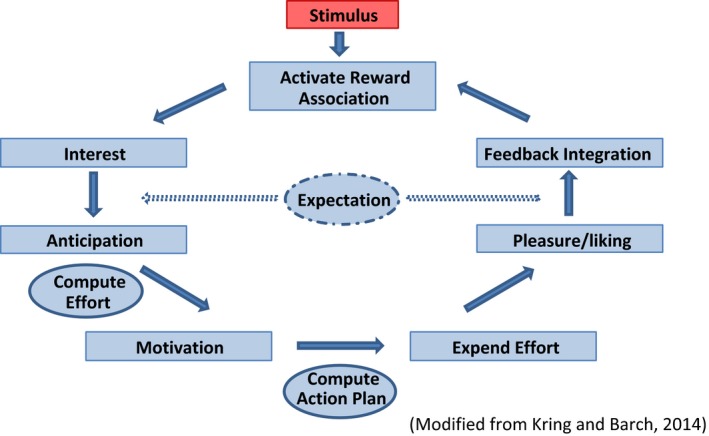
Results: While certain subgroups share commonalities, there are also important differences. SZ may be characterized by a disorganization, rather than a deficiency, in reward processing and cognitive function, including inappropriate energy expenditure and focus on irrelevant cues. In contrast, MDD has been characterized by deficits in anticipatory pleasure, development of reward associations, and integration of information from past experience. Understanding the roles of neurotransmitters and aberrant brain circuitry is necessary to appreciate differences in reward function in SZ and MDD.
Conclusion: Anhedonia as a clinical presentation of reward circuit dysregulation is an important and relatively undertreated symptom of both SZ and MDD. In order to improve patient outcomes and quality of life, it is important to consider how anhedonia fits into both diagnoses.
Keywords: anhedonia; depression; reward circuit; schizophrenia.
© 2018 John Wiley & Sons Ltd.
Figures
References
-
- Nimh.nih.gov (2017). NIMH: Anhedonia (RDoC Element). [online] https://www.nimh.nih.gov/research-priorities/rdoc/units/behaviors/150689.... Accessed Oct 1, 2017.
Publication types
MeSH terms
LinkOut - more resources
Full Text Sources
Other Literature Sources
Medical
Miscellaneous
