


Effectiveness of implementing a best practice primary healthcare model for low back pain (BetterBack) compared with current routine care in the Swedish context: an internal pilot study informed protocol for an effectiveness-implementation hybrid type 2 trial
- PMID: 29691246
- PMCID: PMC5922514
- DOI: 10.1136/bmjopen-2017-019906
Effectiveness of implementing a best practice primary healthcare model for low back pain (BetterBack) compared with current routine care in the Swedish context: an internal pilot study informed protocol for an effectiveness-implementation hybrid type 2 trial
Abstract
Introduction: Low back pain (LBP) is a major health problem commonly requiring healthcare. In Sweden, there is a call from healthcare practitioners (HCPs) for the development, implementation and evaluation of a best practice primary healthcare model for LBP.
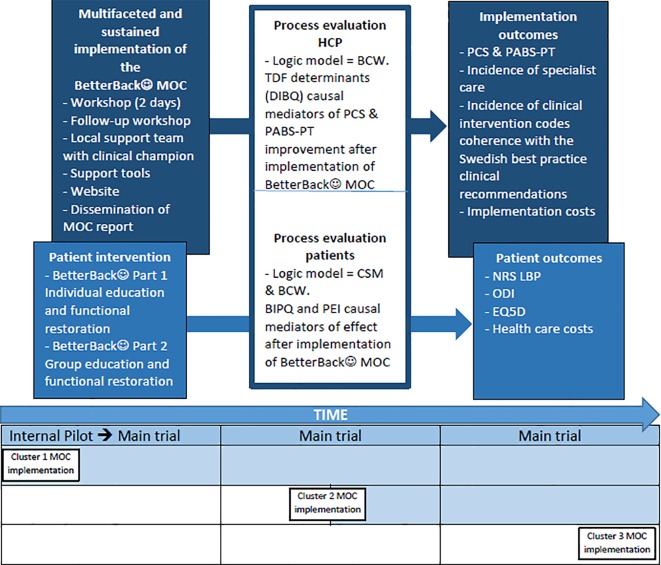
Aims: (1) To improve and understand the mechanisms underlying changes in HCP confidence, attitudes and beliefs for providing best practice coherent primary healthcare for patients with LBP; (2) to improve and understand the mechanisms underlying illness beliefs, self-care enablement, pain, disability and quality of life in patients with LBP; and (3) to evaluate a multifaceted and sustained implementation strategy and the cost-effectiveness of the BetterBack☺ model of care (MOC) for LBP from the perspective of the Swedish primary healthcare context.
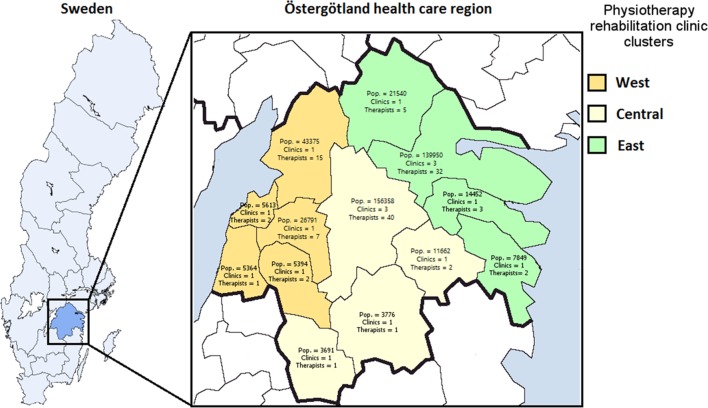
Methods: This study is an effectiveness-implementation hybrid type 2 trial testing the hypothesised superiority of the BetterBack☺ MOC compared with current routine care. The trial involves simultaneous testing of MOC effects at the HCP, patient and implementation process levels. This involves a prospective cohort study investigating implementation at the HCP level and a patient-blinded, pragmatic, cluster, randomised controlled trial with longitudinal follow-up at 3, 6 and 12 months post baseline for effectiveness at the patient level. A parallel process and economic analysis from a healthcare sector perspective will also be performed. Patients will be allocated to routine care (control group) or the BetterBack☺ MOC (intervention group) according to a stepped cluster dogleg structure with two assessments in routine care. Experimental conditions will be compared and causal mediation analysis investigated. Qualitative HCP and patient experiences of the BetterBack☺ MOC will also be investigated.
Dissemination: The findings will be published in peer-reviewed journals and presented at national and international conferences. Further national dissemination and implementation in Sweden and associated national quality register data collection are potential future developments of the project.
Date and version identifier: 13 December 2017, protocol version 3.
Trial registration number: NCT03147300; Pre-results.
Keywords: effectiveness; implementation; low back pain; model of care.
© Article author(s) (or their employer(s) unless otherwise stated in the text of the article) 2018. All rights reserved. No commercial use is permitted unless otherwise expressly granted.
Conflict of interest statement
Competing interests: None declared.
Figures
References
-
- Smart KM, O’Connell NE, Doody C. Towards a mechanisms-based classification of pain in musculoskeletal physiotherapy? Physical Therapy Reviews 2008;13:1–10. 10.1179/174328808X251984 - DOI
Publication types
MeSH terms
Associated data
LinkOut - more resources
Full Text Sources
Other Literature Sources
Medical
Miscellaneous
